Ten years ago, I was diagnosed with Parkinson’s Disease.
That is a tough sentence to write. Ten years is both a very long time, yet no time at all. Parkinson’s did not arrive one morning and suddenly transform me into somebody else. Instead, Parky (my [un]affectionate nickname for it) has increasingly and unwelcomely wedged its way into different parts of my life — sometimes quietly, sometimes rather ‘less courteously’.
For several years, I continued doing what academics are particularly good at doing: I carried on.
I worked, taught, researched, travelled, presented; I got on with the job, Aas I was trained to. As I thought was the right thing to do. During the pandemic, I started The Third Degree, a research support initiative working with postgraduate researchers, academics, institutions and independent researchers. That grew into something far more substantial than I initially imagined – and I am incredibly grateful for that too.
The Parkinson’s kept progressing though. The tremors got worse. My movement got more restricted. Then, late 2024, I began losing my speech. Not my voice, but my speech. Stringing a coherent sentence together became the ‘battle ultimate’ – for me at least. As somebody whose professional life had been built substantially around communication, this was terrifying.
I didn’t know how to cope. The medical profession where I live felt unhelpful and unsympathetic. “Just accept it” was the ‘professional (medical)’ message being received. So, I withdrew.
I stepped away from a lot of my teaching. I declined opportunities that I so desperately wanted to accept. Worse, I became increasingly conscious of my body and increasingly worried about how other people could perceive it. At some stage, someone would notice the tremors and comment about them. Or ask about my movement challenges. Or notice I was struggling to articulate my thoughts and mock my speech. Or simply, I would implode from the pressure of worrying about whether others would notice. In a way, I did. It consumed me. I was fearful that others, especially those in the universities that I partner with on projects, would notice and then interpret – interpret my slowness as uncertainty, incompetence, and/or inability.
When Slowing Down is Not a Choice
I didn’t (re)discover Slow Academia because I was searching for a fashionable new academic philosophy. I wasn’t searching at all. It just happened. I knew of the movement from some years earlier – and although it resonated, it wasn’t something that I thought much about then. “Parky” reintroduced us. And at a timely juncture too.
I had withdrawn so much for a while that I was beginning to think I wouldn’t return. Amongst this existential personal crisis, I started asking myself “What is actually worth still doing”? I wasn’t ready to give up; but I wasn’t ready to show up again just yet either. That question surprisingly turned out to be remarkably powerful for me.
The philosophy and practice of Slow Academia is sometimes misunderstood as doing less, caring less or quietly retreating from academic ambition. It is certainly not the reality of the movement.
In my case, slowing down has become an exercise in intentionality. My energy is finite. My physical capacity fluctuates; some days are considerably harder than others. Because of this unpredictability, I have become so much more selective about where I place my time, energy and voice. I say no much more frequently. That in itself has made my yes considerably more valuable and meaningful.
I now choose projects because they genuinely matter to me. I work with people where I believe I can make a genuine contribution, either to them or to their cause. I speak and write about things I actually care about, rather than the things I think an academic is ‘supposed to care about’. I tell it as it is too, because my lived experience offers me a unique lens on many issues.
I stopped confusing activity with contribution. That has been a fantastic developmental journey that I strongly encourage for others.
Slower Does Not Mean Lesser
Academia has some peculiar ideas about productivity. We celebrate and reward ‘busyness’ with far too much ease. We count publications, grants, presentations, projects, teaching, committees, and increasingly elaborate collections of metrics intended to demonstrate that we are moving forward, preferably quickly, at what can sometimes feel a superhuman pace.
I am increasingly disillusioned that speed is synonymous with progress. In reality, our most important ‘academic work’ is inherently slow: thinking, listening, mentoring, developing trust with research participants, reading something properly (vis-à-vis extracting something useful from it), helping a doctoral candidate untangle an idea – all are slow activities by default.
It is from this I’ve realised: slowing down has not reduced the value of my scholarship. It has simply changed what I value in scholarship.
Finding My Way Back
It became increasingly important to me to find a way of academic working that would work with the new me. I had a business which depended on me, and I had doctoral candidates who still wanted my perspectives to help them develop. I also couldn’t leave classes unattended, and I was running out of guests to facilitate sessions for me. I also needed to stay active, to contribute. I wasn’t finished – even if I felt it.
I started with teaching. My weekly webinar series. Not as frequently as before; two or three a month only. I’ve learned that it is okay to teach differently. I know that a class or workshop may consume a significant portion of my energy. I want that session to matter. I prepare meticulously. I think about what learners genuinely need. I strive to create conversations as opposed to delivering content. I want participants to leave the experience with something they can use, question or continue thinking about.
Having less personal capacity has made me more attentive to how I use it for others. Shorter sessions. More questions. Less fluff. Everyone wins. Sometimes I pre-record (when I’m feeling strong), then make myself available for discussions directly afterwards. Win-win!
The same has happened with the mentoring I do. And I do a lot. I can spend two or three hours working intensively with a doctoral researcher. We work seriously. We laugh – lots. Alongside this, we wander down intellectual side streets, challenging assumptions, even discovering that the problem we thought we were solving was not actually the problem at all. All part of the journey.
This is not retreat in any form. In my view, it’s the ‘real’ academic work. It’s the academia I love, but got sidetracked from when metrics and institutional pressure established unnecessary speedbumps.
Challenging the norm
An assumption I have become increasingly enthusiastic to challenge is the idea that meaningful academic participation requires us to inhabit particular spaces in particular ways. The office, the lecture theatre, the conference podium, the student cafeteria, the institutional corridor. These spaces do matter. But academia is much bigger than its typically brutalist infrastructure.
Most days, my academic life operates from my office at home. Whether from the sofa, my desk, zoom; be it a blog post, webinar, mentoring conversation or an idea exchanged with colleagues in Malaysia, elsewhere in Southeast Asia, Eastern Europe or somewhere I may never get to physically visit. It happens frequently while I am simply sitting quietly and thinking. Just like right now, writing this reflection, listening to some soft music (Bonnie Tyler, if you must ask).
None of these forms of participation make myself or the work any less legitimate. Place and speed does not matter as much as we think. Intention does. This is especially relevant when we talk about disability, chronic illness, mental health and wellbeing in universities. To continue to contribute impactfully, we must abandon the romanticised ‘image’ of what being an academic means, and get real about the diversity of impact we can create.
Frequently disability adaptation is imagined as something that allows somebody to remain inside an existing system, an accommodation that helps the individual continue operating as closely as possible to the established norm. We must question the norm itself:
Why must meaningful participation always look the same?
Why should somebody experiencing fluctuating capacity have to disappear from academic life because they cannot participate in exactly the same way they once did?
Why do we so willingly interpret reduced visibility as reduced contribution?
In the same vein, we must challenge so-called ‘helpful’ conversations about academic wellbeing that place yet another responsibility (read: burden) upon the person who is already struggling. Telling somebody to slow down means very little if the institution surrounding them continues to only reward speed.
We cannot advocate wellbeing while celebrating overwork. Institutions cannot talk seriously about inclusion while continuing to measure academic worth through systems built around uninterrupted productivity, physical presence and ever-increasing output. Academia cannot be called inclusive if people feel that disclosing illness, disability or reduced capacity might cause colleagues or leadership to quietly question whether they can remain capable of contributing.
That fear is real. I know because I have felt this. For several years, part of my response to Parky was managing ‘symptom visibility’. An inclusive institution should not require somebody to spend precious energy pretending that they are well.
Institutional flexibility requires something deeper than accommodations. It requires us to broaden our understanding of what an academic contribution can look like. Institutions need to ask, “How can we create an environment in which this academic can continue contributing at their best now?” This is a much more nuanced and impactful understanding of inclusion. It shifts the conversation away from fixing the individual; towards creating an academic culture capable of accommodating different bodies, different minds, different circumstances and different seasons of life.
Academics can remain ambitious while working differently. Institutions should make it possible for us to be able to do so.
Conclusion
I hesitate to describe anything associated with Parky as a gift. There are plenty of things about this disease for which I feel absolutely no gratitude whatsoever. But being forced to slow down has given me something I did not expect: ‘permission’.
These permissions have been quite liberating frankly:
Permission to decide what matters.
Permission to stop chasing every opportunity.
Permission to acknowledge that energy is a resource.
Permission to work differently.
Permission to recognise that my academic identity does not disappear simply because my body has changed.
Permission to be the Parky me.
Parky took away one version of my academic identity, yet inadvertently helped me to construct another. There is something freeing in recognising that a changing body does not have to mean a disappearing self. My academic world does not look the way it used to, and I suspect it never will. That does not mean my story is finished. I am becoming more certain about what I want the next part of my journey and story to look like.
I’m still ambitious. I want to contribute. I still become ridiculously excited by interesting research questions. I still enjoy working with doctoral researchers. I still want to teach (well, maybe not undergrads). I still want to write. And I still want to challenge academic practices that I think deserve to be challenged.
I do all of the above, just differently. I no longer believe that I have to exhaust myself to prove that I belong. There are days when I cannot do much. There are opportunities I decline. And there are still rooms that I cannot enter and conversations in which my voice may not cooperate in the way I wish it would. That’s part of my journey. It does not make me less of an academic.
This is the message I most want to share with anybody navigating illness, disability, burnout, mental health challenges, caring responsibilities or simply a changing relationship with academic work. Slowing down and being more intentional does not make you any less.
Artificial Intelligence (AI) Statement
ChatGPT was used in refining this commentary to support spelling, grammar, clarity, and flow, where relevant, and to assist in identifying and bringing together recurring themes from the author’s previous speeches, presentations, and social media commentary on related topics. All substantive ideas, arguments, interpretations, experiences, and perspectives remain those of the author.
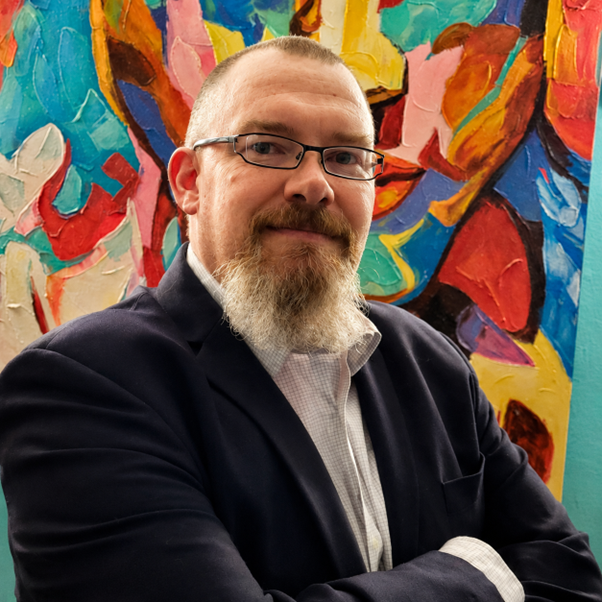
Dr Craig J Selby an academic, researcher, educator, and founder of The Third Degree, working with and supporting a global community of postgraduate researchers and academics. His work focuses particularly on qualitative research, researcher development, academic wellbeing, and the lived experience of academia. Increasingly drawing upon his own experience of living and working with Parkinson’s, Craig explores Slow Academia, adaptation, identity, and what it means to remain meaningfully engaged in academic life when circumstances change. Through teaching, mentoring, writing, and public engagement, he advocates for more human, inclusive, and reflective approaches to research and academic practice.

