Leaving higher education was never part of my plan. But then again neither was a late autism diagnosis, followed in quick succession by diagnoses of ADHD and dyscalculia and, more recently, fibromyalgia and hypermobility spectrum disorder. It’s a lot to process and, in part, I’m writing this to make sense of all that has happened.
Unrealised possibilities
I came to higher education initially as a way to offset the financial precarity of my visual art and performance practice. Yet the pragmatism of supporting others to develop was alluring. What started as a part-time, fixed-term contract, morphed into a permanent post and ultimately to actively seeking opportunities to climb the career ladder. While I remained working in professional services throughout my fifteen years in higher education, the divide between professional services and academia always appeared artificial to me. This was reinforced by the fact my last role was a permanent academic contract as an Educational Developer within a careers department.
Six years ago, this represented the absolute ideal to me. It felt like, at last, I could combine my deep interest in the pedagogy of employability with my passion for supporting the development of colleagues, while leveraging the nature of an academic contract to apply for research funding and undertake more writing.
Yet, all of this never fully materialised.
Multiple potential narratives
At this point in the story I could get lost in trying to work out where it all went wrong for me. In truth I’m not sure I fully understand it yet myself.
Accounting for this ambiguity, I’ve had to make peace with multiple, potential co-existing narratives. There is the version in which I painfully began to realise that pushing through my declining health was no longer the badge of honour I once thought it was. In this version, the narrative arc of my story begins with this recognition, before shifting to dogged self-advocacy and culminating in the triumph of prioritising myself and my needs by leaving my career behind.
Yet, there are other versions that embody grief and loss.
There is the one in which I should have just kept going, tried a little harder, continued pushing through a bit longer and, eventually, it would have all somehow clicked into place. There is a lot of hope in this version of the story — but a lot of naivety too.
There is also the version of the story where my identity was fully intertwined with my job. I saw (or see?) myself as someone who is ‘academic’. When I was failing miserably socially growing up, I clung to my identity as the ‘clever one’, as if it offset my inadequacies in other areas of life. Higher education and the work I was doing reinforced and validated the aspects of my identity that I clung to for dear life. I could even see strangers’ treatment of me was mediated and helped by my profession. Like when a GP was quite dismissive at the outset of my appointment but, when I referenced my work, my words and reporting of symptoms suddenly became more credible.
I felt my role in higher education was currency that I could spend as needed to offset the bias and discrimination that can come about when moving through the world as a disabled, female-presenting person.
The one truth that I feel fully secure in acknowledging across these multiple narratives is that it is an act of self-compassion to identify and acknowledge your needs after a lifetime of dismissal by self and others. It is a determined act of self-compassion to then advocate for these needs. And it is a radical act of self-compassion to leave an environment or situation and pursue a new path on your own terms.
Building a runway
For anyone else finding themselves leaving higher education, possibly through no fault or desire of your own, I say go gently, with compassion and curiosity. Because if, like me, your sense of self was tied to the work you did, the identity shift that occurs can be seismic.
Yet, I’d also like to say, perhaps moving beyond the institution does not have to mean a complete departure from the work you so value. In the midst of the turmoil of the past few years, I had a deep, and helpfully stubborn, sense that I shouldn’t have to give up on all that I’d worked so hard for. Instead, I began to build a runway and gave significant consideration to what I would pack to bring with me. For me this involved focusing on what activities could exist outside the infrastructure of higher education. There were some that couldn’t continue, like the small research grant I had just been awarded, because only institutional members of the grant funder’s organisation were eligible.
However, there were several networks I found welcoming to those of us no longer working within the institution. The Coaching in Higher Education Network, for example, which I have been involved in since it began in 2024, were happy for me to continue my role as chair of one of the network’s development groups. This propagates out as I find myself continuing to make new connections with higher education colleagues and, quite possibly, have more energy and drive to foster these connections in intentional and meaningful ways.
I also identified key collaborative partnerships that were important on both personal and professional levels. One of these naturally extended beyond the date on which I left my last role because we were in the midst of co-authoring a chapter for the forthcoming Routledge Handbook of Neurodiversity and Applied Linguistics. This then led to a conference presentation and, more recently, the beginnings of a new collaborative auto-ethnographic study. There’s also a solo-authored chapter for another Routledge book in the works, and the education consultancy work I now do.
The brain fog-inducing relentlessness of working in higher education was never conducive to any of this – and I can see this very clearly now.
A financial balancing act
For full transparency, it’s also important to mention the financial reality of leaving behind a salaried, pensionable position. I do not come from money, nor is it possible to raise a young family on a single salary. While I’m grateful to have a supportive partner and small financial cushion to soften my landing while establishing my business, it’s worth saying that free labour (emotional and otherwise) is still a feature of independent scholarship.
While my current financial safety net has multiple large gaping holes that we could slip easily through, the anxiety I experience around this pales in comparison to the detrimental impact of enduring what, at times, felt like the relentless grind of higher education culture.
My pragmatic response to the quandary of unpaid labour has been to design my business alongside my writing and research activities so they operate symbiotically. The writing and research establish credibility, support visibility and inform the education, consultancy and coaching work I am paid to do. This paid-for work, in turn, buys me time to undertake writing and research activities. It is not a straight-forward model as balance is hard to achieve, but it appeals to my need for variety, novelty and autonomy.
Conclusion
All of this is to say: It is possible to engage in meaningful scholarly activity beyond the institution. It takes a certain kind of dogged perseverance and a tolerance to financial risk. A deep understanding of your needs and values and awareness of what activities align to these. And a keen eye for relationships that can thrive beyond the transition.
I am by no means alone in independent scholarship, and know there is much to learn from those who have gone before me. Yet, for those of you finding yourself freshly outside the impenetrable monolith that higher education sometimes feels like, there is hope. Hope that you can move into a space that allows you to be fully yourself, have your needs met, and build capacity to engage in the type of work you assumed only academia could facilitate.
On that note, one of the biggest revelations I carry with me, as my next chapter reveals itself, is that some of us were made to operate outside of systems. Yet, independent scholarship creates the potential to interact with these same systems in meaningful and self-determined ways. And in ways that nourish, rather than perpetuate harm.
Artificial Intelligence (AI) Statement
No AI was used in the writing of this blog. I used Claude.ai to refine my biography.
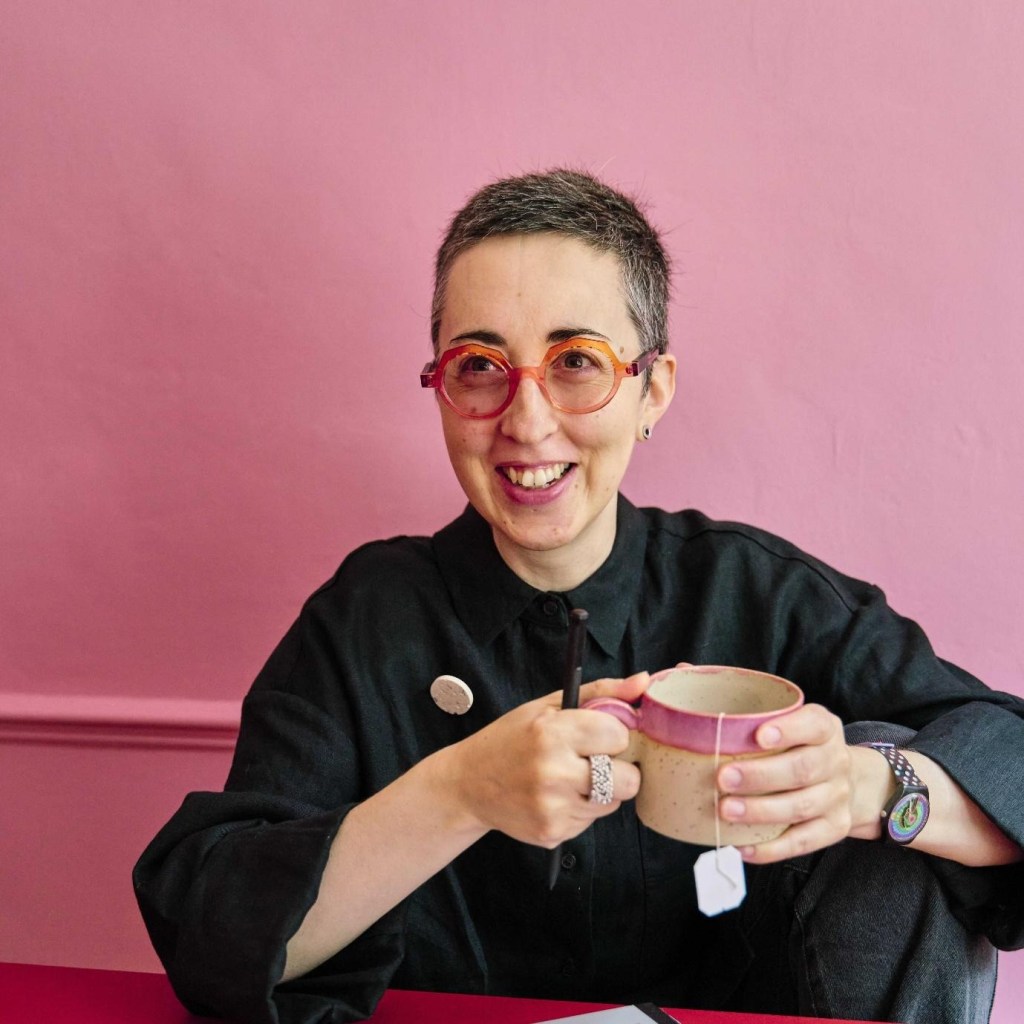
Hannah Breslin is an Irish, London-based educator, coach and consultant working at the intersection of neurodiversity and professional identity. Following fifteen years in UK higher education and late diagnoses of autism, ADHD, and dyscalculia, she left academia to found Coaching for Difference, supporting late-identified neurodivergent professionals and the organisations that employ them. She also writes about the messier, more honest parts of late discovery - identity, grief, and what it means to rebuild a working life on your own terms.

