TW: Eating disorder, sudden loss
I begin with one of my favourite quotes I found when I first connected to the Gifted communities and for the first time in my life felt seen, then mirrored. I hold it close in mind as I live out my life. It reminds me that there can be deep meaning even in a complex existence, when you open yourself up to nuance:
In my darkest night,
when the moon was covered
and I roamed through wreckage,
a nimbus-clouded voice
directed me:
“Live in the layers,
Not on the litter”
Original portion of quote by Stanley Kunitz
Gifted Mindfulness Collective (reshared portion above)
I came to Australia due to sheer luck, a leap of fate, a networking opportunity, a chance. But I presented as a half-drawn figure. Perhaps I was then. Behind an inconspicuous nod, a smile, a handshake, stood the unseen fuller picture, a then undiagnosed neurodivergent human, someone with a history of Anorexia Nervosa, a lot of self-esteem issues, self-doubt and great losses to come.
In this blog, I share my journey as a PhD student and Research Assistant navigating the pressures of academia alongside identity struggles and multiple forms of grief, including disenfranchised grief. This includes the loss of identities I once held: the identity tied to my PhD when I withdrew, my athletic identity I lost during my eating disorder, and discovering I was neurodivergent in my adulthood. I also endured the tragic and traumatic deaths of my partner, also an academic, from metastatic cancer within 4 months, and my sister, that same year, in a hit-and run accident, which led me to grapple with cumulative and complicated grief. I reflect on what helped me move forward and begin to find myself in a secondary integration, after profound loss, amidst a layered and complex existence.
The Beginning of the Journey
I first moved to Australia from overseas to work in academia. I studied abroad at an Australian university in my third year of my Honours and undergraduate degree. At this time, I was completing my degree back in the United States, my country of citizenship. While on study abroad, I made many networking connections here in Australia. The way the cards played out, upon completion of my degree the following year in the USA, I was asked to interview for a Research Assistant role with the university I studied at in Australia on study abroad. To my shock, after the interview, I was notified that I was the chosen applicant. Having fallen in love with Australia, it took me little contemplation before I swiftly agreed to make the move across the world. I was sponsored by the university on a visa which listed my position as one of the skilled ones the country needed. This visa allowed skilled workers with employer sponsorship to live and work in Australia. While I enjoyed my role, and was so grateful for this opportunity, the nature of this agreement meant that each year I was left questioning whether my position would still be deemed needed by the government and subsequently sponsored. After several years of luck of my role being one of the skilled ones on the list that the government needed, eventually the government no longer did. At this stage, I believed (and my supervisor to-be and past boss believed) I had the publications, experience, track record, and intelligence to pursue my own research and subsequent sponsorship through a PhD. I found a topic I was passionate in, that to this very day I’m still passionate about.
As a psychology major, with particular interest in existentialism and the psyche, I always have been fascinated by the dark side of emotions, identity, competing multiple identities, roles and demands. As a high-performing athlete myself, competing in marathons and long-distance triathlons, I realised that many I trained with also worked full-time, were parents, students, looking to sport for a sense of belonging, a feeling of mattering, and struggling to integrate all these identities and find their purpose and place in this world. I sought to explore that further.
What I did not realise was the immense pressure a PhD put on me, the expectations everyone around me held me to, that I held myself to, that I felt I could never live up to, placing me on this pedestal, with an ornament up above I probably could never reach.
Only now, knowing I am neurodivergent, I realise I also suffer from RSD (rejection sensitivity dysphoria), and more than someone neurotypical, struggle with criticism.
For me, criticism often feels synonymous with what I believe being shot by a gun would feel like. The pain is so severe at times that whatever self-esteem and confidence I had mustered seems to go out the window in seconds. This can trigger feelings of failure, rumination, replaying events, striving for perfection, and people-pleasing. It is hard for me to collect myself and get back up in comparison to someone without RSD. Now that I have a name for what I experience, it is easier for me to manage it, and as I’ve grown through experiences, I’ve built resilience over time.
Struggling with Illness
After moving to Australia, and even more so during my PhD, I struggled quite immensely with my Anorexia, not resurfacing, as it had been there since beginning my undergraduate degree, but impacting me to more critical levels, at times rendering me medically unstable and affecting my ability to lead a semi-normative life, certainly not a fulfilling one. Looking back, I now recognize that, as someone who is neurodivergent, transitions, especially major life changes, have always been challenging for me. Moving across the world, starting my real first job, in a completely new culture, while not knowing anyone tested me in ways I hadn’t anticipated, but perhaps should have.
The added pressure of the demands of a PhD only intensified my self-doubt and fear of failure, compounded by the rejection-sensitivity dysphoria (RSD) that I did not yet have a name for then. Despite always identifying with the dramatic, courageous and resilient spirit of my star sign, Leo, a lion, this journey forced me to confront parts of myself I had long tried to suppress. And, heck, when I look back, not only did I try to force those parts down, but the world did too. When I look back there are so many examples, just one being my experience in select, audition only choirs, getting a highly sought after spot, but even then, told to soften, blend, conform, squashing my vibrato a little more every year, once a roar, into a squeal. Perhaps, they taught me to turn the squashing inwards.
I was fortunate enough to be granted a competitive international scholarship when I applied for my PhD, which covered my tuition fees and provided a living stipend. This made the PhD financially possible. While this was a blessing, it meant I did not have the option of going part-time. Therefore, during hospital stints for medical rehabilitation, I hid, filled with shame behind hospital curtains, unable to appear on zoom during PhD meetings due to the embarrassment of unveiling the tube attached to my face providing me nourishment, or revealing where I was, amongst others in the surrounding four bed bays.
Loss and Leaving the PhD
In addition to the Anorexia, I also experienced two huge losses during this time. My partner, Anthony, was a postdoc in theoretical physics. We met through choir friends during my first year of my PhD while I was training for a half ironman event (long distance triathlon). Anthony played a huge role in some of my darkest days. He was my “carer” for many years of our relationship, bringing me coffees that would be cold by the time they reached me on the ward (but meant the world to me), and laying with me in my hospital beds for hours at a time, watching Netflix or playing Lego. Through Anthony, I saw firsthand the toll that a life in academia can take, the tireless struggle to advance, even for someone so brilliant. Anthony called me his “dark and stormy” with my stormy grey/blue/green eyes and often cat-like personality. And he saw me through my darkest storms yet couldn’t love me more, no matter how bleak that season. He reminded me endlessly that I was more than my achievements – that I was enough-more than enough – just as I was.
Six years into our relationship, he began experiencing back and then neck pain that was ignored, but eventually diagnosed as a broken back and neck (C3). To our shock, the cause was metastatic oesophageal cancer that had spread and weakened his bones. At first, he went into a spinal ward, as we feared he could become paralysed due his broken C3. Thankfully, after more investigations while on the spinal ward, his neck was found to be stable for him to come with a neck collar, a relief but still entirely life altering. Overnight, our roles reversed. Once my ‘carer’, always a gentle giant, a 6’4 frame complementing my petite 5’4 stature, I suddenly became his. Our lives transformed, adjusting to his broken neck and the reality of his life with terminal illness and disability. Our shared bed, for instance, a symbol of our togetherness, overnight, became two separate beds-his motor-operated to accommodate his broken neck. I was trained to change his neck Styrofoam pads and collar, we were connected with a palliative care team shortly after, and he began rounds of radiation and chemotherapy, holding hope this would extend his life, if not save him. Despite our best efforts, Anthony passed away within four months.
Just six months later, my sister Cara passed away, killed by a hit and run driver.
These devastating losses shattered me. It took years for me to even begin processing Anthony’s death. Throughout this time, I even received comments suggesting I was grieving “incorrectly”. The first year post-his death is a blur I can barely remember. When Cara died, I was too physically and mentally weak to attend the funeral. It wasn’t until I stood at her grave two years later, that I began to process her loss. There are now scholarships established in memory of Anthony and Cara.
With that, came more loss – we call this compounded grief – when multiple losses pile upon each other in a short period. After discovering I am neurodivergent, I was deeply impacted, realising that I believe Cara was too. I wondered if her life, which was quite difficult in her later years, would have been easier had she known, and had we known and accepted her even with this knowledge of who she really was. This new understanding shifted the way I connected with her memory. Talents and gifts I hadn’t known I possessed began to emerge – truly startling me, including creative writing. Cara was always the writer, not me. This added to a sense of instability and turbulence. Yet as I went through whatever this process was, I began to find my own voice and understanding of myself – I found myself connecting to the Gifted community – I was mirrored for the first time in my life which gave me hope and an increased drive to overcome. My voice came out through poetic expression, recipe curation and photography, Pilates, and my old love of singing. Through all of this, for the first time I discovered awe on the other side of profound pain. I began to embrace the vibrato I’d always had (my roar) rather than pushing it down.
However, alongside this processing, pain, and messy personal growth, there was still the weight of my past identities and the one tied to my PhD. It wasn’t until a year after Cara and Anthony’s deaths that I finally let it go. Even then, people told me I had disappointed them. I felt like a failure. This was part of the reason it took me so long to withdraw from my degree.
To this day my greatest pride still comes from my recent lead author publication stemming from the qualitative study of my PhD , along with my other co-authorships. And to this day, I miss my PhD, the research I did, the fact it felt like mine and something I owned, something that belonged to me. I often reflect on how different my life turned out to what I thought it would, in every facet. However, I still live with a great sense of pride and astonishment in who I’ve become. I don’t know if I would have had this positive disintegration (more on this theory can be found here) without the story that unfolded.
The Grief that Follows
What people don’t often talk about is the grief that lingers long after the initial loss. The kind that comes with the unravelling, the quiet mourning of a life that no longer fits, the grief of losing multiple identities, of trying to piece together who you are in its absence.
The grief of discovering I am neurodivergent in my mid-30s, added to the layers of grief- a grief of what my life could have been like or would have been had we known. The grief of what role all of this had to play in my other mental health concerns, my relationships, my career.
What I do know is that I found a poem recently from one of my first eating disorder medical admissions where I wrote about being barely formed and broken, about living my life as a “con artist, and that one day I’d just be the artist”. Last year, I reflected, and wrote: “2025. To the year I became the artist at the eye of a storm.”
And this isn’t to say that I’m healed, that I no longer struggle, that my career path has been nothing short of a “spiral” one (what I taught my HRM students about) rather than a linear one.. But it’s to say that finally, even without the PhD, I realised this past year, that I somehow integrated aspects of my fragmented parts, that despite the constant wave of unravelling, disintegration, and chaos, I had done some of the work of healing. And while I am inherently the same, with knowledge and acceptance (to some degree albeit) of who I am, through healing, through curiosity, exploration, play, daring to take chances and jump, I realise I am also someone entirely new.
Conclusion – Finding my Roar and Letting it be heard: “Living in the layers not the litter”
I look back at my PhD, my partner, also an academic, who struggled to advance through the academic hierarchy after his two post doctorates, and fell into depression, and I think, “Wow, why there isn’t more support, or language to be open, honest, supported in this incredibly competitive cut-throat space of academia?” I look back at all the help he provided me with in my quantitative studies, and motivating me to try and write, mixing things up by encouraging us to sit side by side in coffee shops, but more importantly, I look back at the eyes he saw me through; that that man loved me more than I could ever love myself. He constantly reminded me of my worth beyond that of a degree, of a publication, of my inherent worth for simply existing, for being my quirky self.
I also look back at my sister who also was neurodivergent, potentially 2E or multi-exceptional as we suspect I am, who died partially due to mental health issues, and think, “Wow, if we had known then, we could have helped her, we could have gotten this incredibly bright, talented human being the support they needed to ‘make it’, perhaps even thrive.
Given my sister was a writer only recently discovered my love of creative writing, like her, I leave you with a poem:
“Something Unspoken”
Behind her and in front of her is something unspoken
We all are here together under this one roof called academia
But no one wants to say it. We know we are all struggling.
We can feel the tension simmering with smoke, smouldering day in and out
We refuse to be put out, but at what cost?
We nod and say hello, sit ourselves at our desks, and get cracking
“Head down, bum up they say”
Our half- drawn shadows move in and out with the come of dawn and with the setting of dusk
But we all know we are more than scribbled figures held against an ORCID number, fading into the margins
Fully formed truth is inherent within each of us screaming to be let out and shared
Imagine if we did?
perhaps we could all become our own artists at the eye of the storm
Each stroke more deliberate
moving with synchronicity of the academics around us, navigating their own storms
never alone
overlapping strokes of paint guiding us through these rocky tides of unknowns, uncertainty, angst and pressure
an unspoken silence of denial amidst many storms transforms into a no-words needed tapestry of togetherness
Artificial Intelligence (AI) Statement
No Artificial Intelligence tools or technologies were used in developing and writing this blog.
Biography
Alana Dorris is a research administrative officer. She is multi-exceptional, a psychology lover and enthusiast, creative writer, avid Pilates-goer, lover of fashion, cafes, coffee and matcha. She holds dual citizenship, American and Australian. She has worked in research support, as a course facilitator and as a researcher for over 13 years across Australian universities. Her main research interests focus on life-role paradoxes with particular focus on guilt and contradiction, identity, organisational wellbeing, employee sport participation and work performance, career transitions, organisational culture and climate, emotional regulation, emotions at work, and abusive supervision.
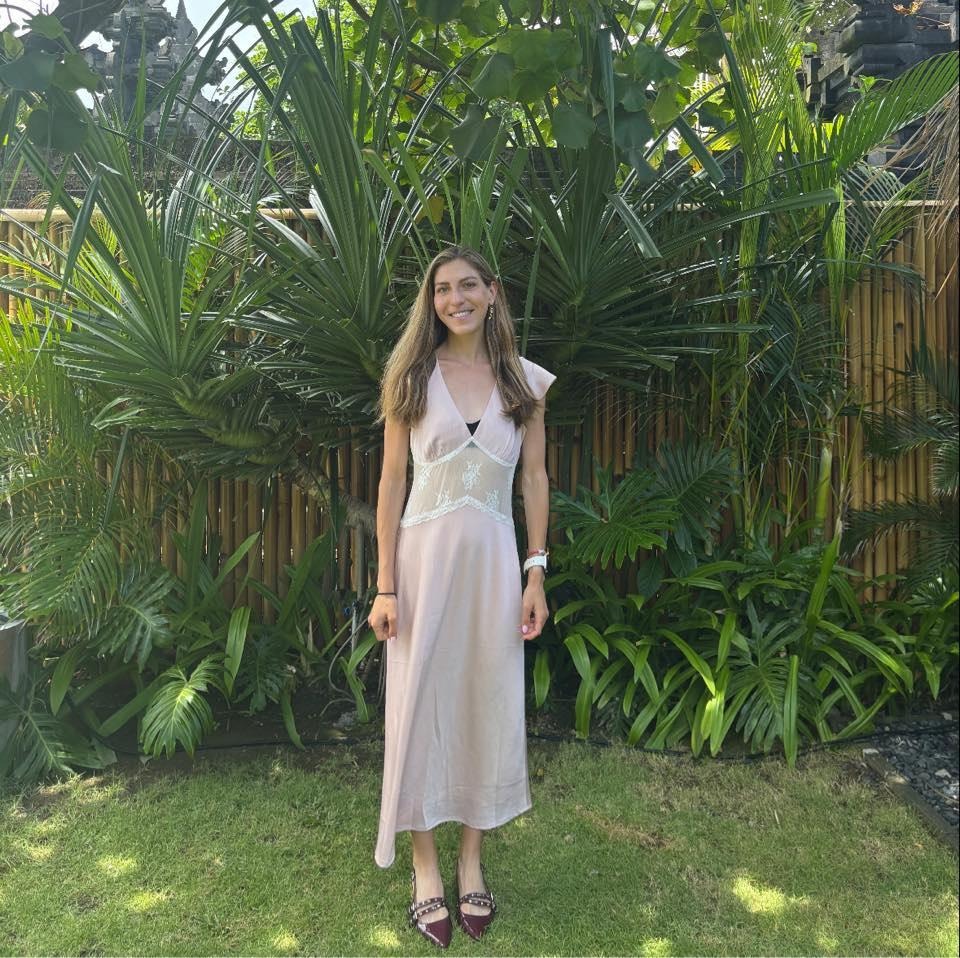
Alana during a Christmas in Indonesia, December, 2025.
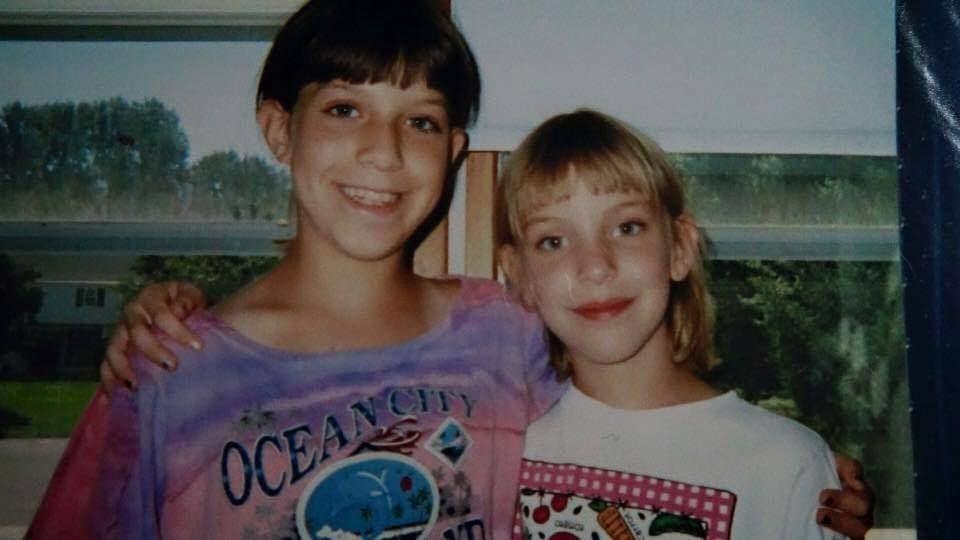
A photo from the late 1990s, in the United States, of Alana Dorris and her sister, Cara Dorris.
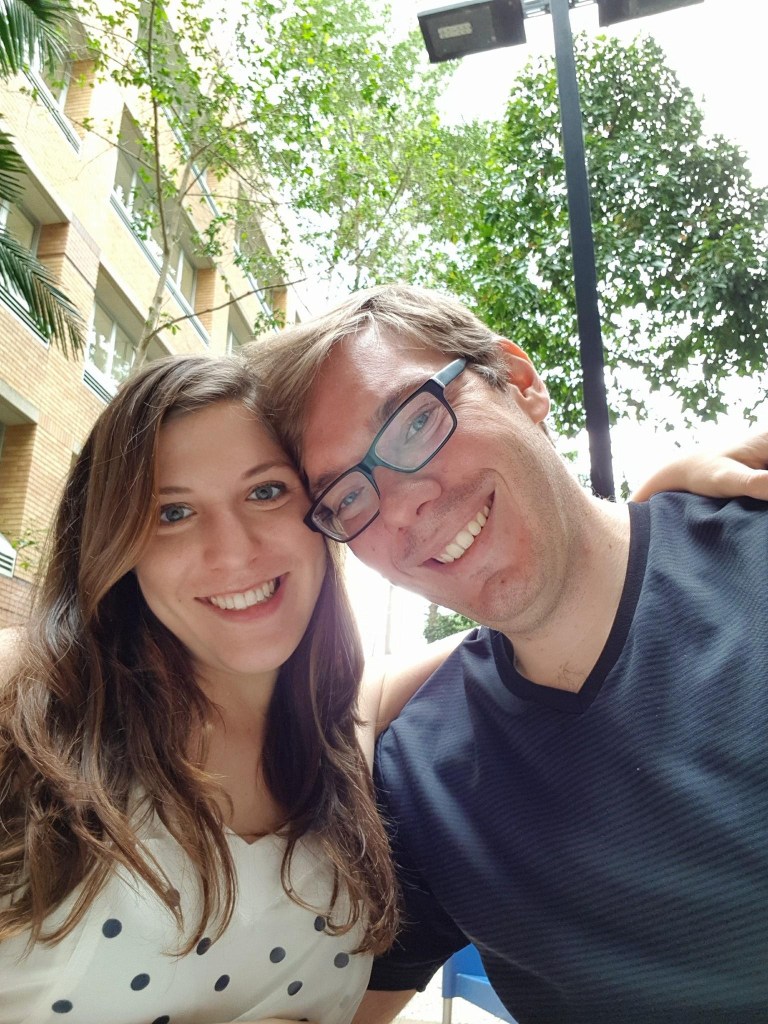
A photo of Alana Dorris and her late partner, Anthony Jacko, moments before her confirmation in 2017.
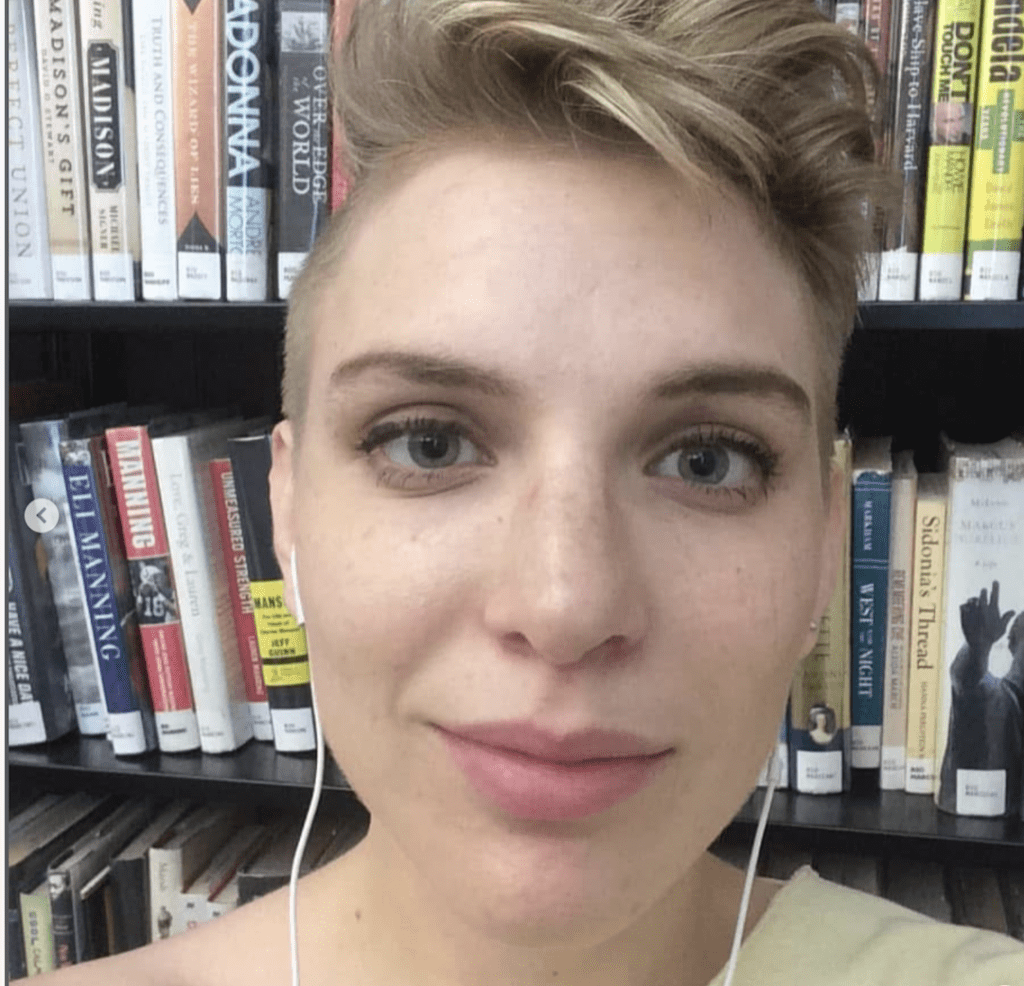
A photo of Cara Dorris the year before she died.
Torrent roar of the lion
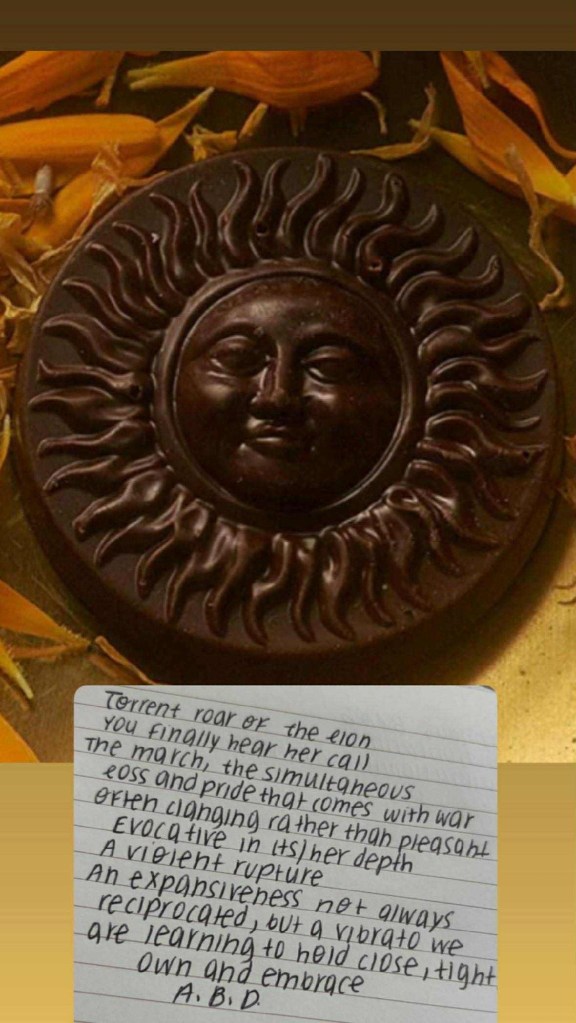
Image above poem: Loco Love Chuncho Drinking Cacao Sun Disc (used with permission)

