When I was 19, I was diagnosed with a lifelong autoimmune condition and although it wouldn’t kill me, it still felt as though my life was over. I gave up my place at university, quit my part time job, and retreated to my bed. All of my ambitions suddenly felt like unrealistic dreams, and I began grieving for a life which had been cruelly snatched away.
Ever since I was little, I have been ambitious and before I became ill, I had mapped out how I was going to become an international aid worker travelling the world helping people. I had a five and ten year plan for not just my career but my personal life too. I remember sitting on my bed after my diagnosis feeling almost empty; the five and ten year plan went in the bin and I just sat there unable to think of anything – I was numb. It felt impossible to see any hope or joy in my future when everything I ever wanted became unreachable. I didn’t leave my room for three months.
Becoming a distance learner
I have always loved learning. I even used to set myself homework if I didn’t feel school had given me enough. So, after my initial stretch of mourning after my diagnosis I started to see the possibility of new dreams and I enrolled on a foundation degree (a foundation degree is the equivalent of the first two years of a bachelor’s degree but with an emphasis on vocational skills) at my local college. It was a part-time course, and I could live at home where my parents could look after me, meaning I had a standing chance of managing it all. It was hard going at times, but I loved it and learnt so much. I even won the student of the year award when I graduated and couldn’t believe how far I had come. A mere two years earlier, I thought my life would be nothing but watching TV in bed, and even getting up to eat felt like an endurance race. Now here I was walking across the stage at graduation feeling like I might just be able to have dreams after all.
The snag came when I wanted to take my studies further. There was a limit to what was available at my local college and living in a rural county meant higher education options were limited. Once again, the feelings of despair and hopelessness returned. I wondered if I would have to resign myself to a life I was not content with because I was disabled. Then I stumbled across distance learning. I must have known that this existed, but it had never crossed my mind as an option. I was dubious as to how it would actually work and if it was as good as the ‘real’ thing. However, I took a gamble and enrolled to study an MSc in Disability Studies. It was a little clunky where recordings of lectures sometimes glitched and not all of the readings would download but overall, it made studying accessible to me and really expanded my options. I think I became a little addicted and I now have six degrees including my PhD.
Distance learning to the rescue once more
During all of this studying, I came to realise that education was my vocation and I trained to be a teacher in further and higher education. By this time, I had learnt to manage my disability and was able to function in a fairly ‘normal’ manner. Therefore, I got a job at a bricks and mortar university and loved working with students. However, as is often the case with my kind of condition, a flare up changed everything once more. Once again, I was restricted to my home and despondent about my future. I felt that life had plotted to derail me again and I felt useless. When your body fails you repeatedly, it is incredibly hard to see the point in having ambitions or goals when they could so easily be taken from you. There is a lack of control over what the future might look like and that is a scary place to be. I did not know if this was it for me and if it was, I knew I could never make peace with a life of staying at home and being looked after by others. Again, I felt an overwhelming sense of hopelessness. That was until distance learning came to the rescue once more.
When I used to think of tutors and lecturers on distance learning courses, I assumed they were all at a physical university teaching face-to-face and then offering some of this online from their lecture halls and offices. I didn’t realise that you could actually be a distance learning tutor or lecturer from the comfort of home. It was one of those brief comments in passing by an ex-colleague during a totally unrelated conversation when I suddenly realised the truth. And it turned out to be the answer I was looking for. I started small with just one module but soon built it up to become a full-time associate lecturer at one of the biggest online universities in the world.
I love my job and not just because teaching is my vocation but because it allows me to reach my potential. The autonomy I have means I can pace myself, I can take breaks, and I can work in an environment carefully crafted to meet my unpredictable needs. Whilst I could probably teach face to face now, it wouldn’t be the best version of me. Simple acts like travelling to work might leave me too tired to be the dynamic educator I try to be.
Is distance learning truly inclusive?
This all sounds like wonderful news (and overall, I would say it is for me) but it is important to also be realistic. Academia is still rife with ableism and distance learning does not allow me to escape this. Although some progress has been made, academia is still associated with the privileged elite. If we look at the stereotypical academic there will be a very limited range of characteristics on display. This lack of representation can make disclosure a nerve wrecking and risky business.
Disability is often stereotyped where disabled people are stigmatised as lazy and incompetent. Therefore, even more is expected in order to prove their worth and place in academia. Arguably the move to a more market-orientated and neoliberal model of higher education just makes this worse. There is a linear view of success with accolades for those who overwork and a normalised culture where only those who compromise their lives outside of university are taken seriously.
For those with disabilities like mine, this is not a sustainable way to work. ‘Pushing through’ in order to meet this expectation would only strive to make me more ill. This is indeed what has happened to me in the past. I once started a job where during my first week a colleague talked about my condition as being one of those made-up ones that’s just an excuse for being lazy. They didn’t know I had that condition but that’s no excuse. The knowledge that this view existed meant I did not disclose my disability for self-preservation. I didn’t want to be seen as lazy; I didn’t want people judging me behind my back, so I forwent the adjustments I needed and burnt out. I had to compromise my own wellbeing; this burnout was not just physical but mental and emotional too. I had spent years going against all the things I knew I needed to not just be physically healthy but mentally healthy too.
Despite this being over 12 years ago the memory still haunts me and shapes how I feel about disclosure.
Conclusion
Now I am trying to be more open with the hope that my small story will help represent others too. I feel incredibly lucky to be doing the job I do at the place I do it. Not only does it allow me to reach my potential as an educator, but I also come across many students who find themselves in similar positions to 19-year-old me. And I am so proud to work for an institution which provides them with the opportunity to study and reach their potentials too.
The increase in online learning is starting to make higher education more accessible to those of us who can’t access it in person. However, there is still more work to be done in all of higher education to stamp out ableism and make it a place of inclusion and diversity. Not fully embracing disabled academics is missing a trick; it discounts all of their valuable expertise, skills and lived experiences. I hope you will join me in championing an education where everyone can succeed without having to hide who they are or compromise their own wellbeing.
Artificial Intelligence (AI) Statement
Copilot was used to help generate some ideas for the blog title.
Biography
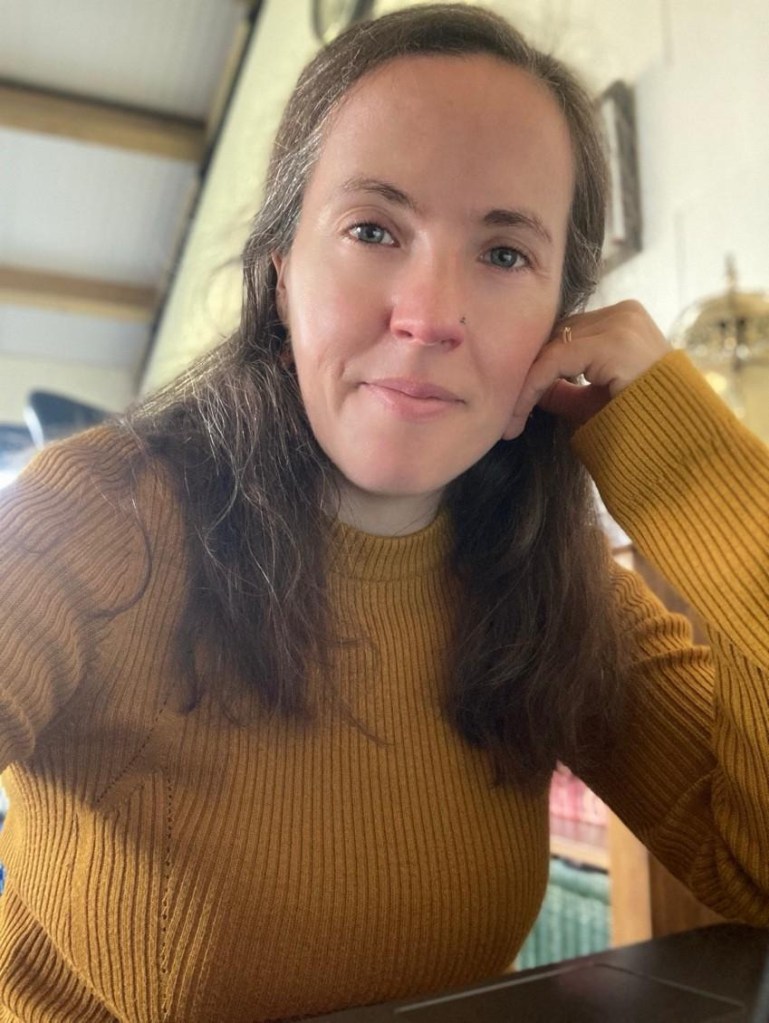
Dr Kim Collett is a disabled and neurodivergent associate lecturer and EDI champion. Her PhD focuses on lived experiences of inclusion in the classroom inspired by her own experiences as a pupil with SEND. More recently she focuses on raising the visibility of marginalised academics and students as well as how to reshape thinking on what inclusive education is.

This blog is kindly sponsored by G-Research

