When I first started working as a criminologist, my mom encouraged me to not disclose my disability to my colleagues or any potential employer. At this time in my life, I was 19 and I had suffered from Chronic Migraines for 5 years. This was advice I ultimately decided to ignore. While the advice came from a place of love, experiencing chronic pain is a core part of who I am and not something I can change. Pain is part of my life every day. Now, at 26, I have suffered from chronic pain for over a decade and have developed four other ongoing health conditions.
Since working in academia, I have had a variety of experiences and responses related to my condition. This has included working with wonderfully supportive people on projects that have impacted state and national policy, as well as experiences of ableism. Balancing working in academia, completing my undergraduate and PhD studies, and managing my ongoing medical conditions has been challenging. Despite these challenges, working in Alcohol and Other Drug (AOD) research has helped me understand my own medical experiences better, and reflecting on my lived experience of disability and addiction has fundamentally altered my own research practice. Through this blog post, I hope to share some of the experiences and lessons I have learnt as a person living with disability working in academia and discuss the value of incorporating lived and living experiences into research practice.
Studying and Working in Academia with Chronic Pain
Studying and working in academia with chronic pain is an experience I can only describe as challenging. For the first few years that I worked in research, I felt that I always had to “prove” myself: just because I was sick, it didn’t mean I couldn’t also be a high-performing student or researcher. Having an invisible illness has its own challenges: once others learnt of my disability, being perceived as “lazy” and told that I “don’t look sick” was not uncommon. I feel like I have to go above and beyond to prove my worth and capability to new colleagues before I inevitably need to take time off for a migraine episode or to get my infusion administered. Not knowing how a new coworker would react to learning I was disabled has always been a very stressful and anxiety inducing experience.
I also know I can be unnecessarily hard on myself. With a condition like mine where it impact on my abilities changes day-to-day, it is hard to not feel frustrated on the bad days when the day before I may have been fine, especially when I was younger. Managing my mental health with chronic pain and my work is an ongoing process: I am learning to be gentler with myself and recognising that it is okay that my 100% one day looks very different to the next. Balancing work with recovery and being kind to myself when I need to move my workload around is something I am still learning.
As I have gotten a bit older and gained more experience, I feel like I am in a place where I can push back and feel more comfortable advocating for myself. Personally, I have found that most people within the social sciences tend to be a little more progressive in their attitudes towards disability as compared to other disciplines, and this has made things easier. Yet, there are still people who try to argue that I simply need to manage my time better or work just a bit harder. I understand that often these comments come from a place of good faith; most people don’t mean any harm and simply don’t understand the ongoing impact of disability on people’s working lives. However, I find that I have to constantly educate others on the realities of living and working with disability. This ongoing advocating for myself and educating others is something that can be exhausting and frustrating, but as someone who doesn’t view my disability as a disadvantage, I make sure I talk openly and widely about its impacts on my life.
This doesn’t mean these experiences with my colleagues have stopped. Most recently, in 2025, I needed to leave work early one day after a quite intense migraine continued to develop throughout the day. After announcing I needed to leave, I was told by a colleague that in the future I should just bring my migraine medication to work with me so I could continue to work. Needless to say, I was not particularly impressed by this comment. It was incredibly condescending, and being told how to manage a condition I have had for over a decade is generally not something I take kindly to. At this point, I had been working all morning with a relatively severe migraine and had taken multiple doses of my painkillers while at work and really needed to go home. I had previously spoken to my colleague about my health, so they were aware that I had a disability.
I understand these comments often come from a place of misunderstanding, and my colleague quickly backtracked their comments after I explained that I had taken all the medication I had with me at work, and I really did need to go home. I have implemented a one-strike rule with how I approach comments made about my condition by my colleagues: I will correct and educate them nicely once, and my next correction will be a lot less nice. Fortunately, I rarely need to correct someone more than once.
How Living Experience of Disability has Shaped my Research Practice
In the last seven years, my living experience as a person with a disability has fundamentally influenced my practice as a qualitative researcher. The way I have viewed my disability has changed a lot over the last decade: it has moved from being something I thought of as a disadvantage (based on internalized ableism) to something I recognize can be a strength. My living experience of disability and experiences of ableism (both in academia and my life more broadly), as well as grappling with the ongoing management of taking prescription medications that are addictive, has helped me understand how I want people to speak to me about these complex topics and navigate these conversations in a non-stigmatizing way.
When I first started working in the AOD research space, the learning curve was steep—but not in the ways I expected. One of the first projects I worked on involved interviewing people who use drugs, including people who inject drugs. What I quickly realised is that I had similar experiences to some of the people I was interviewing. The difference was that I was able to access my medications through prescription, while they were using illicit substances. Many of us were treating pain and trauma, except mine was a physical medical condition, while their use of illicit substances was often related to mental health or social circumstances.
As time went on working in AOD research and interviewing people who use drugs, my understanding of addiction, overdoses, and harm reduction increased. I realised that I had previously been addicted to some of my prescription medications as a teenager, and had experienced three overdoses in the past that I was previously unaware of. This was a rather shocking realization, to say the least. I realized that, in many ways, my participants’ lives mirrored some of my own experiences.
Working in AOD research became a simultaneously anger inducing and healing experience. Suddenly, I had the language to describe by experiences, and the knowledge to understand the context in which these experiences occurred. I could finally understand my own medical trauma, and that the things I had experienced were preventable.
I do truly believe that lived and/or living experience offers its own kind of knowledge that is incredibly valuable when working with vulnerable populations. My lived experience of disability, among others, has fundamentally shaped my research practice. It has altered how I approach my participants, how I approach rapport building, and the questions I ask and how I ask them during the interview process.
Although I knew my lived experienced was important, it was only recently that I realised the significance of this in the context of interviewing. When conducting some interviews in late 2024, I had a number of people comment on how easy it was to talk to me during the interview and how I made them feel comfortable in answering their questions. One particular comment that stuck out came from a middle-aged woman who was injecting methamphetamine when she said, “I have never spoken about some of these things before, but you made me feel safe enough to talk about them”.
I think sometimes we forget as academics that we are not just working with facts, figures and words on a page. These are real people, and they are trusting us with their stories. If we don’t approach research in the right way, we will end up doing more harm than good. My experience of disability has not only made me a more compassionate researcher, but by incorporating my lived experience into my research practice, I had learnt how to create an environment where my participants feel comfortable sharing information with me, leading to richer insights from the interview process.
Conclusion
My experiences with chronic pain have fundamentally shaped my journey through academia. While working in AOD research helped me understand my own experiences of chronic pain better, my experiences of chronic pain have also profoundly shaped how I approach research and my interactions with participants. The knowledge that comes from our lived and/or living experiences as researchers can be incredibly valuable. We so often as researchers overlook our own experiences in the effort to be unbiased and impartial, when in reality we can incorporate these experiences into our research practices to make us better researchers. Good research should be based on compassion, especially within the social sciences and when focusing on “controversial” topics such as people using alcohol and other drugs. While my disability has presented challenges every day while working, I also know that I am a better researcher because of how I have incorporated my lived experience into my research practice.
In closing, I have a couple of pieces of advice I would like to share. Firstly, for anyone reading this who does not have a disability, please educate yourselves on experiences of disability and consider the value we may bring. This goes for disability research, but also all types of lived and/or living experience research. We have a responsibility as academics to ensure we don’t cause harm and engage with our participants in an appropriate way, and incorporating lived and/or living experiences is one way to do this. And for those who do have a disability: Advocate for yourself and reflect on your lived experience. While I know advocating for yourself can be exhausting, nothing will change if we don’t push for that change to happen. Advocate for when you need to rest and flexibility, but also advocate for when you know you might be able to offer insight that other people don’t have. I encourage you to reflect on the knowledge you have gained from your experiences, how this is different from your academic knowledge, and how this knowledge could be valuable in your own research practice.
For myself at least, living with disability is challenging and ever-changing. While my condition affects me every day, I am certainly not only defined by my condition. Living with chronic pain has forced me to learn how to be flexible and compassionate with myself, but has also taught me how to advocate for myself across all aspects of my life. It has taught me how to be honest, vulnerable and authentic with others. When I reflect back on my life, chronic pain is one of the greatest challenges I have experienced, but it has also moulded me into the person I am today.
Artificial Intelligence (AI) Statement
No Artificial Intelligence tools or technologies were used in developing and writing this blog.
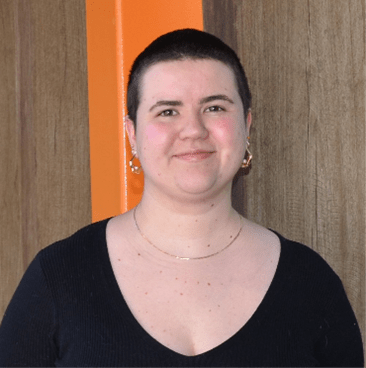
Tayla Barber is a criminologist specialising in research evaluating policy and practice, with specific subject matter knowledge in substance use and terrorism research. She has worked as a research officer and is currently undertaking her PhD at the University of Queensland. Tayla has extensive experience working with vulnerable populations, including with individuals involved in the justice system, people who use drugs, young people, and individuals experiencing homeless or mental illness. Tayla is passionate about harm-reduction, evidence-based policy, and working on evaluations which aim to improve the lives of individuals involved in the justice system.

