
TW: Suicide Ideation
A few years ago, the faculty which I am a member of had a social event to celebrate the end of semester. Drinks, scrumptious food, and a wonderful venue coincided with a wider festival of light operating in the city around the campus grounds. Throughout the evening, colleagues mingled in a convivial setting with music and light displays. And yet, whilst I was physically present, I was also distant. I could talk to people, but all the while I felt a tightening in my chest and an internal distance between me and my colleagues that was entirely of my own making. I admire my colleagues both as people and for what they have achieved professionally. In many cases I have known them for years. And yet, the idea of starting a conversation scared me and I felt a pit in my stomach as I looked around. What is my future and why am I here? Why am I so anxious?
My Own Anxiety
For as long as I can remember I have struggled with anxiety, depression, and feelings of alienation, which has only relatively recently been diagnosed. In recent years the effects of my condition have manifested itself in medical episodes and at different times the stress had me considering suicide.
Anxiety is often an embedded, hidden part of academic life. Over the years, it has become apparent that my anxiety has dovetailed in many ways with my work as an academic. For example, I can recall teaching on a high-profile subject when I was an early career researcher and staying up past midnight on the night before student feedback surveys were announced at 12:01am, waiting, with my heart racing and chest tightening. Would the student feedback scores be good enough to satisfy people throughout the university? Further, like many readers of this blog, I started my academic career as a research assistant, before taking on contract work after graduation. My own experience with contract and casual employment provided me with wonderful opportunities to expand my teaching skills and work on a wide range of stimulating projects with interesting and knowledgeable people. However, the challenge came from the fact that I often did not have the time to also pursue my own research interests post-PhD. This push-pull added significant pressure. I also experienced the effects of multiple short-term contracts and the stress that is caused when you do not necessarily know how much money you will have at the end of every pay-period.
As I have become ‘more secure’ in academia I have noticed that rather than going away, my anxiety has evolved. I have often felt alienated from my colleagues due to my own introverted nature and inability to make friends, which began as far back as high school. It has caused me to want to avoid settings where I might be around other people. Such a response is the product of the fight-or-flight responses that characterise anxiety disorders. It has also caused me to often feel out of control with respect to my future. I can recall leaving functions overwhelmed, occasionally in tears and not able to understand why I could not chart an equivalent career trajectory as many of my colleagues. In doing so, I now know that I was falling into a trap that is typical of many in academia; specifically, I was focusing on the competitive drive to produce outcomes at the expense of a more rounded experience of academic life, and the constant strive for ‘perfectionism’.
As I reflect on my career, I realise that my constant desire to publish was a way of addressing my own perceived inadequacy in social networking. Over the last decade I have been proud of my various publications and the associated increase in my citation score. And yet, with a few notable exceptions, I do not feel more complete when a paper is published. Rather, I often feel empty as my worth as an academic often seems tied to a sheet of paper. I feel embarrassed to share my successes – I feel lost and immediately start to wonder how I am progressing with the next paper, which leaves little time for reflection.
Learning to Cope and Speaking Up
Universities are increasingly recognising the need to support the mental health of academics through initiatives such as Employee Assistance Programs, the creation of community gardens, staff and HDR wellness workshops, exercise programs, events around R U Ok? Day and peer support/mentoring programs. However, to-date one of the challenges has been getting people to sign up to such initiatives. From my own experience, I am unlikely to attend such events if there is the possibility that it could shine a light on my own mental health issues when I am not ready to talk about or even acknowledge these. It’s important people are given space to discuss mental health concerns, but only when they are ready and not necessarily in a public forum.
When I reflect on where I have come to in my own recovery from mental health issues, I am proud that I have been able to write about my experiences in a public forum. I have also been happy that I have sometimes been able to share some of my struggles with anxiety and depression with my students, while getting them to reflect on what it will mean to be a more effective leader in business. At the same time, however, I know that the stigma associated with mental health issues in academia is real – with the potential to curtail a person’s chances for promotion and advancement – and it was only relatively recently that I was able to start talking about it. I know that some people will inevitably look at this blog, which I have attached my name to and judge me negatively, but c’est la vie (such is life).
From a medical perspective the two main ways of managing anxiety are through either psychotherapy treatments such as cognitive-behavioural therapy or by taking anti-anxiety medications. As I have engaged with different medications, I have felt my own situation improve. However, I have also realised that no drug will ever be a ‘silver bullet’; it is not as if we can click our fingers and anxiety disappears, so long as we take our medication. A big part of recovering is putting yourself in a position to succeed. From my perspective, this can mean patting myself on the back when I have had a small win; for example, engaging with people in a public setting. It can also come from having the confidence to realise that every person we meet is either facing or has faced their own challenges. Whether it is a physical or cognitive disability, or something in our upbringing that has limited our opportunities, or our mental health; these challenges are part of us. And yet, while these challenges are part of us, they don’t define us. When I reflect on individuals who I admire in academia (and in society more broadly for that matter) one of the common characteristics that they often have is an ability to own the challenges they have been presented with in life. I recognise that this is my challenge as an academic; to acknowledge the challenges I have been faced with and to use my experiences to shift the needle ever so slightly on mental health.
However, I have also realised that more needs to be done to encourage academic communities to discuss their own mental health in the same way that we discuss physical health issues. Business academics, such as I, are not afraid to discuss the mental and other health challenges experienced by other stakeholders in business. Such discussions are important for the development of organisational processes that can result in more healthy work environments. And yet, we tend to ignore the possibility that we are ourselves are sometimes facing the same health challenges. More than this, some academics go as far as to become combative with other members of the academy, allowing their desire to ‘win’ a debate (whatever that means) to override the potentially equally important consideration as to how our words might negatively impact on our colleagues. Overall, we need to truly prioritise mental health in universities and do more to support academics’ wellbeing.
Conclusion
When I reflect on the last few years, which was the period when my mental health challenges became particularly acute, there are several key lessons. Overall, what has given me my sense of purpose is the willingness of the academy and my own institution to support my interest in exploring niche topics that can make a genuine contribution to the body of knowledge, whilst also helping me build resilience and a sense of my own well-being.
Additionally, I have come to realise that there is no such thing as an archetypal academic. Working in a business faculty I am, of course, still interested in mainstream management concepts such as sustainability, organisational behaviours, business ethics and leadership that I have researched for years. Such topics are relevant for my teaching and can more easily aligned to targeting competitive research grants and the other tasks of a twenty-first century academic. However, what I am now more interested in is researching the practices of the academy, topics that allow me to explore my own sense of self in the context of hopefully providing practical suggestions to my colleagues to inform better professional practice. To be successful in this regard requires the support of one’s colleagues, which I received in abundance when I have written on topics including mental health, domestic violence and the links between my own religious beliefs and my work as an academic.
When I have received feedback on such topics I have been characterised as brave for writing them. However, from my perspective, the courage in these papers was not my decision to write them. Rather, it was from the colleagues who anonymously reviewed the papers and those that have subsequently recognised their value and emailed me to congratulate me for writing them. In doing so they have given me the support needed, which I will be forever grateful for, to not only begin to address my own mental health challenges but also the courage to say that perhaps I do have an academic voice.
No Artificial Intelligence tools or technologies were used in developing and writing this blog.
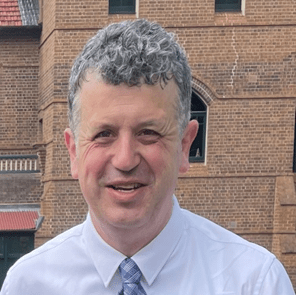
Stephen Schweinsberg is a senior lecturer in the Business School at the University of Technology, Sydney. His research interests include social sustainability, business ethics, and academic pedagogy and practice. Whether it is in relation to his students or colleagues, Stephen is passionate about encouraging people to critically reflect on their own positions and to take a stand for better interpersonal practice (he is a signatory of the Scholar Mindset Restart Pledge). He is proud to be the father of three wonderful boys, two cats and two dogs, as well as a husband to a beautiful wife who is his constant inspiration.

This blog is kindly sponsored by G-Research.

