
This may cut against the grain, but after three decades in the public and private sectors, returning to academia for a PhD feels less like leaving the real world and more like a reckoning, and, unexpectedly, like coming home.
I want to start there, because it matters. Having recently completed my first year, I recognise I’m still very early in the journey. Still finding my feet, at times firing on all cylinders, other times fumbling along, asking inane questions (much to the vexation of my esteemed supervisors) as I continue to learn how this world works. Yet despite the unrelenting pile of papers to parse, the intellectual gymnastics, and the imposter syndrome diatribe murmuring in the background, I’m grateful to be here because it’s the ideal environment for someone who’s constantly curious and ambitious.
Still, at the same time, I’ve become gradually aware of something else: a familiar tension in my body. A low-level alertness. A sense of bracing for ‘something’, not from looming lectures or supervision meetings, but for something primal from earlier chapters of my life. And that’s surprised me.
Over a 35-year career, I’ve moved through several very different worlds. I began in the military, spent two decades in corporate environments such as Telstra, News Corp, and Clemenger, went on to build and run startups, and now find myself back in a university setting as an ingénue PhD researcher. Each transition demanded adjustment. Each carried its own pressures.
But this time around is different in an unexpected way.
Not because academia is necessarily “harder” than previous environments, it is and isn’t. What has caught me off guard is how subtly it recreated some of the same internal stress patterns I associate with previous high-pressure work, yet without the obvious markers that usually tell you when you’re under ‘under the gun’, so to speak. Stress does not need to be loud, visible, or dangerous to be real.
There are no warning sirens here. No clear moment when you’re told to stand down.
Familiar Feelings in an Unfamiliar Place
If there’s one thing I know intimately, it’s stress. It wears many disguises, but the body doesn’t distinguish between them. Whether triggered by physical danger, prolonged uncertainty, or the quiet pressure of evaluation, stress activates the same psychological and physiological systems. I know this because I’ve lived it at both extremes. My nervous system makes no distinction between the stress I endured in the military and the stress I feel staring at a blank page and a blinking cursor in academia. Beyond lived experience, I bring technical insight: my last startup developed groundbreaking technology to detect stress through bioinformatic data, and that very same technology now shows me how ambiguity, cognitive load, and sustained vigilance register in the body as clearly as overt threat. This isn’t metaphor: it’s measurable, repeatable, and deeply human.
In the military, stress was overt and expected, just the cost of doing one of the most demanding jobs on the planet. You knew when you were in a high-risk environment. There were briefings, structures, hierarchies, missions, and (importantly) rituals for coming back down afterwards. Even when things went wrong, the context was clear. Similarly, in the private sector, stress was there but legible. Targets, deadlines, performance reviews. You might not always agree with the system, but you understood the rules of the game. But in academia the stress feels opaquer – I’d suggest insidious.
At a theoretical level, the expectations are clear from the get-go. Milestones are laid out, progress is discussed, debated, and tracked fortnightly, and for the longest while you can’t help but wonder if any real progress is being made. There’s always more to read, more to refine, more to justify. Feedback can take weeks or months, primarily driven by seasoned academics having too much on their plates to give your fragile ego the succour it desperately needs, and when it arrives it can feel both deeply personal and strangely abstract at the same time. What I noticed wasn’t that I was overwhelmed, it was that my mind didn’t seem to know when it was allowed to take a breath.
I’d finish a solid day of work, look at the cornucopia of (hopefully) well-crafted words and thoughts, yet feel slightly on edge. Not anxious exactly, just a little closer to being on ‘high alert’ than I could ever have expected. As if something important might be about to happen, or be missed, or be judged poorly. It took me a while to realise that this sensation was familiar. It was hypervigilance.
When Old Systems Light Up Again
I live with PTSD. It’s (generally) well-managed, and it doesn’t define me as much as it once did, but it’s an enduring part of my internal landscape. Over the years, I’ve learned to recognise how my nervous system responds to certain patterns: uncertainty, shifting expectations, unclear authority, and prolonged evaluation. Academia, unintentionally, encompasses many of these ingredients.
There’s nothing inherently unsafe about a seminar room or a supervision meeting. But safety isn’t only about physical threat. It rests on predictability, clarity, and knowing where you stand. When those foundations remain uncertain for long stretches, the body fills in the gaps.
For me, the sensation wasn’t panic or overt distress. It was far subtler, a kind of constant readiness. A sense of needing to stay on top of everything, because falling behind felt vaguely dangerous, even if I couldn’t articulate why. I want to be 100% clear: this isn’t a criticism of academia, or of the people in it. Most of the academics I’ve met are thoughtful, generous, and deeply committed to the students under their care and the research that keeps them awake at night. What I’ve noticed is structural, not personal. An ecosystem and culture that assumes a certain psychological resilience, without ever acknowledging how different people’s nervous systems respond to prolonged uncertainty.
The Long Stretch of “Almost”
One of the hardest parts of academic life, I think, is how long it asks you to live in an in-between state. You feel as though you’re quite finished, nor secure, nor yet established. Progress is measured in months and years, not days or weeks. Recognition often arrives late, if at all, and identity feels provisional, like you’re slowly becoming something, but not yet allowed to fully inhabit it. For those without a grounding in high-pressure environments, this must feel gruelling at times. For someone who has embraced systems where pressure and hypervigilance mattered, it can rapidly reignite old patterns.
I’ve noticed how easy it is to tie self-worth to productivity here. In academia, we often feel that rest, time away from textbooks, so to speak, must be justified. Over time, this outlook wears you down – not dramatically – but gradually. And because it’s normalised, it often goes unnamed.
Burnout as a Badge of Honour
One thing that unsettles me is how often cerebral exhaustion is either discounted, or worse, worn as proof of commitment in academic spaces. Long hours are expected and vaguely admired, and I’m regularly awe-struck by the volume of time and effort my supervisors give to teaching, marking, and supervising. Overextension is treated as normal. Burnout is acknowledged, but often after the fact.
I feel (and maybe it’s just me) that if you’re struggling, it’s because you need to manage yourself better. You just need to be more resilient, more organised, or more efficient. I understand where that comes from. Academia attracts single-minded people who are almost always high achievers. Men and women of all ages who care deeply about ideas, impact, and contribution. But commitment and caring without boundaries can be dangerous.
In other high-risk fields, we eventually learn that pushing people beyond their limits doesn’t produce better outcomes, it produces mistakes, harms, and attrition. As such, downtime and recovery aren’t treated as luxury; they’re integrated into the system. Academia hasn’t fully absorbed that lesson yet.
What a Different Approach Might Feel Like
Academia, while intellectually rich and physically safe, can quietly recreate conditions (e.g. prolonged uncertainty, unclear expectations, constant evaluation) that activate stress responses in the body, particularly for those with lived experience of high-pressure or who have had trauma in their lives at any point in time.
I sometimes wonder what academia would feel like if it borrowed more openly from trauma-informed practices used elsewhere. In an ideal world, this would involve clearer expectations, more explicit permission to rest, supervisors trained in emotional literacy and mental health support, and more acknowledgment that prolonged stress and uncertainty come at a cost for many.
As someone researching conversational AI for mental wellbeing, particularly for people in high-risk roles, I’m struck by how often we study these academically without applying them to ourselves. We know that chronic stress erodes creativity, and that unyielding ambiguity taxes the nervous system. We also know from decades of research that people do better work when they feel safe enough to think slowly and deeply rather than always accomplish. And yet, in academia, we often accept distress as the price of intellectual success.
Conclusion
Despite all of this, I want to emphasise that I’m delighted to be here. Academia has given me space to think, to question, and to integrate different parts of my life in ways that feel meaningful. It has asked (N.B. forced) me to slow down in good ways, even as it asks more of me in others.
Overall, I hope that we can have more conversations about the inherent stressors that seem to accompany many research careers. This should be done not to make academia easier (as some would claim), but to make it more humane. If we can name the quiet stress that is part of academic life, we can begin designing spaces and creating cultures that challenge intellect without grinding down the people inside them.
Artificial Intelligence (AI) Statement
I used Grammarly and ChatGPT-4 to refine my writing and correct spelling, grammatical and punctuation errors as needed, but no Artificial Intelligence tools or technologies were used in developing and writing this blog.
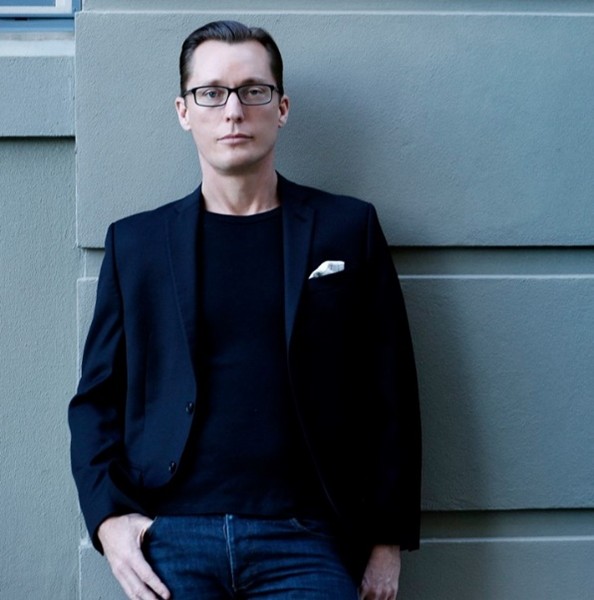
Chris Rhyss Edwards is a veteran, author, and PhD researcher exploring the intersection of conversational AI, mental health, and human connection. A former Australian Army combat engineer, he later spent two decades in senior corporate and entrepreneurial roles before returning to academia. His research focuses on voice-based conversational agents, wellbeing, and the growing role of AI in emotional support. Chris is the author of The Silence Paradox and The Woke Paradox, a TEDx speaker, and the founder of FOLQ.ai, a voice-first mental wellbeing platform grounded in lived experience and ethical design.

This blog is kindly sponsored by G-Research.

