
I’m Shinasa, a South Asian PhD researcher studying addiction recovery, culture, and stigma among ethnic-minority women in the UK. My work sits at the intersection of addiction, identity, gender, and community. I care about emotional wellbeing and social justice and empowering people to share their stories.
When I started my PhD, I thought the hardest part would be the writing. But the real challenge was carrying other people’s pain while trying to hold on to my own sense of self. My research explores the recovery journeys of South Asian and African Caribbean women who live in communities where silence is survival, where honour decides a woman’s fate, and where addiction is denied, hidden, or punished.
I didn’t expect their stories to crack me open. I didn’t expect them to heal me. Nor did I expect them to teach me how to speak again. And yet, here I am using my voice. I am writing this to reflect on what happens to researchers when we sit with trauma, silence, and responsibility, and how our own wellbeing is shaped along the way.
The weight of silence
I grew up in a Muslim family in the northeast of India. Mine was a relatively liberal and progressive household. They always encouraged education, independence, and curiosity. Yet even there, patriarchy was not entirely absent. Because patriarchy is inherited. I saw subtle signs around me and it’s always unspoken. Growing up, I was aware of the patriarchal mindset that shaped Indian society more broadly, but my family worked hard to shield me from its more direct constraints. It was only when I moved away from my hometown that I saw how gendered expectations operate outside the safety of home. The freedom to study, to live independently, and to travel alone were privileges for me, really. I grew up in a culture where girls are taught to hold everything inside. “Don’t question”, “Don’t expose”, “Don’t show weakness”, “What will people say?” So women learned to just survive in silence. And that silence followed me into adulthood. Further, I have struggled with a stutter since childhood. This is something my family didn’t recognise as a speech disorder. It carved fear into me. I avoided speaking up, avoided asking questions, avoided taking space. Even as an adult, even as a psychologist and then as a researcher, I carried shame about my voice.
Then I began interviewing women whose lives held more pain than I knew how to process. These women had survived emotional abuse, violence, stigma, racism, religious policing, gossip, surveillance, and the crushing burden of wondering, “What will people say about me? About my family. What will happen to my father’s reputation?” Each women’s narratives were full of courage and trauma. Their voices were steady even when breaking. And somewhere inside those conversations, something in me shifted.
Research is always personal
In my interviews, my participants were discussing taboo topics with me, sharing stories that followed me everywhere: into the shower, into my sleep, into grocery aisles, while I was eating an ice cream and dancing to Mama Mia. I was not taught how to carry these things. I was just told to be “professional.” What that meant in practice was learning how to keep going even when I was not myself. I was listening to women speak about grief, violence, shame, and loss, and then expected to return to my desk and analyse their words as if they did not stay with me. Their stories were in my body. I felt it as anxiety, sleeplessness, fear, chest pain, and a constant sense of being overwhelmed. I began to doubt myself and my capacity to cope. Being “professional” meant not naming what was hurting me. Writing about this now is my way of acknowledging that the emotional impact of this research was real. And pretending otherwise came at a personal cost.
During the recruitment phase, I met a young woman whose fiancé died suddenly. She was in recovery. Grieving and fighting to rebuild her life at the same time. Every time I saw her posts left me breathless. She was hurting and yet she kept showing up. She documented her grief, trying to make meaning out of it. She showed me that there can be power and strength in recovery.
Around that time, my anxiety was spiralling. I remember during the data analysis phase, staring at my analysis and thinking: If she can face this, what excuse do I have for hiding from my own fear? My stutter worsened. I was losing weight. I couldn’t sleep. Chest pain became normal. My brain felt like it was drowning while I was trying to code and analyse layers of trauma and loss. I found it hard to switch off from the stories I was hearing. They stayed with me while I was cooking, trying to rest, walking, or doing podcasts. I began to feel like I was carrying too much on my own, but I didn’t know how to say that out loud. Honestly, I didn’t know what was affecting me then. Working through layers of trauma and loss started to blur the line between my research and my own wellbeing, and I realised I could not keep going in the same way without it costing me more.
In addition, I am sure most of us already know that power dynamics support certain voices and silence others in academia. There are hierarchies, territorial behaviours, and politics that drain you long before the research does. And being an international student adds another layer. There is visa stress, cultural misunderstandings, financial pressures, the subtle feeling of always being “the outsider.” At times I felt unsupported. I felt misunderstood. I felt invisible in academic spaces. I also saw how privilege shapes who gets heard and who gets dismissed. While analysing data about stigma and exclusion, I was also living my own version of it inside the institution. So, I sought help. In practical terms, it was relatively straightforward. I contacted my GP surgery, and they referred me to NHS Talking Therapies. I was assessed and diagnosed with social anxiety, which helped me put a name to what I had been experiencing. I was fortunate to be matched with a therapist I connected with, and I attended weekly sessions for around six months.
CBT and trying to breathe again
During the thematic analysis phase of my research which was the most mentally intense part, I started Cognitive Behavioural Therapy (CBT) with the NHS Talking Therapies. My therapist was brilliant. She helped me see that my stutter wasn’t a failure. It wasn’t shameful. It was a part of me that had grown out of years of silence, cultural expectations, fear of judgement, and the pressure to be “strong.” She even created artificial interview scenarios with her colleagues who interviewed me and later shared their feedback. This was to challenge my perception of myself with how in reality people perceived me. With time, therapy gave me a place to breathe.
At the same time, my participants gave me the strength to try. Every time I thought “I can’t do this,” I remembered the woman who kept speaking through her grief. I remembered who the woman who did not want to turn on the video, wept, spoke slowly but still shared her story. I remembered women who shared stories they had never told anyone. I remembered women who trusted me with truths they once feared would destroy them. They didn’t run away from their pain. So I stopped running from mine. Slowly, I learned to speak through my stutter without apologising. Learned to take up room. Learned to sit with fear instead of avoiding it and finally to confront my own.
Learning to accept what was always mine
Writing the thesis (and writing this blog) made me realise that my stutter, my anxiety, my identity, my culture, and my research are not separate stories. They feed into each other and are all connected. My speech is not “broken.” My voice is not “less.” Yes, it carries pauses, repetitions, hesitations but it also carries empathy, depth, courage and honesty. Throughout my journey, I gained important lessons:
- You can do meaningful research and still be human. Listening to trauma, stigma, and loss will effect you. Feeling overwhelmed means, you were paying attention, and it means you cared.
- Your voice doesn’t have to be perfect to have power. My stutter always felt like a flaw. But through this journey I learned that I can share by reality by speaking slowly, shakily, or with pauses. This gave me courage and courage means speaking despite your fear.
- Silence protects the stigma, not people. The women I met showed me that shame grows in hidden corners of the house. When one woman tells her story, another finds the strength to step forward. That is how change begins. One voice breaking a long silence.
- Recovery can come from unexpected places, including the stories you carry. My participants’ resilience helped me face my own anxiety and stuttering. Their courage became my motivation to stop hiding. Sometimes the people you are studying end up teaching you how to live.
The women in my study taught me that resilience and courage are not always loud. The voice is quiet at times but speaks anyway. I learned that my voice, although imperfect, trembling, stuttering, is still mine. Still worthy. Still powerful. Therapy did not make the stuttering disappear. But it gave me tools I could work with when the anxiety resurfaced. I practised them consistently and pushed myself, even when it felt uncomfortable. I still experience anxiety today, but I am no longer at its mercy in the same way. I know how to recognise it and I know how to respond. I speak through it anyway. And I intend to use it.
No Artificial Intelligence tools or technologies were used in developing and writing this blog.
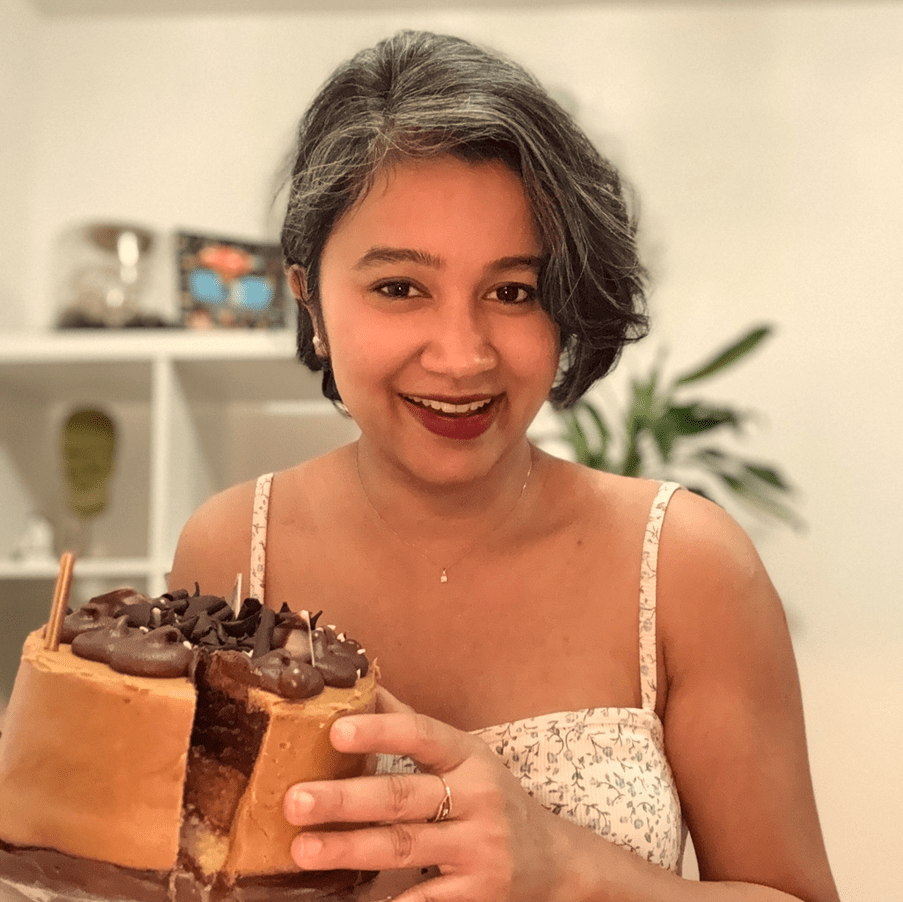
Shinasa is a PhD researcher whose work explores addiction, recovery, stigma, and identity among ethnic-minority and migrant women in the UK. She combines mixed-methods research, community engagement and culturally grounded insight shaped by her own lived experience. Alongside her PhD, she works with grassroots groups, and runs MindBee, a mental-health platform creating social media content on emotional wellbeing, culture, and recovery. Her work sits at the intersection of social justice, gender, culture, and mental health. She cares about amplifying silenced voices and more importantly unlearning and reshaping narratives ingrained in us.

This blog is kindly sponsored by G-Research.

