
Academia strongly values perseverance; the ability to keep writing, teaching, publishing, and producing even under pressure, uncertainty, and exhaustion. Despite many changes and policies, the culture quietly assumes that life’s disruptions can be managed around the edges of our work, that crises can be compartmentalised, and that any interruption is temporary and productivity can continue. But what happens when life delivers something you cannot simply “work through”? What happens when your child is fighting for their life, or living with a serious, chronic condition that requires significant presence, advocacy, and constant emotional labour? What happens when caring and academia collide?
For many academics who are also parents-carers, this collision is not an abstract question. It is a lived reality – daily, relentless, and often invisible. I write from that place: I am an academic and a mother of two, one of whom has special needs. My story is not unique. It is one of many that remain hidden behind office doors, muted in meetings, or buried beneath the professional mask we learn to wear in order to cope and survive when life is intense. Yet, these stories matter deeply, because they reveal the human cost of a system that was not originally designed with carers in mind. A system that has been evolving; a system that can do better.
The Moment Everything Changed
Sometimes, there are moments in life that divide everything into a “before” and “after”. For me, that moment came when my child’s health took a sudden and devastating turn. The plans I had for my family, and the academic deadlines and commitments I had been carefully managing, vanished instantly. All that mattered was whether my child would survive. I spent my days at the hospital, watching my child surrounded by monitors, speaking with specialists, and praying for a future I could no longer picture. In those hours, I had no idea what the days ahead would hold, only that nothing would ever be the same.
When your child is fighting for their life, or when they are diagnosed with a severe, chronic condition, you don’t get the luxury of time to process the trauma. You don’t get to step away to rest, to heal, or to breathe. You go into survival mode. Your child needs you fully, fiercely, constantly. You become the parent, yes, but also the advocate, the medical interpreter, the coordinator of care, the daily therapist or medical personnel, the emotional anchor, and the person who must stay strong even when you are completely breaking. Your child needs you, so there is no time for you and no luxury for your wellbeing.
The pain is indescribable. It is deeper than anything you would feel for yourself. It consumes you, reshapes you, and leaves you moving through each day in a fog of intensity while the world around you keeps moving.
The Invisible Weight of Caring
Caring for a child with serious health needs is not a temporary disruption. It is a continuous, often lifelong, responsibility. It comes with emotional labour that is impossible to quantify: the fear, the uncertainty, the constant vigilance, the grief, and the guilt for every moment you are not doing enough, even when you are doing everything you can.
This emotional weight is invisible to colleagues or mistaken for a parenting role of a healthy child. You walk into meetings after sleepless nights. You answer emails from hospital corridors or during a therapy session. You write papers in waiting rooms. You teach while your mind is split between the classroom and your child’s wellbeing. You carry a private world of worry that no one sees, and you don’t want them to see it. You need to keep it together. You need to remain “professional”.
But the cost is high. Your mental health slips to the bottom of the list. Your sense of self begins to erode. You lose the version of yourself you once knew – the confident academic, the ambitious researcher, the person with plans and timelines, which now must be postponed or cancelled. You become someone else: redefined, reshaped, bruised by trauma and deep care.
Surviving When The System Isn’t Built For You
As an academic with a permanent position and many years of service, I was fortunate that academia gave me the time I needed to care for my child – time to support their recovery, to advocate for them, and to help them improve. That stability allowed me to keep my career alive, even if only in small steps, and to gradually increase my workload as my child’s needs became more manageable and the part of me that I had put on hold – my academic enthusiasm and drive – could resurface again.
But even with job security and a supportive supervisor, many challenges persisted and some continue to persist. I became “the one with other responsibilities”. Invitations stopped coming. People assumed I was too busy, too overwhelmed, too unavailable. I found myself fighting twice as hard for opportunities that once came more easily, all while carrying the mental and emotional overload of intensive caring. The intensity of it is indescribable.
For colleagues on fixed-term contracts, or in workplaces without understanding or flexibility, the situation is even more precarious. The choice can become unbearable: your career or your child. And many choose their child not because they want to leave academia, but because the system leaves them no choice.
Even in supportive workplaces, jobs and academia itself are rarely structured to accommodate genuine caregiving of a loved one with a disability and/or serious chronic illness. Flexible work policies and decreased work hours help, but they don’t address the deeper issues:
- Bias and assumptions that quietly sideline carers from opportunities, collaborations, and leadership roles.
- Metrics tied to output and time demands where time is much more limited.
- Short-term contracts that make job security impossible for carers who cannot guarantee uninterrupted productivity.
- A culture that prizes only one type of resilience, defined as the ability to keep producing no matter what.
For many academics, particularly women, who disproportionately carry caring responsibilities, these pressures can quietly push them out of the profession. Not because they lack talent, expertise or dedication, but because the system is not designed for people whose lives include intensive caregiving.
The Isolation of Being Unseen
One of the hardest parts of being a carer is the isolation. You are surrounded by people, yet profoundly alone in your experience. Academia is not a place where vulnerability is easily shared. The culture often rewards stoicism, independence, and the appearance of having everything under control.
So, you hide the hardest parts of your life because you don’t want to feel weak, you don’t want to be vulnerable. You smile through exhaustion. You apologise for delays. You overcompensate to prove you are still committed. You avoid mentioning your child’s health unless it is absolutely necessary. You fear being seen as unreliable, less capable, or less serious about your career.
But the truth is that carers are some of the strongest, most resilient people in academia. They navigate complexity, uncertainty, and emotional intensity every day. They develop skills – advocacy, crisis management, efficiency, empathy, adaptability – that academia desperately needs but not always recognises.
What Could Real Support Look Like?
Supporting carers in academia requires more than flexible hours or sympathetic emails. It requires structural and cultural change. Real support might include:
- Promotion and performance frameworks that fully recognise these types of caring responsibilities.
- Permanent positions, longer-term contracts and job security, especially for early-career researchers who are carers.
- Workload and leave adjustments that reflect the realities of caring, without extra pressure, stigma, or penalty.
- A culture that normalises caregiving, where colleagues feel safe to share their circumstances without fear of judgement.
- Leadership training that includes understanding the needs of carers and addressing unconscious bias.
- Institutional policies that acknowledge the emotional labour of caring and provide meaningful support.
These changes are not just about compassion. They are about equity, retention, and the recognition that academia is richer when it includes diverse life experiences – including those shaped by caring.
Finding Yourself Again
When caring and academia collide, you lose parts of yourself. But you also gradually gain new insights, new strengths, and a deeper understanding of what truly matters. You learn that resilience is about surviving, adapting, and finding meaning in the midst of hardship.
We always have a choice: to lose ourselves in the struggle, or to use our experiences to reshape who we are and to reshape structures and systems. Caring changes you. It breaks you open. It forces you to rebuild. And in that rebuilding, you may find a new version of yourself – different, yes, but also wiser, stronger, more grounded, and more determined to help to create change for others.
Why Carer Stories Matter
As conversations about mental health in academia grow, we must expand them to include carers, especially those caring for children with serious illnesses or disabilities. Their stories reveal not only personal struggle, but systemic gaps in how academia cares and how it defines success, resilience, and belonging.
Caring responsibilities should not be seen as a deviation from the academic path. They are part of the diverse realities of academics and are ones which can enrich academic life. They deserve recognition, understanding, and structural support, not exclusion.
Behind every academic-carer is a story of love, fear, strength, and survival. And these stories need to be heard, understood, and supported within the academic system.
It’s time for Australian universities to step up and honour the spirit of the Carer Recognition Act 2010 (Cth). Carers deserve binding employment protections. They deserve the implementation of enforceable carer support plans and the embedment of positive, proactive obligations on employers. Anything less is a failure of duty, a failure of equity, and a failure to recognise the essential role carers play in our communities.
Artificial Intelligence (AI) Statement
I declare that during the preparation of this work I used Venice.ai and ChatGPT for shortening and proofreading of some parts of the text. After using these AI tools, I reviewed, changed and edited the content as needed.
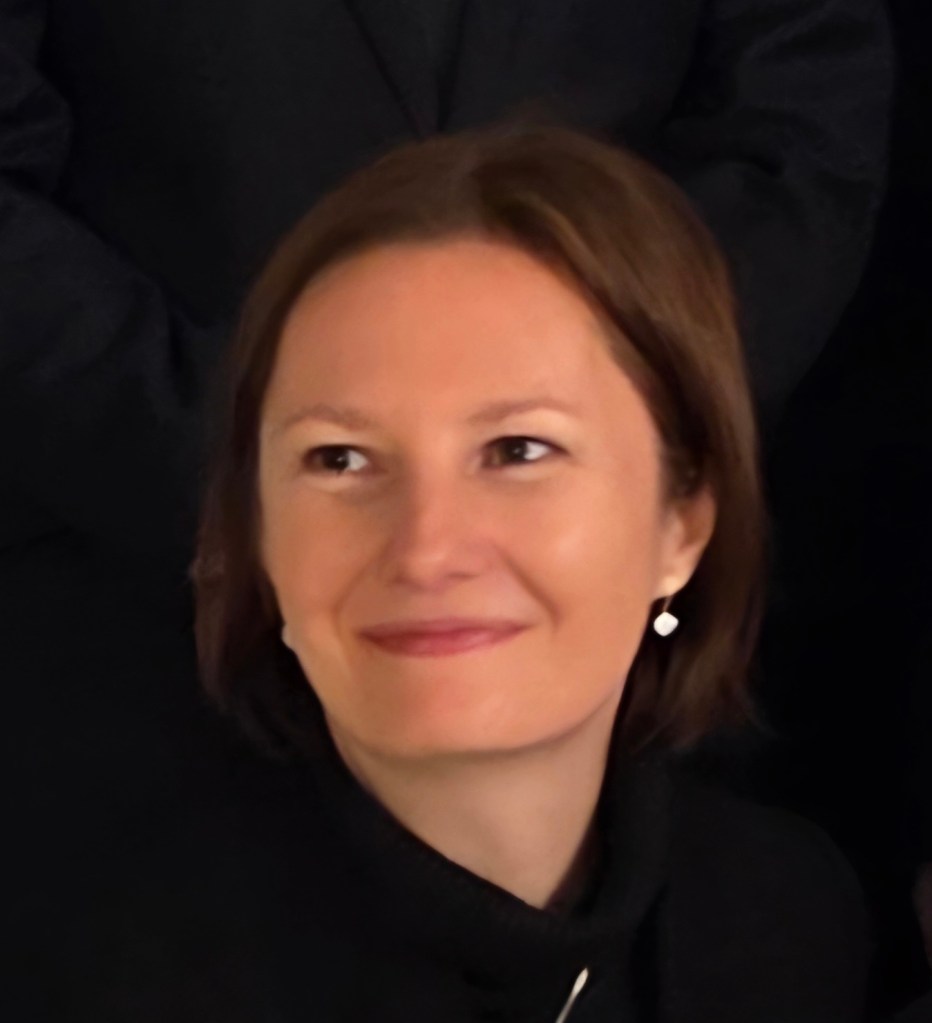
Associate Professor Barbora Jedličková is a legal scholar, the Chair of an academic network dedicated to supporting carers of children with special needs and chronic illnesses, and a mother of two beautiful humans. She has been an active advocate for carers and for children affected by hypoxic ischaemic encephalopathy (HIE), working to raise awareness and improve support within both academic and community settings.

This blog is kindly sponsored by G-Research.

