
It is said that elephants have a unique way of honouring their ancestors. Every year, they revisit ancient burial sites which hold their deceased kin. Cautiously, they approach the graves of their relatives. They pause. Then, to an onlooker, they engage in what appears to be an act of desperation. Carefully touching and examining the bones and tusks of their ancestors, they take a few moments to solemnly reflect. In turn, new herds then approach the carcasses and perform their own ritualistic memorial.
To those who have experienced grief, however, this is no act of hopelessness. It gives the pain, spiralling thoughts, and memories meaning. Those who know this pain understand that grief has no time limit. No fixed point of closure. But these moments of reflection, turning the bones, gives us the strength that we need to move forward.
When my counsellor first told me this story, I don’t think that I truly understood it. It took time to understand how to “turn the bones” and honour the passing of my own father figure. In the past, when I’d faced challenges, I would find a way to distract myself, release emotion, or ruminate my way out of problems. But the passing of the only father I’d ever known presented new challenges, all of which attacked my nervous system, my spirituality, and my mental health in ways which I couldn’t curtail. Both the lead up to his passing, and several months after, were physically, emotionally and cognitively draining. Those issues were compounded by being on the other side of the world, and only six months into a PhD.
However, two years later, I find myself writing this blog in a different headspace. I’m on a plane, returning to Australia after spending Christmas back in the UK, with only a few months of my PhD remaining. Although it’s only the second time I’ve returned home since his passing, I can finally say that I’m ready to “turn the bones” and share my story in this blog. Here, I hope to empathise with others who know the pain of losing a loved one, discuss the unique challenges that academia presents while grieving, and share my insights about how we can support others to make life feel a little easier.
The Story of a Stoic Yorkshire Man
I am originally from a village in West Yorkshire, England. It’s the kind of place where everyone knows each other on a first name basis, and probably their dogs too. Whenever I return home, I feel especially grounded. Life is idyllic in Skelmanthorpe. Among the rolling hills, expansive farmland, and streets lined with quaint shops, pubs and restaurants, it harbours some of the kindest people you could ever meet. People who believe in the values of working hard, staying humble, and looking out for their neighbours. It’s this shared culture which has allowed my family to call this place home for hundreds of years.
My granddad was everything you’d imagine in a stoic Yorkshire man. He had a tough exterior, shaped by the trials and tribulations of his life. But beneath this was a persistence and protective instinct which would strike fear into any Hollywood villain. He was the one I would go to when life got really serious. The one that I knew would be able to shelter me from life’s storms. He went from being a miner, to an award-winning security guard, to working in aged care. Such a varied career path is a reflection of not only his adaptability, but his determination to provide for his family and help others along the way.
He was the only father figure that I had growing up. I moved to live with my grandparents when I was five years old, and from that point he was my greatest protector. My grandma was and still is ever present with her unconditional love, warmth and understanding, and I am lucky to still count on the support of my mum and my brothers. But my granddad was the one who taught me to be strong.
I often thought his lessons were hard. We disagreed regularly. My worldly ambitions and sensitive nature often clashed with his traditional views on how life should be approached. But through it all, I knew I could count on his calming strength, his unwavering pride in my accomplishments, and his values of respect, diligence, and service to others. He was a big believer in the value of education, having spent his life working industrially in physical labour. My grandma and I often look back at my master’s graduation photo, where he stands alongside me in his trademark yellow formal shirt. His smile is beaming, his chest puffed. It’s a look that I only got to witness a handful of times in my life. Imagine his pride when I told him that I’d been offered the chance to undertake my PhD in Australia. He struggled to find the words, but affirmed something along the lines of, “I know this is something that you will enjoy, if you put your mind to it.”
Having his seal of approval gave me the strength that I needed to move across the world in February 2023. Dropping me off at the airport as he habitually did, he hugged me tight and whispered “be good.” He was probably holding back the tears, as was I. Because of course, Yorkshire men don’t cry.
A New Beginning
The first few months in Australia were an incredible adventure. One thing that I never got used to was the summer heat, which intensified the emotions of the journey I’d just embarked on. This was a whole new world. Going from a small village to a bustling Gold Coast, the bright lights and constant stimulation took some getting used to. For the formative months, I battled deeply with imposter syndrome. Despite the warm welcomes from faculty, I was several years removed from academia and switching disciplines. It was like everyone around me was speaking a different language.
However, as autumn set in and the weather cooled, so did my apprehensions. I found my group of friends, whom I am still eternally grateful for, and began to find my passion and purpose. Around October, I was working in a part-time job with a laboursome manager. Or as my granddad would more eloquently describe him, “a pillock”. I called my grandma to vent, as I often did, however it was my granddad who answered the phone.
This family dynamic might seem mundane to anyone else, but for me it was highly unusual. My granddad wasn’t one for catching up over the phone, but would regularly request updates from my grandma. But that evening, he answered. From that moment, I could tell that something had changed. I felt strangely comfortable opening up to him, and for the first time he embraced my sensitivity. He reminded me to keep working hard, and then I wouldn’t have to work in these kinds of roles for much longer. He sealed that fateful call with a “It was nice to catch up”, an unconventionally sentimental statement for a stoic Yorkshire man.
Over the next few weeks, sleep was hard to come by. My mind was working overdrive, refusing to switch off. I soon found out that my granddad had been taken into hospital with what appeared to be an infection. I had an unshakeable feeling throughout my body that this “infection” was not as it seemed. I pleaded with my mum and grandma to push the medical staff for more concrete explanations. With no direct access to doctors, I relied on my family to relay questions about overall condition. It was frustrating not to get clear answers firsthand and every delay made the decision to return to the UK feel more urgent. There were whispers of imminent discharge, but I still felt that such conversations were premature.
Then, it came. My grandma sent a message that the doctor had spoken to my granddad. The doctor refused to say more, but said that my granddad would explain everything when she reached the hospital. The next few hours awaiting news were excruciating. I wandered the parkland late at night, desperately awaiting the prognosis. Finally, the message illuminated my screen. I didn’t need to see it all. The words “Stage 4 cancer” and “Palliative care” lingered like an unwelcome visitor.
Several deliberations followed which resulted in a despairing race across the world. During that 35-hour journey, I was accompanied by nothing but my relentless thoughts. I planned my final exchanges with my granddad, reflecting on how I could express my gratitude and enjoy the final months of his life. Moreover, I thought about how I could present myself as a man that he could be proud of and have confidence in to build my life and support his family. It was all in vain. He unexpectedly passed just hours before I landed in the UK. I should have seen it coming; for a typically stoic Yorkshire man, it would have broken him for me to witness him in such a vulnerable state.
Output over Emotion
It took a few days to orient myself back in the UK. I tried to come to terms with my new reality. The world had just become a more exposed place without my greatest protector. The morning after arriving in the UK and hearing the heartbreaking news, I emailed my supervisors to update them on the situation. I will always be grateful for how accommodating they were and how they were understanding of the magnitude of the challenge that I was facing. They strongly encouraged me to “do whatever I need to look after my wellbeing.” If only I knew how onerous that would be.
I struggled knowing what to prioritise over the next period of time. Firstly, I spent the next week trying to be the pillar of support for my family. But I also powered through a journal article I was working on, using the focus and structure it demanded as a way to distract from the emptiness I felt. . My granddad’s sacrifice couldn’t be meaningless. I had to persist with what he’d taught me; to be strong, to work hard, and to turn up for others.
I became something of a spin doctor in responding to messages from friends and family offering their condolences. Expressions of support are humanity’s response to grief akin to turning elephant bones; ritualistic acts of compassion to honour both the individual that has passed and their surviving kin. But the truth is, that grief takes away our voices. Even close friends and family can struggle to find the right words to offer support, much less to measure someone’s life. Nonetheless, I greatly appreciated the sentiment, and accepted love and the supportive messages with open arms. But I knew that something inside me had changed forever.
The Cost of Containment
Returning to Australia was particularly hard. News had spread about my grandfather’s passing, and people were quick to offer compassion. Some gave hugs, others wise words, but were all kind interventions to alleviate my grief. In truth, I felt guilty for not knowing how to feel in those moments. In my experience, grief wasn’t the heavy dark cloud that I expected it to be. Rather, it was like a low fog that never quite lifted. You can often see and function clearly. You can feel self-condemnation for finding happiness and laughter again. But you always feel forever slightly muted.
What nobody ever prepared me for was how that would present in my body. During this time, I developed crippling insomnia. I would love to say that I stayed awake for hours every night reflecting on my granddad’s life and our relationship, and ruminating over my PhD and next steps to build a life that he could be proud of. But no. I don’t think my mind had quite caught up yet. I would routinely lie awake for 7 or 8 hours, anxiously fumbling for an off switch on my swirling thoughts. And during that time, I would think of nothing but of how hard sleep was to come by.
Existing became physically painful. I did not have a solid night of sleep for around three months. The exhaustion and delirium compounded, and managing a conversation, much less the demands of a PhD, became impossible. I felt nauseous, hopeless and progressively less human by the day. I knew I had to seek help from this maze from which I could find no escape. The weeks that followed involved a prescription of sleeping pills and counselling. My worries also eased when I received a diagnosis of ADHD, which explained how anxiety presented itself in my nervous system and a compulsion for hyperfocus. It didn’t ease overnight, but I progressively managed to take control of my nights and my life once again.
The World Didn’t Pause
After a couple of weeks, I slept for six hours for the first time. When I first saw the clock, I was elated. Finally, I had broken the anguished cycle. But the elation shortly turned to tears. For the first time in months, I could think clearly again. And I realised that my toughest days were yet to come as I continued the grieving process.
I seldom feel anger, but I felt more of it in the months that followed than at any other point of my life. Academic meetings quickly turned into mundane rituals which I managed on autopilot. I felt a sense of injustice that life would continue unaffected. Like my world hadn’t just been shattered, and that I saw a perspective of life’s fragility that many couldn’t understand. Finding meaning through my work was paradoxical. I found myself barely jumping through academic hoops, whilst questioning the whole time what the point of this life journey was. Would I ever be able to measure my legacy in the same way as my granddad?
I’m not quite sure what I mitigated those concerns or when I started to feel like myself again. But I think it came when I stopped attaching expectation to my work, allowed myself to indulge in the things which brought me joy, and found purpose again in helping others. This included contributing just a little bit more in conversations, creating more open dialogues with my students, and realising the real-life applications of my work. When my supervisors expressed that they were concerned about my progress, I threw myself into work to get back on track while also prioritising mental health awareness. I took on roles that aligned with my values and allowed me to show up as my truest self, embracing my experiences and vulnerabilities.
Turning the Bones and Making Meaning
Being courageous can take many forms. I am not afraid to admit my vulnerabilities, nor how close losing my greatest protector brought me to the edge. Losing someone so close is devastating at the best of times, but whilst completing a PhD and being 10,000 miles away made it immeasurably harder. For those working in academia, we know the extraordinary demands that it places upon our lives. The pressure to work consistently with quality, novelty and speed is a recipe for burnout. When personal challenges such as personal losses arise, working in academia can make it much harder to find the time and space to move through the grieving process.
When my granddad passed, he left me his bravery medal. It was awarded to him for resisting an armed attack when he was working as a security guard. I used to steadily turn it in my hands, like an elephant turning the bones, curious about how he wanted me to be inspired. I will never have his physical strength, nor his fortitude to hold emotions. I will also not follow the structured path of stability and prosperity that he did. But slowly, I am realising that does not matter as much as I thought it did.
If I could take any solace from sharing this story, it’s that it has the potential to help someone. Whether that be someone who is going through loss, or someone struggling to balance competing work and personal demands, we have to make the meaning from our own story. For me, that is learning to be brave in a way which is authentic to myself. Living unapologetically, challenging injustice, and approaching my work with passion and purpose. When the fog thickens, it’s okay to pause. Sit with the grief as it settles, seek the light of compassionate support, and let yourself release what weighs heaviest.
It is then that we, like the elephants pausing to turn the bones of their ancestors, can acknowledge our grief, honour what remains, and continue on our journey.
Artificial Intelligence (AI) Statement
No Artificial Intelligence tools or technologies were used in developing and writing this blog.
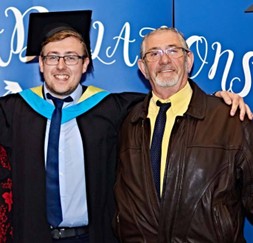
Chris Wainwright is a PhD student and Associate Lecturer at Griffith University, with a concentration on youth mental health and empowerment. He is overseeing a research collaboration between Griffith and batyr which has resulted in various publications, exploring the outcomes of a youth mental health advocacy program upon participant professional development and social wellbeing. He also contributes widely to the youth agency field. He has worked in the field for over 15 years, as a coach, mentor, teacher, facilitator and advocate, and holds extended certification in working with young people with special educational needs and mental health challenges.

This blog is kindly sponsored by G-Research.

