
Walking in two worlds as an Aboriginal academic has meant learning to balance not just knowledge systems, but also my own wellbeing—especially within university spaces that often overlook the mental and emotional labour we carry. This blog is both a reflection and an offering: I share how grounding myself in Country, culture, and kinship has supported my mental health amid the unique pressures of academia. By weaving together stories of resilience, community, and cultural practices, I hope to show that looking after our wellbeing isn’t just personal, but deeply collective. Through my journey, I’ll explore ways we can nurture ourselves and each other in universities—holding space for rest, truth-telling, and cultural safety, while honouring both ancient wisdom and the realities of modern campus life.
Growing Up on Country: Learning Before Lecture Theatres
My earliest teachers were not found in classrooms, but in rivers and ridgelines, in the guidance of Aunties and Uncles, and in the stories shared across kitchen tables and verandas. From an early age, I learned to listen with my whole body: to hear the wind moving through trees on Country, and to recognise the quiet pause an Elder takes when a story is about to become a lesson.
For Aboriginal peoples, knowledge is inherently relational. It is created and sustained through reciprocity, carried in language and ceremony, and embedded in our responsibilities to kin, community, land, and waters. Learning does not occur in isolation; it is inseparable from relationships and place.
This relational understanding of knowledge also shapes how we understand health and wellbeing. In Aboriginal culture, health extends far beyond the absence of disease. It encompasses physical, social, emotional, cultural, and spiritual wellbeing, not only at the level of the individual but across the collective. Wellbeing is deeply interconnected with Country, family, and cultural identity, and cannot be understood outside these relationships.
When I first entered university spaces, I encountered a markedly narrower conception of “knowledge”—one often defined by written evidence, citations, and methodologies grounded in specific western intellectual traditions. I quickly became aware that the strength, depth, and sophistication of Aboriginal knowledge systems are frequently obscured by academic frameworks that privilege individual expertise over collective wisdom, and efficiency over slow, careful yarning.
Yet these spaces also hold possibilities. There is room for dialogue—often described as two-way learning—where Aboriginal ways of knowing, being, and doing can sit alongside western approaches. Crucially, this dialogue must occur without Aboriginal knowledges being marginalised or reduced, allowing multiple epistemologies to coexist with respect and integrity.
The Cultural Load: Invisible Work in Visible Institutions
There is a particular kind of labour we do that isn’t listed in position descriptions: cultural load, some call it colonial load. It’s the emails that find us after hours seeking advice on “Indigenous perspective,” the committee seat we’re asked to fill to make a policy look inclusive, the mentoring of Aboriginal students that happens in corridors and cafés because there aren’t enough formal supports. Cultural load also shows up when we become the “go-to” person for anything Aboriginal—regardless of the diversity of our Nations, languages and experiences.
Over time, this accumulation of invisible labour carries a significant emotional and cognitive cost. For me, this ongoing, unrecognised labour takes a toll on my mental health—manifesting as exhaustion, emotional strain, and the constant negotiation of boundaries in spaces that rely on my cultural expertise but do not adequately support my wellbeing.
Carrying cultural load is not a complaint about helping; it is a reminder that institutions must recognise and properly resource the work of cultural safety and transformation. Cultural safety is not achieved by a single acknowledgement or a NAIDOC morning tea; it grows through consistent practice—listening to Elders, resourcing Aboriginal staff and students, embedding accountability, and respecting protocols such as Welcome to Country and the right people speaking for the right Country.
Kinship, Care and Collective Strength
Kinship is a backbone of our world. It structures obligations, generosity, and accountability. I bring kinship into my academic life in simple, practical ways: checking in on students who are juggling study with cultural responsibilities; creating spaces where we yarn before we jump into assessment criteria; organising community led sessions where Elders, Knowledge Holders and students sit together, building relationships rather than just content.
In my research and teaching, I take care to foreground the relational nature of knowledge. Who benefits from this work? Who is named? Whose permission was sought? Are we following proper protocols? The answers are not bureaucratic checkboxes; they are ethical commitments that place community at the centre and remind us that our work must be accountable beyond the university.
Truth-Telling: Naming the Past, Shaping the Future
If we want universities to be places where Aboriginal people truly thrive, truth-telling must not be optional. Truth-telling acknowledges the histories of dispossession and the ongoing impacts of colonisation—on our languages, our families, our access to Country, and the way institutions have treated us. In the academy, truth-telling looks like re-examining curricula, challenging deficit narratives, and recognising that “inclusion” without structural change is performative.
I’ve seen the courage of students who ask difficult questions in tutorials, the persistence of colleagues who push for policy changes, and the steady leadership of Elders who keep us grounded in what matters. Truth-telling is uncomfortable, yes—but it is also liberating. When we name the past, we create room for a different future—one built on respect, accountability, and genuine partnership.
Two-Way Learning: Walking the Line Between Method and Lore
Two-way learning is not about blending everything into a grey mush. It is about holding difference with respect and patience. In practice, this means we value Aboriginal research methods such as yarning, Dadirri (deep listening), and community-led inquiry alongside western approaches. We recognise that data is not just numbers; it is story, memory, responsibility. We remember that some knowledge is not for public consumption. Some stories are held by designated custodians, and seeking permission is part of the method.
When I design units or supervise students, I ask: How can we ensure that research gives back to the communities that make it possible? What does reciprocity look like here? Can our outputs be more than journal articles—perhaps community reports, workshops on Country, or resources cocreated with Elders? Two way learning requires humility; it asks us to sit with the discomfort of not knowing and to understand that leadership can look like listening.
Songlines, Language and the Ethics of Place
Our songlines knit Country together—mapping stories across mountains, rivers and coastlines, carrying Law/Lore through generations. Even in urban campuses, I try to teach with a sense of place: whose Country are we on? What languages belong to this place? Which stories are appropriate to share, and who should share them? Place is not a backdrop; it is a teacher. When we acknowledge Country meaningfully, we are invited into a relationship of respect and care.
Language is not only communication—it is worldview. For students, learning even a few words from the local language can change how they see the land beneath their feet and the people around them. It signals a willingness to step outside English only thinking and to recognise that diversity of language is diversity of thought. In research writing, I encourage students to honour Indigenous terms (with correct spelling and diacritics where applicable), and to explain concepts rather than flatten them into familiar western categories.
Resilience and Responsibility: From Survival to Revival
Our communities are often described through resilience—our ability to survive. I prefer to talk about responsibility and revival. Responsibility means we honour our Elders’ guidance, uphold Law/Lore, protect Country, and nurture young people. Revival means we actively restore what was damaged—language classes, community led healing, cultural camps, research that traces and strengthens kinship networks. In academia, revival looks like supporting Indigenous scholars to lead, funding Aboriginal led projects, and embedding Indigenous governance in decision making.
Personally, my resilience is not an individual trait; it is communal. I draw strength from the Aunties who tell me to rest, the Uncles who remind me to laugh, the young ones whose curiosity keeps me honest, and the old people whose steady presence keeps my feet on the right path. Revival is visible in small moments too: a student who finally sees her story reflected in the curriculum, an administrator who moves resources so a community visit can happen, a faculty that commits to long-term relationships rather than one-off events.
Mental Health and Wellness: Caring for Mind, Body and Spirit
In academia, the pressure to publish, teach, and serve often collides with cultural responsibilities and personal wellbeing. For Aboriginal academics, this can be compounded by cultural load and the emotional labour of truth telling. Wellness is not just an individual pursuit—it is collective care. Our mental health is strengthened when institutions recognise the unique stressors we face and respond with structural support, not just tokenistic gestures.
Wellness begins with permission: permission to rest, to say “no,” to prioritise cultural obligations without fear of penalty. It grows through culturally safe spaces—places where yarning is valued as much as metrics, and where Elders’ wisdom informs wellbeing strategies. Practical steps include flexible workloads, access to culturally competent counselling, and recognition that grief, ceremony, and community responsibilities are not “interruptions” but integral to who we are.
For students and staff alike, mental health initiatives must move beyond generic programs. They should embed Indigenous approaches to healing—such as connection to Country, language revitalisation, and community-led wellbeing projects. When universities invest in these practices, they affirm that thriving is not about assimilation; it is about balance. Caring for mind, body and spirit is how we sustain ourselves and each other on this long walk between worlds.
Mentoring, Yarning and Making Space
Mentoring, for me, is relational. It is not only about grades or CV lines; it is about making space for students to bring their full selves—culture, family, responsibilities, grief and joy—into the learning context. Yarning circles are one of the most effective ways I’ve found to build trust. We sit in a circle, speak in turn, practice deep listening, and let insight emerge without forcing it. Yarning is not “informal chat”; it is a culturally grounded method built on respect, reciprocity and patience.
I also work to make space structurally—advocating for inclusive assessment formats, flexible deadlines around cultural obligations, and recognition of community engagement as legitimate academic contribution. This is how we move beyond tokenism: we change the rules, not just the rhetoric.
Advice for Aboriginal Students and Early-Career Academics
- Stay connected to Country and mob. Your strength comes from place and people. Visit when you can. Call when you can’t.
- Seek Elders and mentors. There is no “DIY” culture when it comes to our ways. Guidance protects you and strengthens your work.
- Learn the rules, then change them. Understand institutional processes so you can navigate them—and advocate to make them better for those who come after you.
- Protect your wellbeing. Cultural load is real. Say “no” sometimes. Rest is resistance and renewal.
- Write with integrity. Use culturally grounded methods. Name your responsibilities. Ensure reciprocity and permissions are in place.
Advice for Institutions: From Inclusion to Self-Determination
- Resource cultural safety. Fund positions, training, and community partnerships properly. Cultural safety isn’t a volunteer activity.
- Embed Indigenous governance. Involve Elders and Aboriginal staff in decision-making, not just consultation.
- Respect protocols. Welcome to Country, Acknowledgement of Country, and permission-based sharing are not ceremonial add-ons—they are ethical foundations.
- Support two-way learning. Recognise and reward Indigenous methodologies, outputs and community impact.
- Measure what matters. Track not only enrolments or staff numbers, but retention, wellbeing, research conducted with and for community, and the strength of relationships with local Nations.
Conclusion: Continuing the Walk
Walking in two worlds is demanding, but it is also deeply generative. My academic life is not an escape from culture; it is an extension of it. I carry Country into my teaching, research and leadership, and I bring my scholarship back to community with humility and care. The baskets I carry grow lighter when institutions share the load, when colleagues choose accountability over comfort, and when students find their own ways to hold both worlds with pride.
I hope this story invites readers—especially those in universities—to move beyond performative inclusion and towards genuine partnership, truth-telling and self-determination. Our communities have always been knowledge makers. When academia learns to listen, respect and walk alongside us, we don’t just improve the university; we strengthen the broader society we all share.
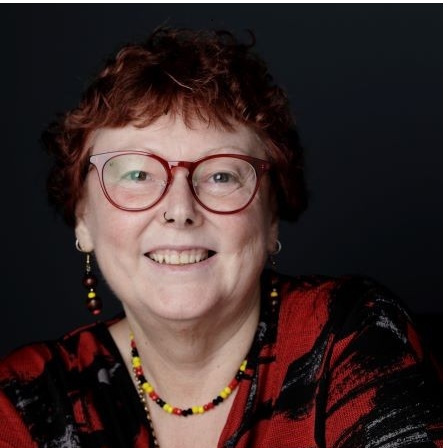
Associate Professor Sharlene Leroy-Dyer is a Garigal/Darug/Awabakal academic whose work centres Indigenous knowledges, cultural safety and justice in higher education. She leads community-engaged research, mentors Aboriginal staff and students, and advocates for institutional change grounded in truth-telling and self-determination. Sharlene’s teaching foregrounds two-way learning, kinship and respect for Country.

This blog is kindly sponsored by G-Research
 Voices of Academia