When I commenced studying at university, I did not yet have the language to call myself “disabled scholar.” I just knew that my life had been split into “before” and “after” a brain tumour, and that I was trying to rebuild a future for myself and my family in a body and brain that no longer worked the way they used to. As a mother of four, a brain tumour survivor, and now a student, I carried competing identities into every classroom and hospital waiting room. Higher education became less a straightforward path to a qualification and more an ongoing experiment in how to learn, parent, heal, and advocate simultaneously.
My story sits inside a much bigger reality: each year in Australia, around one in four people live with disability, and many of them are in or trying to access higher education. Yet universities are still largely built for an imagined “typical” student: young, healthy, able to sit through long lectures, juggle work and study, and bounce back quickly from stress.
Negotiating these systems with disability means constantly translating your body’s needs into a language that institutions understand. My journey through TAFE, university, postgraduate study, and now a PhD has shown me both how hostile and how transformative higher education can be for disabled students.
The Early Years: Survival and Returning to My Studies
My story as a disabled scholar begins in 2003, when I was diagnosed with a brain tumour. I was studying a web design certification by correspondence. I had to achieve a score of 90% or above on every unit. The brain tumour side effects meant that I could not sit my final exam for the course, which was heartbreaking. For the next 8 years, we were on ‘watch and wait’—trying to juggle four children and a brain tumour was no easy task.
In 2011, I required surgery for the tumour and the challenging recovery upended everything I thought I knew about my body, my mind, and my future. I had to relearn the basics of daily life while navigating fatigue, pain, cognitive changes, and the unpredictability that comes with a serious neurological condition. In those early months and years, higher education was not on my radar; staying alive and present for my children was my top priority.
By 2012, I felt the pull back toward study. I had relearned how to learn and wanted to get back to work. I enrolled in TAFE avocational, post high-school education in Australia, cautiously testing what my post-tumour brain could handle. Walking into that learning environment after major surgery, while parenting four children, felt both terrifying and exhilarating. I was no longer the student who could rely on all-nighters and last-minute cramming. I had to plan around medical appointments, symptom flares, and the sheer exhaustion of holding everything together. Yet succeeding at TAFE, even in small steps, began to rebuild a sense of possibility. It reminded me that my intellectual life had not ended with my diagnosis. At that stage, I did not fully identify as “disabled” within the TAFE context, even though disability shaped every part of my daily life. Instead, I quietly blamed myself for not being able to keep up with the pace.
Learning to Ask for Support
For a long time, I tried to get through without drawing attention to my disability. I worried about being judged, disbelieved, or seen as a burden. I internalised the idea that “good students” should be low maintenance and endlessly flexible. Eventually, pushing through without support became unsustainable. I started engaging with disability services, disclosing my history, and requesting reasonable adjustments. This required translating years of medical complexity into concise documentation, forms, and brief conversations, often with individuals who had never met me before.
Becoming a Disabled Student
In 2014, I began a Clinical Science degree at university, convinced that hard work and determination would be enough to carry me through to my goal of curing brain tumours. Very quickly, my body reminded me that determination alone cannot bend biology. Long days, dense content, and the physical demands of university life collided with neurological symptoms and chronic fatigue. I found myself constantly comparing my performance to classmates who could seemingly juggle everything with ease. It was during this period that I began to see myself more clearly as a disabled student, not just “someone who had been sick.” That shift mattered because it opened the door to seeking formal support and realising that the problem was not simply my effort but the design of the systems around me.
Learning to advocate for myself as a disabled student was one of the most complicated and most important lessons of my higher education journey. I had to explain my invisible, occasional symptoms—such as fatigue, cognitive fog, and sensory overwhelm to lecturers—who sometimes expected disability to look obvious and symptoms to be constant. I requested extensions, flexible attendance, and alternative assessments. Some staff responded with openness and compassion, trusted my account of my body, and worked with me to find solutions. Others questioned, resisted, or treated adjustments as special favours rather than fundamental equity. Each interaction taught me something about power, policy, and the difference that individual staff can make.
Over the next few years, my health fluctuated, and I had to make difficult choices. I shifted into a Bachelor of Psychological Science, a degree that better matched my capacity and a modified goal of supporting people with brain tumours through understanding the psychosocial impacts. Psychology gave me a language for what I had been living: grief, adjustment, trauma, and resilience, and let me situate my own experience within broader patterns of human behaviour and mental health.
From Student to PhD scholar
Despite the hurdles, I completed my Bachelor of Psychological Science and moved into postgraduate study. I undertook a Master’s in Public Health, joining conversations about health systems, equity, and social determinants that directly resonated with my own life. As a disabled student in public health, I was both a case study and a researcher, carrying the lived experience of navigating fragmented services, long waitlists, and the emotional toll of chronic illness. This dual role sharpened my critical lens; it was no longer just about surviving my own journey, but also about questioning why systems so often fail people like me.
Now, as a PhD candidate, my identity has shifted again, from “student with disability” to “disabled scholar.” My research interests sit at the intersection of mental health, chronic illness, and healthcare access, including how people living with conditions like brain tumours experience depression, suicidality, and gaps in support. The same critical thinking that grew from navigating my own care now informs research questions, methodologies, and ethics. Being a disabled scholar is not simply a label; it is a lens that shapes what I study, how I study it, and who I hope my work will benefit.
Lessons for Universities
Walking through higher education as a disabled scholar has taught me lessons that go far beyond my own story. First, disability is diverse and often invisible. Not all disabilities are immediately apparent, such as mobility aids or visible impairments. Many students live with neurological, psychological, sensory, or chronic health conditions that vary from day to day. Policies and attitudes that assume disability is obvious or static end up erasing a large portion of disabled students. Recognition must start from the premise that disability is broad, complex, and deeply individual.
Second, access is more than ramps and automatic doors. While physical accessibility is vital, so too are lecture recordings, flexible attendance options, online resources, captioning, alternative assessments, and realistic placement expectations. For a student managing fatigue, pain, or fluctuating symptoms, the difference between dropping out and graduating can be as simple as being allowed to attend classes via Zoom, spreading a placement over a more extended period, or submitting assessments in a format that accommodates their cognitive capacity. Accessibility should be embedded into design, not something students have to fight for constantly.
Third, students with disability want agency, not just protection. Too often, support frameworks are paternalistic, focusing on what disabled students cannot do. Students with disability are experts in their own bodies and lives. They want to be heard, believed, and included in decisions about their learning. This means trusting their reports of symptoms, involving them in shaping reasonable adjustments, and recognising their strengths as well as their limitations. Agency also means being able to choose pace, pathways, and goals that align with their realities, rather than being forced into rigid templates.
Lessons for staff and institutions
For individual staff members, the lesson is simple but profound: how you respond to a student’s disclosure of disability can alter the entire course of their education. Meeting a disabled student with curiosity, respect, and flexibility signals that they belong in your classroom. Small actions, such as offering multiple participation options, providing materials in advance, checking in privately, and honouring agreed-upon adjustments, can make it possible for students to continue when they might otherwise give up. Seeing students as partners rather than problems opens space for genuine inclusion.
For institutions, the challenge is to move from reactive, case-by-case accommodations to proactive, systemic accessibility. This means adequately resourcing disability services, streamlining processes so students are not endlessly re-explaining themselves, and ensuring that policies around attendance, assessment, and placements are genuinely flexible. It means collecting and acting on feedback from disabled students and scholars, not just counting enrolment numbers. Ultimately, it requires recognising that making higher education accessible to people with disabilities is not charity; it is a matter of equity and human rights.
What This Taught Me
My passage through higher education as a disabled scholar has been anything but linear. It has involved detours, pauses, hospital stays, tears over emails, unexpected kindnesses, and quiet victories. I have learned that rest is not laziness, but a strategy; that extending a degree does not erase its value; and that asking for help is a sign of wisdom, not failure. I have also learned that disabled students are not rare exceptions; they are part of the fabric of our campuses, even when systems pretend otherwise.
If there is one message I carry forward, it is that disabled students do not just want to be allowed into higher education; they want to thrive there. They want to be recognised as future researchers, clinicians, leaders, and changemakers, not just as risk factors or accommodation files. As a disabled scholar, I hope that telling this story, my story, will help shift higher education toward a model where diversity of body and mind is not merely tolerated but truly welcomed.
Artificial Intelligence (AI) Statement
I used Grammarly to refine my writing and correct spelling, grammatical and punctuation errors as needed.
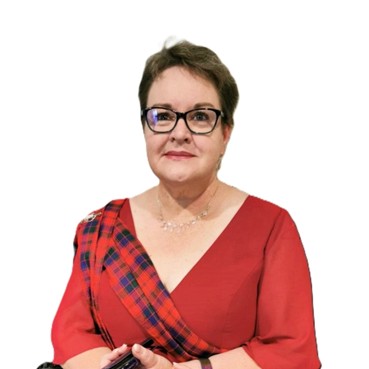
Julia Robertson is a PhD candidate researching mental health and wellbeing for people with brain tumours. A brain tumour survivor and disability advocate, she focuses on psycho-oncology, suicide prevention, and equity in healthcare. Julia is passionate about amplifying the voices of disabled scholars and driving systemic change in academia. Connect with her on X and Bluesky.
This blog is kindly sponsored by G-Research.
 Voices of Academia