
I am a researcher. For 12 years I had health-related research roles, and before that I was a healthcare professional – an occupational therapist. Making a difference through one-to-one clinical practice and research impact was also positive for my mental health. Except I’m not a researcher now. I was outmanoeuvred by the system.
My career (and my life) have not felt very linear. I moved around quite a bit in my childhood and early twenties and have always been very motivated by change – especially change in my career and change in location. I’ve struggled with my mental health since my teens and have found it important for my wellbeing to have roles that felt meaningful as well as intellectually challenging and varied. I always moved on when I felt like I wasn’t able to give my best anymore and if my mental health was slipping. In this blog I’ll share how my career has shifted over time, my mental health struggles, and how I’ve found myself in a new role that I love.
My career journey
I did my first degree in English Literature at the University of St Andrews in Scotland. During this degree, I volunteered with the charity Riding for the Disabled in Scotland and Northern Ireland, and had various part time jobs supporting children with developmental disabilities. This led me to do a second undergraduate degree, in Occupational Therapy (OT) at York St John University in England. During this time, alongside my OT training, I worked in supported living homes for adults with learning disabilities and in child and adult inpatient mental health services. I also worked as an academic support worker, helping students with mental health and special educational needs to achieve their degrees. I realised three things from these degrees – that I enjoy writing, I want to make a positive difference to others’ lives, and I really like research. The research module in my OT training was my favourite. When I qualified, an opportunity came up as the patient and public involvement lead for the European Lung Foundation, a respiratory health charity which worked to put lived experience at the heart of European clinical guidelines. I loved this role and stayed for 5 years, but the amount of travel took a big toll on my mental health and I burnt out.
I wouldn’t leave research though and successfully applied for a funded PhD at the University of York and returned to my interest in developmental disabilities. In this position I quantitatively investigated the health of caregivers of young children with developmental disabilities. But again, I struggled with my mental health – in part due to my sense of perfectionism, the critiques of my work, the steepness of the learning curve (so many new skills!), and with the isolation (and all against the background of trying to start a family). In the second year of my PhD, I found a peer network through doing the Three Minute Thesis competition and proactively improved my health by returning to my sense of needing to support others – I founded a peer support programme for PhD students at the university, called Thrive and Survive in your PhD. This network really helped me to see that my challenges were common to many PhD students – we normalised them and shared our knowledge and experience with others to also make their PhD journeys smoother. And in the end, despite the challenges, I submitted my PhD in exactly 3 years and passed with no corrections.
Alongside my PhD (in addition to running Thrive and Survive in your PhD and a cleaning job in a local convent), I had a graduate research post in a research centre linked to the University’s Department of Politics. I performed a scoping review of the use of data from non-governmental organisations in health policy and systems research. I stayed on with the Interdisciplinary Global Development Centre for my first post-doc. It was on Universal Health Coverage in Malawi (the Thanzi La Onse project). These roles spoke to my interest in global health (I worked as an OT in Uganda during my training) and charity sector work. However, as each was fixed term, I bounced into the next advertised post-doc role of interest and went back to the Department of Health Sciences, this time doing research on inequalities in perinatal mental health care. I settled here for 2.5 years and then my research career ended.
Leaving my research career
After I completed my PhD, I followed the typical research path in UK universities: I moved from casual to multiple fixed-term contracts. Working as a graduate researcher alongside my PhD worked well as a way to diversify my research experience and bring some money in. When I was offered a post-doctoral one year fixed term post with the same team, I was delighted to be staying in research and with people I enjoyed working with. As this contract neared its end, an opportunity came up in my PhD department with one of my supervisors and I successfully applied for a Research Associate (post-doc) role in evaluation and perinatal mental health interventions. In reality, it was more varied than this, including infant mental health and adult mental health research projects as well. I enjoyed the work but I was conscious that I wasn’t pursuing my own research interests and felt a bit lost and disappointed with myself. I was nervous that my research portfolio looked too diverse since I’d worked across so many different topics and in both qualitative and quantitative research roles. I worried that I had become too much of a generalist, and not specialised enough in a particular topic or method.
During this four-year post-doc period, I was trying to navigate becoming a parent and maintaining my research track record. I had two maternity leaves, and these were only 7 and 9 months respectively. The first was during the Covid-19 pandemic and I wasn’t entirely on leave – I wrote and reviewed papers during the first leave and took less time off than I could have because I was so anxious about having gaps in my publication record and losing my researcher identity. Becoming a parent during the pandemic with no family around and my husband not allowed into the hospital to support me after an emergency c-section, did not make for a happy maternity leave. Research and getting back to it felt like my sanctuary during this time. I needed to still be producing research outputs.
When I went back to work (full time) into my post-doc role in perinatal mental health research, I couldn’t find enough time and energy to do the priming/background work and write the grant applications to advance my personal research interests related to my PhD. I put what little energy I had into academic citizenship activities rather than more strategic roles (or grant writing) because I cared about my research community and rebuilding that shared sense of belonging after the pandemic. When I’ve struggled with my mental health, I’ve always tried to look beyond myself to try and make a difference. But this all together with a lack of geographical mobility (mortgage, husband’s job to consider) meant I couldn’t easily progress in my research career. I didn’t have the fight left in me to try and felt bruised by the system. I was despondent and felt like I’d failed.
What I hadn’t yet appreciated though, was how good a fit that system was for me. Of course there are systemic issues, and I won’t claim there aren’t, but my love of research meant I made sense to myself in a University context. I am deeply curious and conscientious. I loved the research community, and I was part of a thriving and supportive research group. I didn’t realise then how important the workplace environment and values are to my wellbeing, as well as the role itself.
My last post-doc role had taken me closer to evaluation, and I learnt theory of change and systems approaches as methods for evidencing impact. I decided to try a move back to the charity sector into an evaluation role (and a permanent contract). I missed out on a role with a health-related charity in 2022 but the same role was readvertised in 2023 and I was contacted and invited to apply. The timing was much better second time round as I was nearing the end of my second maternity leave and was delighted to be contacted. I returned to my post-doc role for about 4 months then left for the new position as Evaluation and Learning Lead for NHS Charities Together. I felt guilty about leaving work unfinished and papers unwritten, but everyone acknowledged that the system of fixed term contracts makes this outcome inevitable as ‘jobbing researchers’ have to look for their next role before they’ve wrapped up their last.
Moving into the charity sector
Note: My career has been ‘squiggly’. I leap from one thing to another, seeking new skills and knowledge (perhaps many researchers have this trait?).
After leaving my university role, this time I leapt back out into the charity sector as a monitoring and evaluation (M&E) expert. Having previously worked for a charity, I thought the context would be familiar and the role would be a good fit since M&E is essentially applied research skills.
But I floundered. I was miserable. My sense of curiosity, thoroughness and professional autonomy didn’t fit with the fast-paced ‘art of the possible’ approach of the role I found myself in. It was more about delivery than idea generation, and it was clear I was not a good fit for what was needed. I was passionate about the cause, but I couldn’t be myself. I couldn’t be a researcher. I lost my professional confidence and felt deeply ashamed. Ashamed that I’d failed at making the transition from the academic to charity sector, from research to evaluation, and baffled as to why I’d found it so crushing. I doubted myself and my abilities, worrying that I wasn’t capable of working and being a mum to two young children at the same time.
Unsurprisingly, my mental health was at a real low. Having experienced mental ill-health in the past, I was scared of the impact of this wrong career move on myself but also on my family and my new colleagues. I felt like I was masking at work and I couldn’t talk about anything but my job at home as I tried to figure out why it felt like such a bad fit and I felt so bad at it. I was in a doom spiral and contemplating going off work sick. I started looking for and applying for other jobs within a couple of months of starting this one, but nothing was the right fit, right location or right pay. Trying to be a parent, manage a full-time job and apply for other jobs at the same time, was exhausting. I applied for roles that weren’t the right fit because I just needed to get out. After some unsuccessful applications and interviews, I was drained and feeling pretty hopeless.
That was when my Thrive and Survive PhD peer support network came to my rescue. Two people reached out to share the advert for the job I have now. They told me I had to apply because I’d be perfect for it. Neither knew just how miserable I was in my current role, but their act of friendship and confidence in me gave me the boost I needed to apply. I got back in touch with others from the network and colleagues still at the university to learn more about their experiences of research culture. Friends reviewed my application and interview slides. I was friends with the person leaving the role so had an informal chat about what it really involved and whether I’d be good at it. I felt valued by them and my confidence slowly started to return. I put everything I had into getting the role. After a very anxious wait, I was beyond delighted to be offered it. I remain grateful to all those friends and colleagues who knew me better than I did myself during this time and they share my success in getting the role.
Making sense of my wrong turn
My previous role brought me pretty low but this isn’t a story about the lows, although sometimes they’re necessary to drive new beginnings. It forced me to take a really hard look at what happened. I contemplated lots of questions: were my struggles because of the role, the organisation or the people? (A careers podcast on Squiggly Careers really helped me think this through). This experience taught me that I need my values to align with the organisation I work for, and I need to feel like I’m making a difference. After all, I started my career as an OT.
My sense of making the world better for those around me is strong (and probably even stronger since becoming a parent). I’m not going to criticise my former workplace as it is a brilliant charity. Perhaps the role just wasn’t right for me, or maybe I wasn’t right for it or the timing was wrong. I may never fully understand what happened, but what I really valued there were the friends I made, the wonderful talented and compassionate colleagues who valued my research experience and wouldn’t let me forget who I was and what I had to offer. Looking back, I really appreciate the skills I acquired through research training and roles but also through my squiggly career path.
This wrong turn reminded me that I am a researcher but I’m a whole lot of other things too. In academic environments, sometimes these get pushed out in the quest to narrowly define ourselves through the lens of research excellence. In academia, our excellence is judged by the number of papers published and presentations given, the amount of research funding awarded, and the additional strategic roles required to meet promotion criteria. Yet we’re all more than this, and we need to be valued for all our skills and attributes, for our whole selves.
Finding a new career
Through recognising my broad skills and experience gained through my research and other roles (yes, even my convent cleaner role!), I found a way to bring all the parts together. After leaving the charity sector, I became a research enabler – part of the army of professional services staff in higher education institutions who make research possible through supporting its successful delivery, implementation and co-ordination.
In making the move to professional services, I discovered a community of people with many of the same interests and skills. I love mentoring, supervising students/colleagues, building relational networks, project management, organising events, helping others develop skills in monitoring, evaluation and impact, and hearing about others’ research and ideas. These skills and interests are perfect for supporting research (in my case as the research culture manager for the University of York). My skills and interests are also perfect for keeping the research ‘show on the road’ and ensuring research excellence (as well as exploring alternative ways of assessing excellence). These professional services roles don’t always get the recognition and reward they deserve, e.g., as co-applicants on bids, co-authors on research publications, career development or promotion opportunities, but they are the infrastructure that makes research possible.
I didn’t plan to become a research enabler, but my happenstance career has brought me to a good place. Taking a step away from research gave me a new perspective – a new appreciation for and understanding of the way research works, and how it is administered, governed and assessed. Being able to help research and researchers thrive aligns perfectly with my values, and instead of shame about leaving a research career, I feel pride in the wider contribution I can make. In my new role, I have found a host of others (mainly women) who had (like me) felt forced out of a research career by conflicting priorities. However, all of us are still highly motivated to contribute to research and see it and higher education institutions succeed.
The new role has been good for my mental health although life throws us curve balls, and on my first day in my current role my dad received a terminal cancer diagnosis. This of course hasn’t been good for my mental health, but his death would have been a lot harder for me to deal with in my last role, where I had so little emotional resilience left. Here I have the support and autonomy to thrive and to make a positive difference to the research system. I feel connected to research and able to contribute meaningfully. Despite the really challenging circumstances for me and my family, I have recognised that being a research enabler and working in research culture is the perfect fit for me and not a compromise. I also realised through losing my dad (a civil servant in Northern Ireland), just how similar our professional motivations and values have been: to always try our best, to have a positive impact, and to be fair and fight inequity where we can. In this way, my new identify is also a tribute to him.
Conclusion
What are my takeaways and reflections?
Leaving a research career that you really wanted and might have had to fight for can be painful. Give yourself time to grieve the loss of that identity (and goal).
Research enablers encompass a wide variety of highly skilled and vital roles. If you’re looking to leave research but stay close to it, there will almost certainly be a role that is a good fit for you.
Building your resilience is important. I discovered how resilient I was during my PhD, which tested me personally and professionally. I’ve drawn on that knowledge since when I’ve felt close to breaking point. Reflect on the skills and attributes you honed alongside your research and will always carry with you.
It’s also vital to craft your narrative; you need to make sense to yourself and know why you do your job, and this will help you feel fulfilled. As narrative CVs become more widespread in recruitment for research and research-enabling roles, being able to pull through the thread that connects your career story is important.
Know how to centre your sense of purpose. Whilst universities are changing, there can still be the sense of hierarchy between research and research enablers to overcome, and indeed between people with and without PhDs. These barriers to collaboration and mutual respect should not exist and I will continue to champion parity of esteem. What matters is that we are all part of a vibrant and thriving research system with a responsible research culture and achieving long term positive impact. Each person in the system matters and has a purpose. Lean into that sense of purpose.
On my bad days, because of course there still are some, I try to remember these things and feel proud of where I am now in my career journey. It’s squiggly and it’s made me who I am so I’m going to choose to be thankful for it – and for my new identity as a research enabler.
Artificial Intelligence (AI) Statement
No Artificial Intelligence tools or technologies were used in developing and writing this blog.
Biography
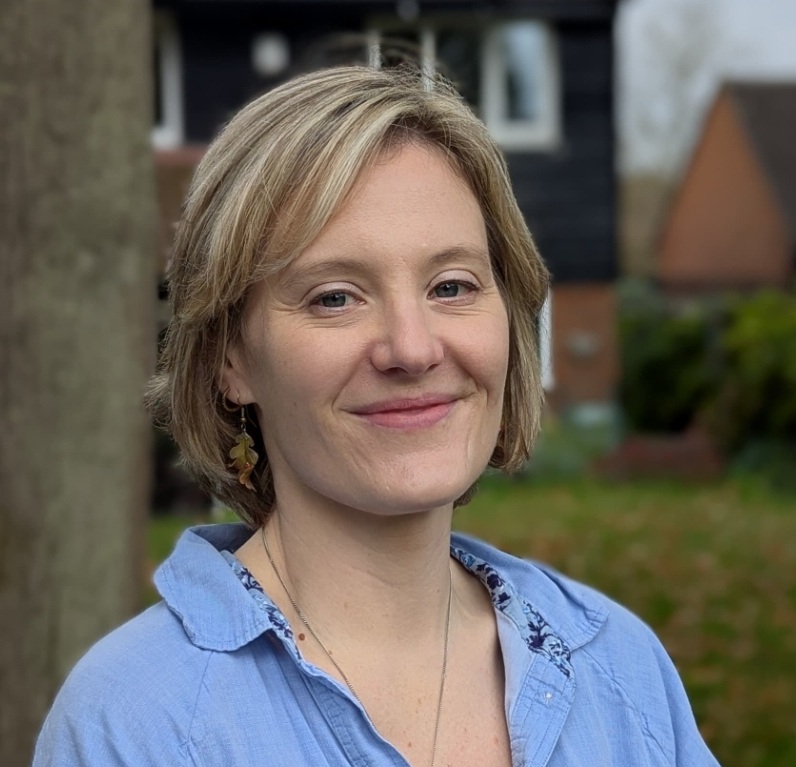
Sarah Masefield is the Research Culture Manager at the University of York, UK. Sarah has degrees in English Literature, Occupational Therapy and a PhD in health inequalities and data science. She brings mixed methods research skills to exploring research culture and evidencing impact, combined with a clinical background that makes her fiercely motivated to provide practical solutions to personal, environmental and task-related challenges for the benefit of each and every person. Sarah is the founder of the award-winning Thrive and Survive in your PHD programme and co-founder of the annual Department of Health Sciences Research Showcase at the University of York.

This blog is kindly sponsored by G-Research.
 Voices of Academia