Six years of studying were almost at an end. It was December, and I was looking forward to Christmas. Beyond that, I was looking ahead to April of the following year when I would complete my BA degree. For anyone, this would be an achievement, but for someone like me, who had left school at 15 without taking exams, I had doubts that I could do it. My string of dead end jobs and long stretches of unemployment made me want to change things. Even my family, especially my dad, thought I was a lost cause, So, I was elated to be so close to the finish line. Then, one phone call changed everything.
The diagnosis
My mum called me while I was wrapping Christmas presents and said Dad had been diagnosed with cancer. It was unexpected, although he had smoked since he was 14, but stopped a few years earlier. He had been to the doctor several times for what he thought were heart problems, over the period of a few months. None of us ever thought about the possibility it wasn’t heart-related and was cancer instead.
I tried not to worry about it too much, but went home to see him at the weekend. He was positive that he was going to beat it, and I told myself he would. So, I carried on studying. I was enrolled with the Open University, so everything was remote, and I’d always tried to stay a few weeks ahead of the course timetable in case anything set me back.
Coping with uncertainty
Over Christmas, it became obvious, at least to me, that there was a very real chance my dad would die. He told us it was stage four lung cancer and secondary bone cancer. He remained positive that his scheduled Chemo in the new year would help him beat it. I can’t speak for anyone else in my family – my mum, brother and older and younger sister – but I was playing along for his sake. I had a mini breakdown in the spare room on Christmas Eve night. I think that’s when it really hit me and I cried so much I felt like I couldn’t breathe. I had to do my best to not make any noise as my parents were sleeping in the next room and we were all openly agreeing with my dad that he was going to be fine. Hearing my hysterical crying would suggest I didn’t really believe that.
We had a nice Christmas day, and we all helped with making the Christmas dinner, which my dad would normally make on his own. I managed to put the previous night’s upset to the back of my mind and tried to continue on as normal. In fact, I probably bottled it up more than I should have done. Nobody was openly talking about the possibility of losing my dad, and I understand why. We had to remain positive for him, but I don’t think it helped anyone, including him.
In the evening, I went upstairs with my netbook and continued to study. Despite my distress, I felt it was more important than ever to stay ahead of the course timetable. It was like I had to split in two and there was the emotional side of me and the practical side.
The emotional side of me wanted to drop everything and be there for my dad, but the practical side knew messing up my life wouldn’t change whatever the outcome was. I could defer or quit the course, and I could stop earning money to pay the rent and bills, but then I be jobless for even longer, and probably homeless too. So, I kept up with things like studying and ensuring I had money coming in, even though it meant less time being there for my dad.
A new year and new heartache
I started to spend more time helping to look after my dad, mostly with practical things like cleaning the house while he was too unwell to do much himself. I also went with him to the hospital a couple of times for his chemo. At that time, it was more for the emotional support than anything else. He was okay walking and getting there and back in a taxi.
Whenever I was at my parents’ house and had some free time, I studied and completed essays on my netbook. It was a difficult balancing act. Eventually, the three-week buffer I had from getting ahead of the timetable became two weeks, then one, until I was just about on track.
My dad called me to say the doctors had stopped the chemo early because it wasn’t working. He seemed to think that they would offer another solution, but they didn’t. It wasn’t until a nurse visited him and asked if he had life insurance, which he didn’t, that it seemed to sink it. My younger sister lived closer. She and her partner spent the most time round there, and I did what I could, which later, felt like it wasn’t enough. My mum didn’t seem to accept it at all until later, when he had gone.
The practical considerations
It was never discussed openly in our family, but sooner or later we all caught on to the fact that Dad was being sent home to die. No more treatments were offered. He was just given medication to manage the worst of his symptoms and eventually, had an oxygen tank delivered to the house, which he relied on a lot.
This was a very difficult time, and I leaned toward the practical side of myself to help cope and considered my options. There wasn’t anything I could do to change what was happening with my dad, so I looked at my studies and the grades I’d already gotten.
Thankfully, the last module I had to complete had something called a substitution. In short, it meant I could miss one essay and still finish the course. I can’t pretend to understand exactly how it worked, but thankfully, there was an online calculator that I used. Based on my other grades for the module, and even if I scored 90% on the remaining essays (which was unlikely), my final module grade couldn’t possibly be high enough for me to get a better degree classification than 2.2.
In other words, I would have the same outcome if I scored 60% or more and missed one essay. I was suddenly grateful for all the work I had put in before, on that module and the five before it. I’d always done my best, rather than have the mindset that I could catch up later. I had been getting 60% or more on my assessments, so I just had to keep that going.
A personal choice
I knew there was an option to ask for special considerations, but I didn’t want to do that. Years before my dad’s diagnosis, I had to change from a named degree to an open degree (consisting of a mix of subjects) after failing a module, and realising the gaps in my education would make it almost impossible to pass the subject I wanted to do This felt like the last chance to prove to myself that I could complete a degree, even if it wasn’t the one I originally set out to do.
Looking back, I wasn’t coping as well as I thought I was. Completing my degree was a big distraction from what was happening with my dad, and in some ways, I wanted to prove myself to him. We had a rocky relationship at times, and I never felt like he believed I could achieve anything with my life. It also felt like if I asked for special considerations, I’d never know what I could have achieved on my own, and that I’d used my dad’s illness to benefit myself. So, while I understand someone using this option, it was my decision to complete the degree without this.
The end of the journey
I completed the degree just before my dad died, but didn’t get the results until months later. I couldn’t tell him I had passed or gotten the classification I wanted. I don’t know if he would have been proud, or dismissed my achievement. Either reaction was possible with him.
After I’d had time to process everything, I was wracked with guilt which sent my mental state spiralling. I knew that I did what I needed to with my education and other parts of my life, but that didn’t change how I felt. I broke up with my partner (now husband) for a few months.
Once I was truly on my own, I relived everything over in my mind, imagining I chose something else each time. Instead of absorbing myself in studying, I spent more time with my dad, especially near the end of his life. Or I chose to go to visit him the weekend before he died instead of going to my partner’s friend’s birthday meal. There were dozens of scenarios I wished I could change. None of them would have altered the final outcome, and I’ve had to come to terms with my decisions and find peace with my actions since. It helped to listen to about fifty episodes of a podcast about grief and hear other people’s experiences, and also to attend a group session for six weeks. I saw a pattern. Everyone felt guilty, and I could see that many of things they felt guilty about weren’t their fault. Yet, I was blaming myself for similar things that I did or didn’t do.
It’s been over seven and a half years since I lost my dad. Some people might think I should have done more. Others might agree with me that I did what I could and had my own life and responsibilities to think about. I’ve learned to forgive myself for most of it, because I couldn’t move on with my life if I didn’t.
Conclusion
There’s no easy solution or single best way of coping when a loved one has a terminal illness. When you’ve invested so much into learning and trying to give yourself a better future, it can feel selfish to think of yourself and prioritise your needs when someone is dying. However, my experience also reminded me I still had a life to live and I didn’t want to waste the opportunity to complete my degree. It reminded me how short life can be, and I wanted to live my life.
Besides the group sessions and podcast, studying helped, and I went on to do a Creative Writing MA. I also ran in two Race for Life events in my dad’s memory before bringing out an anthology to raise money for cancer charities. Those things made me feel more proactive.
In the end, I had to forgive myself for the sake of my own mental health because nobody can go back and change the past. So, you have to think about the future, That’s what I try to focus on every day.
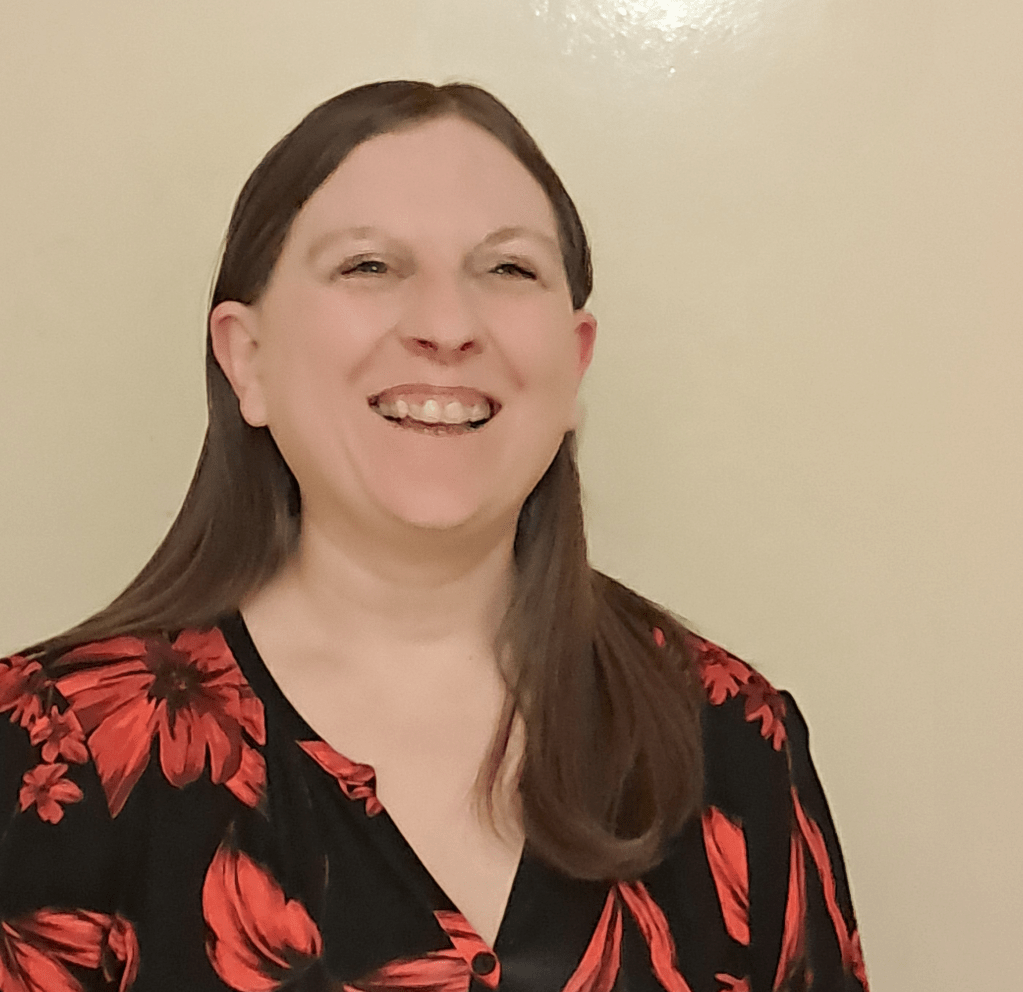
Amanda Nicholson is an author, poet, podcast co-host and copywriter. Her poetry has been broadcast on BBC Radio Manchester. She Has a Creative Writing MA, and she’s had articles published by Ask.com, Harlequin and Readers Digest UK.

This blog is kindly sponsored by G-Research
 Voices of Academia