Navigating higher education (HE) is difficult for any student, but for those who don’t fit the traditional mould – whether due to neurodivergence, disability, other protected characteristics or any combination of the above – the journey is fraught with additional obstacles. These obstacles shape our academic and personal lives in ways that are often hard to fully grasp if you don’t share some of those characteristics.
My own story, complete with an autism diagnosis just before adulthood, and the onset of a debilitating chronic pain condition, has been one of resilience, discovery and advocacy. As I’ve moved through the world of HE, I’ve seen first-hand how systemic barriers can hinder progress and damage wellbeing. That said, I’ve seen how these challenges can be a catalyst to drive change for those too stubborn to accept systemic barriers preventing people from reaching their full potential. This is not just a recounting of my story so far, but a call-to-action for a more inclusive and compassionate educational environment for all.
The Diagnosis That Changed and Saved My Life
I have always been a ‘square peg in a round hole’, never quite fitting in. I struggled socially and emotionally, but I always excelled academically. Being different isn’t easy and up until relatively recently I didn’t know why I felt so out of place. An eventual autism diagnosis two weeks before my 18th birthday would make everything clear.
Suddenly, it all clicked. I wasn’t broken or some sort of alien from another galaxy. My brain is just wired differently. For all those years it was like having Android software running on Apple hardware – baffling to anyone familiar with Apple, but perfectly understandable in its own context. This is an analogy for neurotypical-neurodivergent communication issues (illustrating neurodivergent-neurodivergent communication tends to be less difficult).
My autism diagnosis provided clarity in some aspects of my life, but I faced a further complication which challenged my mind and body. I am a full-time wheelchair user due to complex regional pain syndrome (CRPS) with dystonia, which causes severe pain, hypersensitivity to touch, spasms, fatigue and more. I developed CRPS with dystonia at 16, but it took 9 months to receive a proper diagnosis, during which I was dismissed as a hysterical, malingering teenager. The delay in diagnosis meant missing the critical window for early treatment, which derailed my education and career plans, requiring me to rethink and reevaluate my future as a doctor. Being told that medicine would not be in my future broke my heart. My teenage years were not filled with parties and mischief but were marked by medical misogyny and academic barriers, even before I could enrol in higher education.
University Life
When I first started my neuroscience degree, many at home weren’t sure if I’d manage to live independently, especially with my disability. They encouraged me to just get through the first term, reassuring me that dropping out would be understandable. Now, as I head into my fourth year, people admit they didn’t think I’d last more than a few weeks, let alone thrive! They also assumed at best I’d isolate myself, focusing only on my studies, but I’ve proven them wrong in more ways than one.
I’ve always had a voracious appetite for learning, but it led to a reliance on external validation. My self-worth became tied to constant high achievements and continuous improvement. Coasting or stagnating, even when exceeding targets, was unacceptable. I constantly pushed myself for that dopamine buzz and sense of accomplishment.
My first two years were a mirror of my earlier schooling, pushing myself to be better, to know more, to have more sophistication and flare. I worked excessive hours, didn’t acknowledge my achievements and tried to do everything and be everything to everyone (…the small business, volunteering, university committees, ad hoc work, societies, student representative work and more). It was also difficult not just because I have a driven personality but also because neuroscience is my special interest. It is a passion that provides me comfort and stability, but it does make it difficult to switch off from work and study. I was and am lucky to have people around me who could see that despite my outward success I was hiding pure sleep deprivation and exhaustion. My mental health was spiralling, my physical health crashing, and I was unable to admit I was struggling. I now realise I was in autistic burnout – a state of extreme exhaustion and stress, caused by prolonged masking and overexertion – and was fortunate to avoid becoming another student suicide statistic.
Accessibility Challenges
On top of my struggles, I’ve felt a compounding theme of accessibility challenges and systemic ableism throughout my university journey. When I started university in 2021, I joined the growing community of university students with disabilities, which has surged by 47% since 2014, highlighting just how many of us face these challenges. That’s who we know about though, as fewer male/assigned male at birth students report disabilities, and 60% of students are unaware of what support they can get before starting their course, so are less likely to disclose their disability. I can still remember how lost and overwhelmed I felt at the start of my university experience. Prior negative experiences from school, trying to acquire support and simply existing in an inaccessible world, all whilst battling harmful stereotypes, contribute heavily to students underreporting their accessibility needs.
One of my biggest barriers has been finding accessible accommodation, and I know I’m not alone in this. Shockingly only 66% of higher education providers in the UK thought about making their accommodation accessible. Even when there is a policy, there may only be a limited number of adapted rooms in student accommodation. Typically, this means having a space with a suitable wet room bathroom, along with a wheelchair-accessible/adapted kitchen, plus as-needed additional adaptations for the individual. This handful of rooms “on paper” is also functionally smaller in number when you have continuing students remaining in their rooms as they can’t find accessible private accommodation, meaning prospective students must delay university or consider other education providers.
When you have a disability, there is always extra labour to be done, and arguments to be had with people who make you justify your existence and why you are asking for certain things. It’s constantly feeling like an outsider when you can’t access a room or need to take a ridiculous detour. People don’t see the amount of energy this takes on top of studying, trying to work, and having health issues (both physical and mental). Sometimes, it’s enough to push you to the edge simply because you’re always fighting for your foot (or wheels) in the door.
A Call to Action for Accessibility Improvements in HE
Amidst all these challenges, I found a place that would bring comfort and inspiration – Cardiff. I want to take you back to a beautiful spring open day a little over five years ago with time spent in Alexandra Gardens. There were stunning blue skies – a rare sight for Wales, along with the mythical entity that is bright sunshine. Cherry blossoms clumped on the trees, making them look like candyfloss. In the next second, a breeze passed and spread flurries of blossoms as if it was snowing, petals settled and contrasted the most delicious red tulips. This is the day I fell in love with the city.
To this day, Alexandra Gardens is one of my favourite places in Cardiff, rain or shine.

Alexandra Gardens on a spring day. (Photo taken by me)
It was one of the first “big days out” I had done since I developed a physical disability, with a wheelchair that didn’t fit, naïve to all the savvy tips, tricks and routes I know now. But I managed it. Even if my wheelchair didn’t quite survive the subway tunnels, I did it. Considering how busy and fast-paced open days are, it was a small victory. While the city has its beauty, it has its challenges as well. Experiencing Cardiff that day as a new wheelchair user opened my eyes to how much accessibility today is still a wider societal challenge. Have you ever considered how a city’s design might look through the eyes of a wheelchair user?
The issues I find in wider society also apply to HE. But there are many ways we can all work together to make university settings more accessible and inclusive. From my experience, most individuals do what they can within the system, but that still leads to exclusion. Below are some examples of things which I find make a massive difference, not only allowing people like me access but to feel connected and wanted – protecting mental health and wellbeing (for more information, head to Modern Campus and/or Unlearning Ableism).
Classroom Accessibility
Creating an inclusive classroom environment involves several key practices:
1. Microphone Usage:
Utilising microphones helps students who are D/deaf, hard of hearing, or have auditory processing issues (I fall under this umbrella when tired and overwhelmed). This practice not only improves accessibility but also enhances the quality of recordings, making them clearer for all students and sparing you from straining your voice.
2. Use of Captions:
If captions aren’t automatically enabled, make sure to activate them. Even AI-generated captions with occasional errors significantly aid D/deaf and hard-of-hearing students, as well as those with auditory processing issues. Captions also benefit students with English as an additional language by improving overall comprehension.
3. Communication Considerations
Face the cohort while speaking to support students who may be lip-reading. This will ensure that all students can access the information being presented. Additionally, if there will be any sudden or loud noises, please warn people where possible. This consideration helps neurodivergent individuals and those with anxiety, trauma, or PTSD. A good example of this is when one of my lecturers forewarned a noise would play in her PowerPoint during a lecture to illustrate a neuroscience concept (which I could access without spending the rest of the lecture in a startle response, thus improving engagement).
4. Notification of Visual Stimuli:
Avoid or inform students beforehand if flashing or strobe lights or moving images will be used. Such notifications are crucial for those with photosensitive epilepsy, migraines, or sensory sensitivities. Unexpected visual stimuli at best may ruin my day due to sensory overload, but at worst may ruin my week with the risk of migraines. However, for people like one of my dearest friends, stimuli like this without warning may well be life-threatening, as she wouldn’t be able to take precautions risking the trigger of a seizure.
5. Reasonable Adjustments:
Before conducting labs or workshops, check students’ reasonable adjustments to ensure that necessary adaptive equipment (e.g. height adjustable lab benches) and support are available. This includes having trained first aiders present for students with health conditions like epilepsy or heart issues. Making these adjustments in advance ensures a safer and more inclusive experience and overall more enjoyable time for everyone involved. Even when I pre-emptively email those who are session leads, I have often arrived to find equipment not there which delays my accessing the session, putting me behind and drawing unwanted attention to myself.
Accommodation Accessibility
Accessible housing and dietary considerations are essential for an inclusive environment:
1. Accessible Housing:
Student accommodation should feature accessible amenities such as wet rooms and wheelchair-accessible kitchens. Regular updates and maintenance are necessary to meet evolving needs. Limited availability of adapted rooms can lead to long wait times or delayed enrolment, so maintaining enough accessible rooms is crucial.
2. Dietary Requirements:
Accommodation options should consider various dietary needs, including Halal, Kosher, vegan preferences, and food allergies. Integrating these options into the application process, along with preferences like quiet living, helps streamline availability and creates a safer, more inclusive environment. I have some serious allergies and last year my overall physical and mental wellbeing suffered in university accommodation due to flatmates who continued to use my allergens even with agreements not to use and other precautions. These individuals were not technically in the wrong, because there are no policies in place.
Cultural Accessibility
Understanding and addressing cultural and intersectional needs enhances overall accessibility:
1. Intersectional Awareness:
When designing policies, recognise the diverse experiences of students based on their intersecting characteristics. For example, the needs of a White woman with mental health issues who is estranged from her family will differ from those of a physically disabled Black man with strong family support. These are just two examples; there will be innumerable combinations of characteristics, needs and experiences. Direct feedback from students is the best way to understand and address these varied experiences.
2. Accessibility Beyond Basics:
Accessibility extends beyond physical access, including sensory, cognitive, and social needs. Policies should be comprehensive, addressing a broad range of needs. Consulting with disability advocates and specialists can help ensure that policies are effective and inclusive. Regularly seek input from both students and staff to continually improve the university experience and overcome the broader societal challenges reflected in institutional structures.
Universities often have mirrored broader societal challenges with similar structural issues making change difficult. Whether due to cost, tradition, or a perceived need for fairness, these barriers persist but aren’t insurmountable with understanding to pave the way for a more inclusive academic environment.
Conclusion
Looking back, these barriers and experiences while trying, have helped shape who I am today: someone who tirelessly advocates for change. I can see the strength in my story and so many others who are pushing for a more inclusive higher education system and wider society. In the same vein, I also know how tired I am from constantly battling for even the simplest things.
These systemic barriers aren’t abstract – they affect real students every day, just like they’ve affected me. This is why I encourage you to reflect on your experiences of education. Do my words resonate with you? Are there things you wish you could change? What changes could make higher education more inclusive for all? I know, at times, it feels like you’re screaming into a void or banging your head against a brick wall but know there are others who are screaming into that void with you.
Together, we can make change happen.
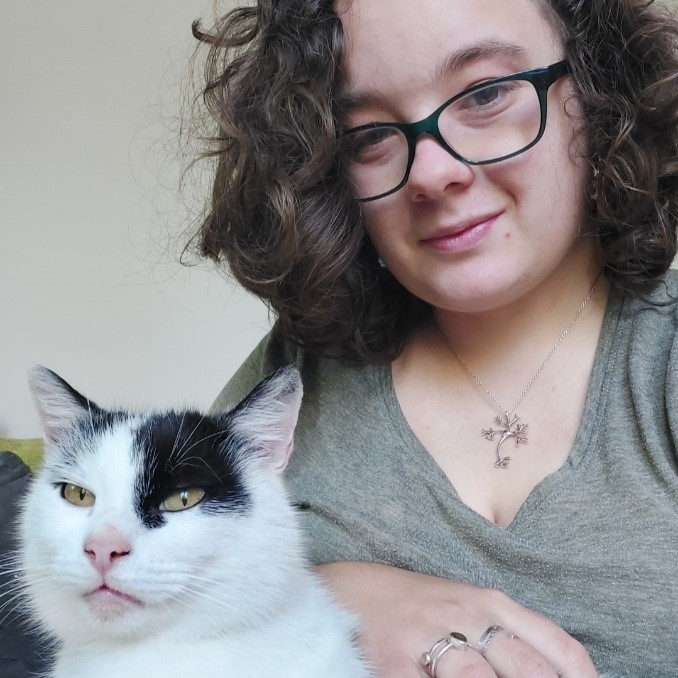
Alexandra is a 4th-year integrated master’s neuroscience student specialising in neuropsychiatry and neurodevelopmental disorders. She has volunteered with the CRPS charity Burning Nights and mentored underrepresented youth as a STEM pen pal for Letters to a Pre-Scientist. Alexandra aspires to become a neuroscience-informed psychotherapist. In her free time, she enjoys crafting, reading, nurturing her plants, and spending time with her cat, Archimedes. Her blog post is inspired by the support and encouragement she receives from her closest friends.
This blog is kindly sponsored by G-Research
 Voices of Academia