
TW: Death and family bereavement
My father was diagnosed with Stage 4 bowel cancer, just as I was completing my Health Psychology Masters, and just before I found out I had been successful in being awarded PhD funding. It is well known that doing a PhD can be challenging for mental health, but this diagnosis meant that things were going to be even harder for me. For the next five years, I experienced a mix of extremely stressful life experiences at the same time: undertaking a PhD, being a caregiver for Dad, his death, and the grief that followed.
I hope that by sharing the good and the bad parts of my experience in this blog, including suggestions about how to make the process easier, it might help others get through the process of returning to their PhD and experience the joy that this finally brings.
Suggestion 1: Start small – break work into manageable chunks
On top of impostor syndrome and feelings of inadequacy, which are common experiences during PhD study, I was also experiencing anticipatory grief (or living bereavement) as my Dad was dying. These feelings didn’t leave any space in my head for anything else, let alone being able to think critically, process theoretical concepts properly or conduct analysis appropriately. I therefore had to change my working style accordingly.
Personally, I found it easiest to break down the enormity of the PhD into smaller tasks and steps with seemingly endless to-do lists that I could work through at my own pace. I also had to accept that some days I would be able to tick off more than other days and that was ok.
Also, identifying which tasks were easier or were more enjoyable was often a good starting point; this helped me get into my “work” frame of mind and I could tackle the harder or more boring tasks later. For me this was starting on the introductions to each chapter or the introduction chapter itself when I returned to my PhD after pausing my studies for a year. Luckily I still absolutely loved the topic, so I enjoyed reading and summarising the relevant literature and inserting citations as I wrote. This meant that getting words on the page was easier for me compared to having to do analysis and write that up, and meant I could go back and edit on the days when I wasn’t feeling able to do much.
It is important to remember that a PhD is a marathon, not a sprint and one thing off the list means one step closer to the end.
Suggestion 2: Take formal interruptions – for as long and as many times as you need
One of the things that was critical to my success was having space away from the PhD when needed. This allowed me to process some of the grief and clear some of that space in my head to allow me to then be able to focus on my topic. I think if I hadn’t taken the time away, I would have most likely quit my PhD and not returned to finish it.
I initially took a two-month interruption as my caring roles were increasing as Dad was getting more poorly. I ended up extending this to a year as Dad entered the end of his life and then subsequently passed. I am grateful that I had this time off to spend with Dad without having to worry about the PhD. It was also helpful to return to my thesis and final analyses after this break, as I felt more confident and was able to make decisions and edit more effectively after having the time away from it.
As a PhD student, you are entitled to take holidays as you would whilst employed. It can be difficult to take time off, but it is so important to take a break and rest/recharge rather than thinking about your PhD all the time.
At my university in the UK, I was also entitled to take a formal interruption, which was when “the clock stopped” on my PhD; this meant a pause on my studies. I was still enrolled as a student and still had access to student facilities and emails, but I did not have to work on my PhD during this time. I was able to take interruptions for as long as needed (although longer lengths usually need to be justified) and as many times as needed. In my experience, these can be taken to either preserve your mental health if taken early, or to help you rebuild your mental health after crashing/burning out.
It is important to acknowledge that it can be difficult to take interruptions as your student stipend may be paused during this time, meaning that you won’t have your usual income. In some cases, it might help to request to go part-time in your studies rather than continuing full-time, to give yourself that time away from your PhD.
I think taking the decision to step away from something that is having a negative impact on your mental health is commendable and is an important investment in yourself.
Suggestion 3: Be kind to yourself
Finding things to do outside of my PhD helped me cope. This involved things like listening to podcasts of comedians talking nonsense to make me laugh, or doing repetitive tasks which meant I didn’t have to think at all, like knitting and therefore having to concentrate on counting stitches/rows and having to follow patterns. I found these active tasks much easier ways of essentially being mindful and staying in the present, which helped reduce my anxiety and overthinking.
This sounds like common sense, but it can be difficult when focusing on a PhD and/or caring for someone who is ill. Self-care and self-compassion are often the first things to fall to the wayside when you are in survival mode, but it is so important to look after yourself and be kind – you cannot pour from an empty cup.
Suggestion 4: Have open and honest discussions with your supervisors
I was very fortunate that I had extremely supportive supervisors, who never gave up on me and had faith in me even when I had lost confidence in myself. Although it can be difficult to admit that you’re struggling, I found over time I was able to have honest conversations with them about my progress (or lack of) and the state of my mental health, which really helped them to support me and set realistic goals and targets.
My university required PhD students to complete quarterly progress reports to state their targets for coming quarter, progress against previous quarter targets, highlight any challenges encountered, and anticipate future barriers towards completing upcoming targets. I found it useful to document my mental health struggles in this formal way so that both my supervisors and independent academic tutor were aware of my situation, and to have a record to refer back to when requesting formal interruptions as mentioned above.
I lost count of the amount of times I cried in my primary supervisor’s office and am privileged to call him a friend even now. However, I know that many people do not have this relationship with their PhD supervisor and would not want this form of pastoral support from them. You do not need to share this emotional side with them if you do not feel comfortable doing so, but it is important to be open and honest about your progress and wellbeing so that they can support you appropriately to complete your studies.
Suggestion 5: Seek support, especially during the final stages of the PhD
For me, I found closing this chapter of my life in terms of finishing the PhD to be hard, especially when it has been the most constant element at this time in my life, whilst having to do this in parallel with the other ending that I was already dealing with from bereavement.
Writing the Acknowledgement/Dedication can be triggering as it can be difficult to put into words the level of thanks and gratitude you feel towards all the people who have supported you on this PhD journey, especially for those people who are no longer here. I did find it quite cathartic though after many tears and felt pride ultimately in dedicating my thesis to my parents and having my Dad’s name written there. Take your time and acknowledge whatever feelings and emotions you experience.
Both Viva and Graduation celebrations can involve a mixture of feelings; from happiness and pride at accomplishing this mammoth academic achievement whilst also being sad that your important person isn’t there to see it. Just let whatever emotions come up and enjoy the highs and get through the lows.
Not only is doing a PhD a unique experience, but dealing with a bereavement is also unique and unfortunately difficult to understand unless you have been through both, let alone at the same time. I was able to connect with two friends who had also experienced the death of one of their parents during their PhD, and we were able to give each other support and share the highs and lows of trying to finish a PhD whilst grieving.
Unfortunately the loss of a close family member or friend during PhD studies isn’t that uncommon, given that life doesn’t pause whilst you are studying. This can also be seen by the other four excellent blogs on Voices of Academia on this topic by Jasmine Schipp, Ryan Linn Brown, Gunoor Mutreja and Sam Strong. Connecting with others showed me I wasn’t on my own in feeling this way and there were others out there who could help me cope with this difficult period. Being able to speak to people who just get it (and don’t say inappropriate things), from the PhD point of view to dealing with grief and the two combined, was one of the most useful things to me and one of the biggest supports to me during this time.
Likewise, seeking professional help from a counsellor or therapist who specialises in bereavement and who has also done a PhD or doctorate themselves has also been invaluable to me. Again, it’s so helpful having another person to speak to who just gets it. The UK mental health charity MIND also offers longer term sessions (up to 16) that are means-tested, so this can be much cheaper for students (~£10 a session), and some have specialist bereavement counselling, so I encourage you to explore what options are available through charities as well student services at the university.
Finally, I also found anti-depressants to be a game-changer for me, as was getting a formal diagnosis of depression, but speak to your GP about your circumstances to see if they are suitable for you.
Conclusion
One of the most important things I learned from experiencing mental health issues and bereavement during my PhD is the importance of knowing and respecting your limits, and ultimately taking time off if you need it. I believe this is especially important during a PhD (versus an employment setting), where there are institutional mechanisms in place to allow you to take an interruption from your studies and stop the clock. As hard as it can be to ask for help (or more time), easing the pressure in various ways can help you to be kind to yourself. In the end, this is likely to result in you finishing your PhD in a better place mentally, rather than trying to push through and burning out before the end.
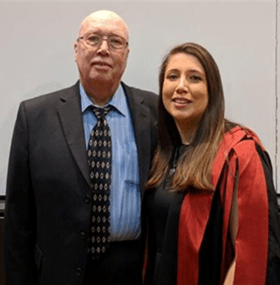
Dr Hema Chaplin is a health psychology researcher interested in health services research in the UK; particularly the impact and involvement of patients and the public in designing and prioritising research projects to improve the quality and focus of research. Another key area of interest is the psychosocial impact a long-term or chronic illness can have and application of psychological interventions and theories, to improve quality of life and other psychological measures especially outcomes that are important to patients.
X: @HemaChaplin

This blog is kindly sponsored by G-Research
 Voices of Academia