
Imagine winning a Ferrari in a lottery—sounds thrilling, right? The rules are that you cannot sell it or transfer it. Once you are over the joy of winning it, a small predicament arises, as you find yourself unable to afford the exorbitant expenses associated with maintaining such a luxurious vehicle. Adding to the challenge, you lack the knowledge and experience required to operate it, and no one in your small town possesses this expertise either, thus requiring you to relocate to effectively leverage it. Then there’s your friends, family, and local community who do not really understand why you might want the Ferrari in the first place.
Then, let’s envision a scenario where you relocate to a distant city where residents are accustomed to utilizing such vehicles. In this new environment, people are so familiar with these cars that they struggle to comprehend why you find it challenging to adapt. Meanwhile, individuals from your hometown fail to understand your decision to leave, perplexed by your pursuit of learning. The individuals who donated the Ferrari and were present for the photo on the day you won have all but vanished. So yes, you won a Ferrari, but in reality, it hasn’t brought you happiness necessarily. You can hardly make use of it, unable to share it with your family, and you find no joy in owning it. Furthermore, the burden of maintaining it has plunged you into significant debt, affecting your mental health.
Academic pursuits
For me, my “Ferrari” was having academic opportunities. But I’ll be honest, they demanded more than a simple lottery ticket purchase in the example above. To win, I dedicated numerous years to hard academic work, underwent selection processes, and made some personal sacrifices. Adding some context here, I am from south-eastern Mexico, specifically from Mérida, a beautiful city that combines Spanish influence with Mayan culture within a tropical setting. At the age of 21, in the middle of my undergraduate studies, I won a scholarship opportunity to embark on a year-long academic journey in France. I am not exaggerating when I express my immense excitement about being in another country for the first time, especially one as renowned as France. However, despite receiving this opportunity, there were so many challenges to overcome.
I suddenly found myself in a foreign land without proficiency in the language. In all honesty, the initial months were overwhelming; the French language sounded like mere noise to my ears. Despite my brief exposure to French courses, communication remained a significant challenge. It felt as though people judged me as if I were unintelligent when I struggled to speak the language properly. Furthermore, I had a limited understanding of how the academic exchange program operated, incrementing the overall uncertainty in my life. I found myself unsure about the courses assigned to me that year. It turned out that some of them were unrelated to my career in my home country, and that’s when I realized I lacked the proper academic background for those curses too. Then language and academic challenges had a profound impact on my mental well-being in several ways. They heightened my feelings of insecurity, leading me to doubt my abilities even before attempting tasks. This self-doubt contributed to isolation, further exacerbating my struggles in academic courses. I felt ill-equipped to confront the challenges before me and experienced a profound sense of isolation. Reflecting on it now, I see those effects as akin to a snowball, they were gradually accumulating over time. Consequently, I often found myself grappling with episodes of depression, anxiety, and imposter syndrome.
Lack of support
I felt unsupported by both my home institution and the international institute. Although the program was designed to send students in pairs, my designated partner was absent, having quit in the first weeks. In general, I remember there was a high rate of students dropping out or failing courses in these programs, which, to me, serves as a warning sign of systemic shortcomings. The absence of a companion heightened my feelings of isolation, compounded by instances of racism and discrimination from fellow students. I vividly recall discriminatory remarks solely based both on my nationality and on my gender. Reflecting on those times now, I recognize the episodes of anxiety and depression I endured during that period. Looking back, I realize this experience resulted in me holding a biased view of myself that has accompanied me since then: I thought that I wasn’t competent enough, feeling like a fraud whenever I didn’t meet others’ expectations or believing I should have done things better. This resulted in me not always being kind to myself or others. I often believed that making mistakes would lead others to perceive me as less valuable, which in turn made me my harshest critic, applying the same reasoning to others’ mistakes. Consequently, I became overly critical, making it difficult to fully appreciate either my own accomplishments or those of others.
Furthermore, I found myself lacking adequate emotional support from my family. Reluctant to worsen the already strained family dynamics resulting from parental divorce, they were preoccupied with their own battles. Additionally, I carried guilt for distancing myself from my family. In general, I refrained from seeking help or support from my family members, viewing it as a sign of weakness. To be fair, in developing countries like mine, it’s often the norm to suppress the voices of young people and children, and this means we rarely speak up when we are struggling. Consequently, confidence in oneself isn’t naturally nurtured – this made it all too easy to dismiss my own feelings and for my inner voice to convince me not to reach out for help.
For many years, I carried the weight of that experience like a burden of failure. This was exacerbated by the notion that other students in a similar situation appeared to adapt more effectively. I came to realize that there is a misconception that a student’s self-confidence, emotional intelligence, or ability to cope is directly proportional to academic grades. I learned that despite confronting similar situations, we may face different struggles, as we do not all begin from the same starting point or backgrounds. But, this is nothing to be ashamed of; in fact, it is what makes every person unique.
Feeling alone, isolated, and unsupported significantly impacted my academic achievements. Upon returning to my home institute, my motivation waned. As a result, my graduation took longer than necessary.
Silent suffering
Just like if I had won a Ferrari, there is huge pressure to be grateful, and yet it is important to acknowledge the difficulties too. I often felt my feelings were invalidated due to this expectation. Many couldn’t comprehend why I didn’t find joy in visiting iconic landmarks like the Eiffel Tower, unaware of that this experience also harboured struggles. Therefore, I feel compelled to shed light on how such opportunities can inadvertently undermine one’s self-confidence and exacerbate imposter syndrome. Of course, this experience, like life, is not black and white. Despite the challenges, I’ve also gained some wonderful memories from this experience. I’ve had the privilege of meeting exceptional individuals, and these experiences and persons shaped my path in academia and my personal life. I consider myself incredibly fortunate to have undergone this journey.
My journey as a PhD student was also challenging. I performed again a new internship but now in Germany, full of new struggles, and again I felt pressure to “be grateful” for the opportunity. I came to the realization that I wasn’t alone on those struggles when I read that postgraduate students are six times more likely to experience depression and anxiety compared to the general population. It’s particularly concerning that feelings of isolation are amplified among students who are marginalized due to factors such as gender, race, being first-generation, or being international students.
I don’t place blame on anyone, but I want to highlight that such situations can lead to silent suffering. PhD students and postdocs frequently encounter pressure to gain international experiences, as job postings often prioritize candidates with such backgrounds. Consequently, it’s the responsibility of academic institutes to prioritize the enhancement and support of these experiences. Students require significantly more support, and we must make concerted efforts to improve these international academic programs in the future.
Conclusion
International moves require comprehensive support, both academically and emotionally and universities must do better in this space. I believe universities hosting international students should be mindful of adaptation periods. There should be effective communication between the home and guest institutes, and comprehensive information about programs should be provided prior to the students’ arrival. Offering language support services, such as language classes or tutoring, can help international students improve their language skills and feel more confident communicating in a foreign language. Implementing regular check-ins with international students to assess their well-being, address any concerns they may have, and provide additional support when needed could also be helpful. Additionally, it’s essential to foster an inclusive environment in host countries; it is not only the responsibility for an academic visitor to adapt to the new culture. Merely providing financial support isn’t enough to bridge the gap in cultural understanding and integration. It’s a significant responsibility that requires collective effort from governments, institutions, and society.
While strides have been made in fostering cooperation and investing in education and minority groups, I believe there’s a pressing need to prioritize psychological support. Proper program information and the provision of academic and emotional resources are essential. We require leaders who do not see getting minoritized students into university as “job done”, and as providing the “gift of opportunity” by doing so. These students must be supported, with their academic ambitions supported, far beyond day one.
For myself, while I still have moments in which I struggle, I’m committed to self-improvement every day. Knowledge has been a powerful ally in my journey. It has enabled me to understand the reasons behind certain events and to ask for help when needed. I’ve come to accept vulnerability as a strength rather than a weakness and I recognize now that it wasn’t solely my responsibility.
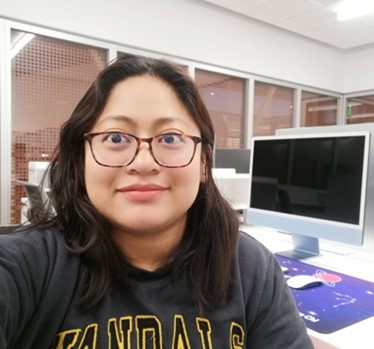
Dr. L. América Chi is a Molecular Modeler with a passion for both science and writing, and a deep commitment to family. As a first-generation STEM postdoc from a Latin-Mayan background, she holds a degree in Physics Engineering and a Master’s in Polymeric Biomaterials. América completed her Doctorate in Applied Physics with a specialization in physical chemistry. Her academic journey includes two postdoctoral positions, initially at the National Polytechnic Institute in México, and more recently at the University of Idaho in the USA. You can find her at @akitaelperro.
This blog is kindly sponsored by G-Research

 Voices of Academia