
I believe that I have spent my whole life anxious. As long as I can remember, I have worried about things that other children did not. I was scared of getting hurt, getting muddy, trying new things out, of a fear of failure. I always felt different from the others.
Whenever I voiced these concerns I was told ‘Don’t be silly’ or ‘You’re no fun to be around’. As a little girl, these comments were extremely damaging to how I viewed the anxiety within me. I was ashamed, appalled and determined to not let anyone know how I was truly feeling.
So I spent my whole childhood, my teenage years and even into my 20s pretending I was somebody else.
My Undergrad Experience: Losing Myself in Work
When I started my Undergraduate degree back in 2018 I was so desperate to fit in and to succeed. I picked Law as a University course, interested in dissecting the impact that words can have in legislation. Reflecting back on this now, I wanted a degree where I felt that I had an element of control over words, where I felt that I lacked this my whole life. Words had always been my biggest enemy: any comment made to me would stay with me. I can’t count the number of times that I was told ‘Words will never harm you’ and every time I questioned and blamed myself, for why then did they hurt me? If nobody else is harmed by them, it must be my fault.
My anxiety escalated during my Undergrad. I didn’t know anybody in this new city, my boyfriend was far away and I felt entirely alone. I didn’t drink for fear of letting down my guard and this left me entirely isolated within my flat, told once again that ‘You’re no fun to be around’. I was terrified of ending up drunk on the side of the road, locked out of my building, being sick in a club; the list goes on. Instead of socialising, I threw myself into my work, working 22-hour days sometimes just to lose myself in something else. I would cry myself to sleep more nights than not, disappointed in myself for not being ‘more fun’. The anxiety within me became my greatest enemy, and I ignored it as much as I could for as long as I could. I overworked myself, didn’t eat and consequently made myself extremely ill. I spent three years in my room barely surviving, feeling like it was all my fault that this anxiety was living inside of me. All I saw around me were people having the best times of their lives, making memories to last a lifetime. When I reflect back on my Undergrad all I feel is numbness.
About six weeks into my degree I realised I chose the wrong course. Out of a fear of failure, I was determined not to give up and to see it through. My mental and physical health reached an all-time low, and I believed giving up on the degree would make it all be for nothing. Surely a certificate on my wall would make up for all of the pain?
How wrong I was.
My Masters: Isolated and Scared
Having barely got through my Undergrad, I was determined to do a Masters in English. This was always my favourite subject growing up, and as a self-confessed bookworm it seemed a perfect fit.
I changed University, changed course, changed city- so why did my anxiety not change? Once again, I felt entirely isolated. I made some friends during my Masters, yet I never felt I could be my true self. I always made sure to hide parts I was most ashamed of. Whilst happier in my new course, I still didn’t feel happy. I moved in with my boyfriend, got engaged and married within the year of doing my Masters. Everything in my personal life felt like it was clicking together. Having been together seven years by this point, I easily would have said my husband knew me the best. However, deep down I knew I was supressing emotions, hiding my feelings and not being my true self, even to him.
I know some people will query why I didn’t say anything to the person I committed to spend my life with. The answer is I don’t know. I was scared he’d change his mind and I’d be all on my own, just as I felt within my head.
So I spent another degree overworking and lying to myself about what I was feeling. This is also when my panic attacks began. Often out of nowhere, I felt paralysed, too scared to think, move or breathe. I found myself too scared to volunteer for university events, or to involve myself in student activities so I kept myself to myself. This developed to a fear of going out. I stopped driving, stopped seeing family and friends, locking myself away to work.
Now I realise why. Despite the toll my Law degree took on me, it got me to the next step in my academic journey. My mind told me that an isolated, overworked approach was fine: that’s ‘normal’ right?
Wrong.
Having finished my Masters, feeling more alone with my anxiety than ever, I applied for a PhD eager to specialise in a topic that I fell in love with. Having been accepted, the reality hit me of another four years as an anxious and isolated student. I felt like I was drowning.
My PhD and the Decision to Accept Help
I got stuck in with my doctorate degree, living within my four walls, terrified to admit what I knew was happening. I knew my anxiety was increasing day to day. How could I be successful and yet such a failure at the same time?
Everybody around me told me that I must have everything together. How else could I be on my third consecutive degree? I smiled and nodded through the conversations, sick to my stomach at how wrong they were.
I was surviving, not living.
It took many more months of denial before my turning point occurred. My husband confronted me about my anxious behaviour, starting a conversation I had actively avoided since I was five years’ old. I started to ask myself, ‘Why do I feel the way I do?’ All of my walls were torn down and I was thrust into conversations that made me entirely uncomfortable. Having one person know about the extent of my anxiety felt again like failing. I convinced myself that I wasn’t good enough, as I had these suffocating thoughts.
It took me a further four months after that conversation to start therapy. I had a panic attack that morning. I’d never felt more scared in my entire life.
I don’t want to build a false pretence that therapy is easy, and it’s all fixed in one day as that can’t be further from the truth. In my experience, therapy has been the hardest, most gruelling experience of my life. I have felt myself be ripped apart from inside to out and have thought about giving up on it every single day. It’s hard to go into something knowing it will hurt you.
However, for the first time I wasn’t alone. For one hour a week, I had a safe space to say whatever I was thinking, completely unedited and raw. I opened up about things that I had supressed for my entire life and was told for the first time that ‘It wasn’t your fault’. Hearing those four words felt like someone lifted the entire world off my shoulders. My therapist explained to me that anxiety is more common than you would think, especially among academics who often place pressure on themselves.
I finally told some of my family and friends just how much I had been struggling. I started to go out again, slowly, but taking those steps forward, no matter how small. I began looking after my physical health alongside my mental health, making sure I ate three meals a day and didn’t forgo a meal to work. I began to see some changes. I would say yes to more opportunities and start setting a timer for my working day, to ensure I left time at the end of the day for things other than work. I have learnt to ask for an extension with a deadline if I need it.
I have also learnt that mental health is as important as physical health. Society has always told us about the benefits of physical health, leaving mental health in the background. However, it is time to start making mental health a priority where it is equally important to your overall health and wellbeing. With hindsight, I can see when my mental health was as its worst through reviewing my writing during that period. It lacked focus and felt erratic, much like my mind. I was determined to keep writing, even if I knew it wasn’t my best work. I didn’t realise at the time how much I needed to step back and focus on things other than my academic work, in order to improve it.
Conclusion
Having gone through this experience I want to communicate one thing especially: Taking that step of saying you need help will be the hardest part. It’s not something that should be diminished or lessened, so do not let anyone ever tell you differently. If you feel able to take this step, then take it from someone who has been through it: It will be okay. Dealing with anxiety is not a linear, neat experience; it has been the messiest experience of my life. Yet, I finally am feeling less alone.
Writing this now, I would be lying if I said a part of me was not anxious. Being entirely vulnerable is terrifying. Writing and reading this on paper makes it hard to ignore, which is exactly why I know it is the right thing to do. Anxiety should be a conversation that is had, especially within an academic sphere. I have given this article out to my family, aware that, despite it being an uncomfortable read, it is a necessary one. My greatest hope is that this article provides comfort or a sense of relatability to whoever is reading it. If this resonates with you, then I urge you to give this to your family and friends as a way of starting the conversation that feels impossible to begin.
The more we open up about anxiety, the less we may feel alone.
Anxiety isn’t a choice, and it isn’t a weakness. It has shown me just how much mental strength I have and my determination to never give up on myself. Anxiety is my greatest superpower.
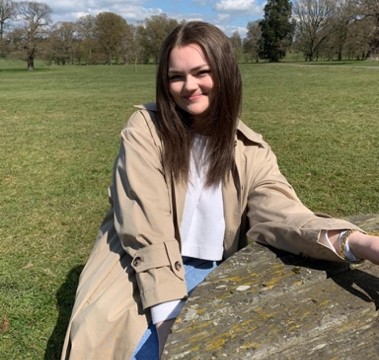
Isabelle Berrow is a second year PhD student studying Feminist Greek Mythical Literature. She is an avid bookworm, and teaches English, alongside Law. Outside of work, Isabelle enjoys board games and puzzles, and loves to bake.
This blog is kindly sponsored by G-Research

 Voices of Academia