
I am a South African writer with a background in psychology and critical diversity studies. In 2014 I began to assist James Reed with his practice-based research project Agents of Change (which was created with Shelley Sacks from the SSRU at Oxford Brooke’s University). Agents of Change helps to connect people to their thoughts and feelings about climate change. Participants spoke about the fashion industry as well as the losses of plants and animals and even the losses of ancestors due to colonialism. How to live a sustainable life appeared to be elusive to many participants. All expressed a deep grief at the devastating impacts of environmental destruction. Many also expressed shame at living lives which impacted on other people.
My ideas about climate change were initially focused on global capitalism and somewhat disconnected, but through the project I discovered how spiritual nature was to me (environmental philosopher David Abram once used the quote, ‘the spirit of God blew upon the face of the water.’ The process of understanding my connection and others connection to ecology was very emotional and filled with grief. Reading and exploring about the risks to ecology that were being created through global capitalism, and the nature-based philosophies which had been denied or even killed off brought a terrible grief and anxiety.
I chose the topic of Eco-social justice for my PhD, and my mentor, Melissa, is a wonderful and compassionate woman who understands crisis. I think that academic research does challenge the way we see the world and that it sometimes breaks down old ways of seeing before it provides new ways of being to replace the old. The crisis and grief I felt during this process lead to feelings of anxiety and grief. I knew I had to change my life, but I did not yet know how. This blog is here to offer encouragement to others caught in the middle of a crisis. It does get better and, for me, has led to a deeper and more wonderful life than the one I had before.
One of the most memorable moments during the writing of my thesis was sitting on the balcony of my small cottage while crying. I was speaking to a visiting professor, a woman I admired deeply, about a lady who had lost her land, home and pets during the apartheid forced removals in South Africa. The story was told during a Heritage Day celebration in Simons Town, a beautiful seaside town in Cape Town and showed very clearly how Eco-social justices intertwined in South Africa.
A few years later I travelled ta small town in South Africa, and heard the story of cotton growers who were struggling with health problems such as cancer because they couldn’t afford the protective clothing they needed to keep themselves safe. Cotton is said to be a solution to the microfibers released by polyester but beneath this solution was another painful injustice.
“I am finding my thesis painful.” I told a colleague at a university seminar, and she confided that her thesis had been painful for her too. I remember my relief at feeling understood.
We spoke through the challenges of gaining consciousness and how to live in the world. The disposable nature of the fashion industry with its cheap and badly made clothing came once again to my mind as I remembered when the group of farmers shared their struggles.
My Research Journey: Connecting with Pain
I had lived a very individual life, which had been about self-expression. I had a love for reading and writing. Clothes were about personal expression. I had to admit that while reading a book outside, I didn’t always notice the birds and the butterflies. I hadn’t thought of the people behind the clothes I wore, or the intense losses connected with growing food or cotton. An understanding of structural injustice and its impact on homes and families filled me with grief. The more I started reading, the more painful my research became.
Living though a Crisis
I have always been anxious. My dad died during the writing of my thesis which added to my feelings of grief and dread. During this time my anxiety became debilitating. I knew I didn’t want to carry on living the way I had been. Living in the middle of a built-up city, with people buying bottled water and takeaway coffees with plastic lids suddenly felt unbearable. I couldn’t see a way out. I saw my own choices as a part of the pain and suffering of others. I have always struggled with what I wanted from my life, but the process suddenly became more profound. I was lucky enough to have a supportive therapist, but I battled to see my way out of the crisis which came with understanding the devation behind everyday life and the grief and despair which came with this.
Shelley Sacks says that crisis is a step towards transformation, arguing that it is part of an alchemical process which evokes an ability to respond. A change in worldview is a part of a process of creating a new life. Psychologist James Hillman compares crisis to sulphur, volatile and explosive, burning through old thoughts and beliefs. Crisis alone cannot create a change. It’s too volatile. Instead, it’s a caring response which helps to create new structures or ways of being. Lost in crisis, I didn’t know that the intense grief I felt was the beginning of a deeper and more enduring journey, a process of creating a new worldview which was based on a love for all beings. At the time I believed that there wasn’t a way through. The world was dying. Pollution was never going to stop. There was plastic in the sea. The messages of fear and despair haunted me.
One day as I was watching the waves, I began to see how they changed and transformed, never constant but always in flux. This reminded me of my journey and how my ideas had transformed over time. I knew then that letting myself think and feel whatever emotions were arising was okay because they would not last forever. In his book Wild Mind, Bill Plotkin tells his readers not to fight feelings but to relax into experiencing them more deeply and that grief, shame and despair are a part of the healing process.
The Process of Transformation
Over time, grief, pain, and shame began to change into a feeling of being more alive. After feeling the grief and sadness I began to recognise how much better I felt after spending time in nature. On a frustrating day I could sit next to the water and watch the ducks. I began to feel more embodied and more present. Instead of worrying about the future I began to love what actually was. This helped me to manage my anxiety. As I began to pay attention to what I could do in the moment to work towards a better future, I started to focus more on the present and on my capabilities that actually existed rather than on the disastrous situations which might actually come about.
My changing worldview meant connecting with new people, and one old and very special friend, Jacques, who had been at school with me. Jacques had been working with communities and food gardens, and as always, we were able to connect deeply and share our experiences. We would sit in the park or at the dam and share our experiences and eventually our love for each other. Both of us wanted to move out of the city to somewhere more peaceful and the shared journey toward healing from our anxieties and questions about the world helped us to work towards a life we knew we could believe in. We now have a two-and-a-half-year-old daughter called Ava.
Conclusion
My thesis journey created a cauldron of crisis, shaking up the way I saw the world, but the result wasn’t actually a deeper anxiety, but a healing process. I know I couldn’t have made the journey without the therapy I was lucky enough to have. My journey brought me peace, but it also taught me my own power. Far from being a bookish nerd who has no way of making a difference, I realized that I can use my writing to work towards change and towards making a contribution. I might be quiet, but my power lies in my ability to care, and to transform this care into stories which make a difference.
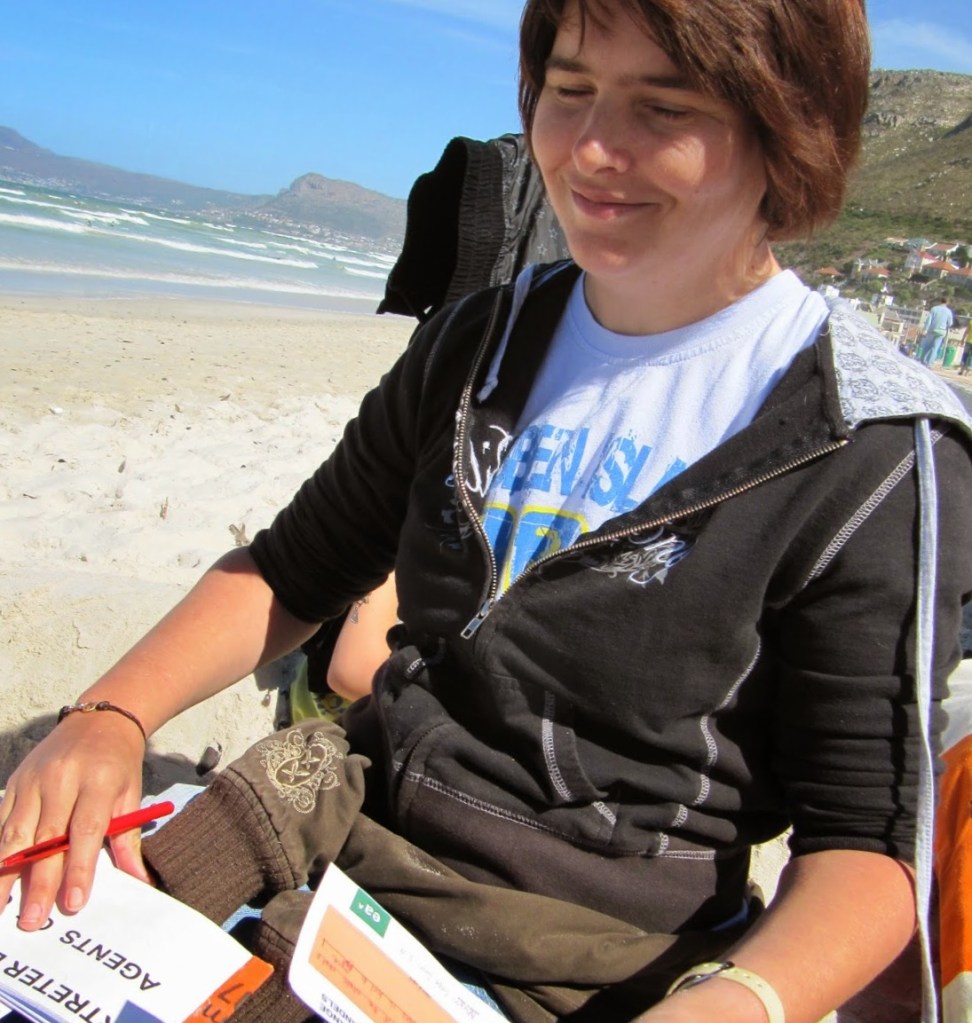
Nicci Attfield is a writer based in the Overberg, South Africa. She has a masters in diversity studies. She has published in Ecological Citizen and has co-authored a chapter called ‘Agents of Change as Connective Practice with James Reed’ for Transformative, Transdisciplinary Eco-Art from around the World’ as contributing authors from Africa. She loves coffee, books and rainy afternoons.
This blog is sponsored by BOOX
About our sponsors:
With over 14 years of expertise in crafting ePaper tablets, BOOX is the ultimate choice for elevating your academic reading and note-taking experience. Unleash the power of effective PDF reading, note taking, and organizing with BOOX Eink tablets. Explore the possibilities for enhancing your academic career at shop.boox.com. Don’t miss out on the benefits BOOX can bring to your academic journey.

 Voices of Academia