
TW suicide
I don’t think I have ever written from a place of genuine anger before. But I am full of rage. Not the sort of anger that causes you to lash out, that strikes a blow, but the type that quietly simmers and boils until you can no longer ignore it, because if you do, it’ll bubble over and hurt you and everyone else in close proximity. But this is where being diagnosed with Attention Deficit Hyperactivity Disorder (ADHD) at the age of 31 leaves me. An angry person: angry at society, angry at medical misogyny, but mostly angry that it took me so long to get here.
But here I am, nonetheless.
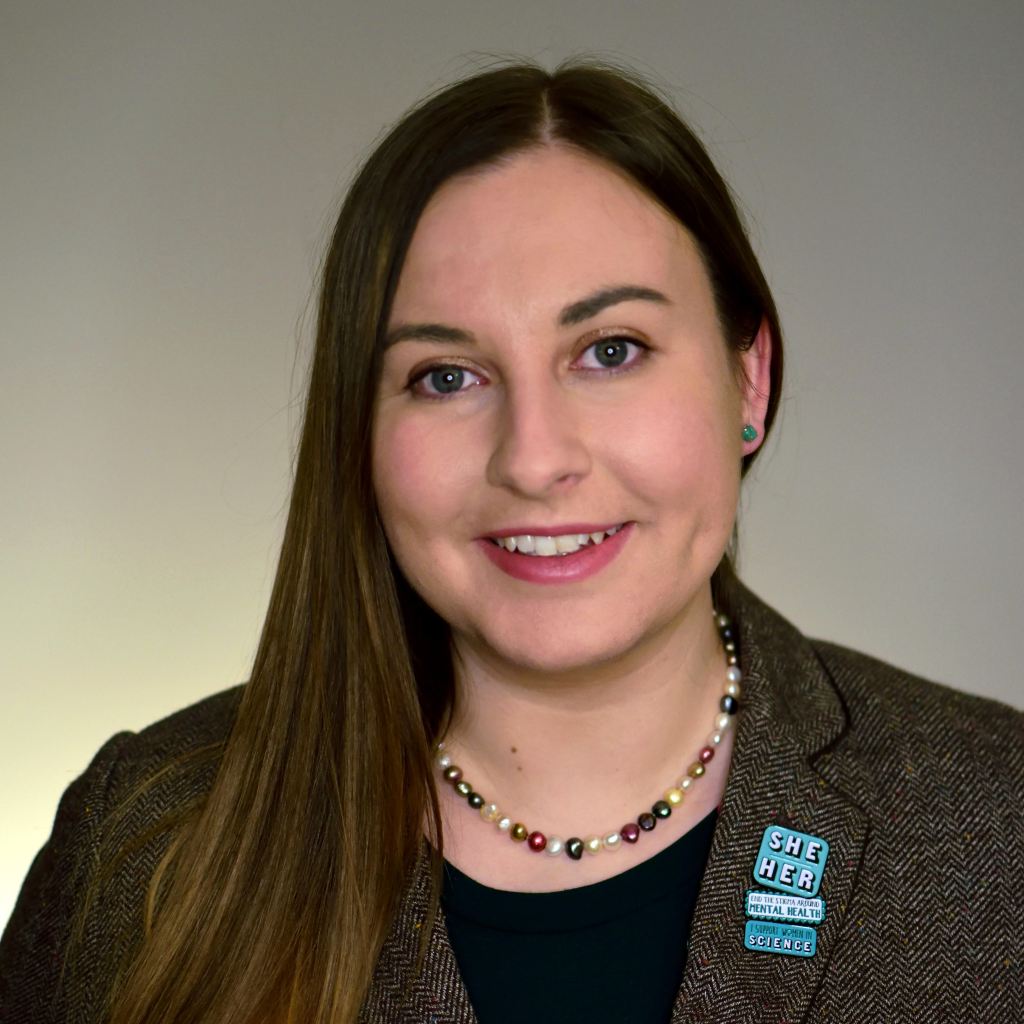
For those of you that don’t know me, my name is Zoë. I have lived with ADHD for 32 years. I have lived with ADHD, knowingly, for just six months. Suspected? Around 2 years. Externally, I am “highly successful” (someone else’s words, not mine). Internally I’ve gone through periods of self-loathing so intense I wanted to die. I didn’t believe I belonged in academia (or the world for that matter) and struggled to understand why. This is perhaps why I am so very angry: if things had panned out slightly differently, would I be here writing this blog at all?
But here I am, nonetheless.
The Lost Girls
Hindsight enables me to see connections between my life experiences and having ADHD, but for a long time I could not see the full picture. In part, this was because my understanding of what ADHD is, and how it presents, was heavily shaped by stereotypes: that to have ADHD, I’d likely have to be boisterous boy, bouncing off the walls, never giving anyone a moment of peace. I was anything but this at school: I was compliant, bright, perhaps a bit outspoken sometimes, but I’d done well. I’d even been popped on the “Gifted and Talented” register. Bright girls like me didn’t have ADHD, right? That made no sense.
But what I’ve learned along the way, and what drives so much of my anger, is that researchers did not consider gender differences in the ADHD experience until relatively recently. In fact, the first studies exploring if the experience of ADHD might be different for women and girls did not emerge until the late 90s. By this point it was already too late to help me. In fact, I have seen my generation (women in their 30s) being referred to as “The Lost Girls”. And we are – lost, left to muddle through, let down. Sure, there was a general surge in diagnosis and treatment of ADHD in the 90s, so maybe girls haven’t been so left behind? But then again, the world is so heavily “default male” (a term I first read in Invisible Women by Caroline Criado-Perez), it’s fairly normal for women’s health to take an unwarranted second place. It’s hardly a wonder it got missed.
Since discovering this, I’ve tried to rationalise it. Why have women and girls been so systemically let down? I guess “boisterous boys” are easy to spot. They disrupt. They act out. They impact other students around them. They are so often (unfairly) seen just as “nuisances” that need intervention. Girls with ADHD often present differently. A theory is that societal compliance means that girls are more likely to “mask” quickly with ADHD and internalise a lot of how they feel. Women: taught to routinely make themselves smaller.
To be different is to stand out and to stand out is bad; best be a “good girl” then.
And I suppose, if I take a moment and have a particularly cynical view of how we as society treat disability and mental illness, the stance is so often “if you are functioning you are fine”, even if you are screaming on the inside. Because in the society we live in, our value is measured so heavily in our contribution, that as long as we are contributing no-one stops and asks the question: Are you actually fine? The answer people rarely actually want to hear is “No”. This compounds further, perhaps, in fields that have historically been heavily male-dominated, like medicine and psychiatry, because maybe there was no-one there to simply say: What about girls? Why is the diagnosis rate 4:1 male to female? Surely this cannot be right? Those questions did come with time, but I’ll always be left wondering what my life might have been like if someone had been there to ask these questions earlier on.
But here I am, nonetheless.
ADHD and me
I can’t remember an exact time point when I decided I must have ADHD. But I know when the journey started. My coping mechanism for a lot of my life up until the first lockdown (in the UK) was to keep busy. If I didn’t slow down, I didn’t have time to reflect. That suited me fine. In that sense academic work also suited me: the constant pressure to keep pushing and pushing meant I never slowed down. Then the Covid-19 pandemic and subsequent lockdowns swept in. My coping mechanisms were crushed almost overnight.
Suddenly I had a lot of time to sit with my thoughts – a nightmare of sorts. Hyperactivity for me has always largely been in my head. Lots and lots and lots of thoughts. Constantly. Like a motor, whirring away, unable to take moment’s break, or to find time to relax. Whirr whirr. To the external world I’ve always been called a “worrier” or “highly strung” but that’s because my brain is incredibly good at scenario building: going from A to B to Z extraordinarily quickly. I see this as a strength as well as a curse (put me in a crisis and I’m through solution mode, delivering on that solution before others have taken a moment to think, but on other days I can be an anxious mess). With a global pandemic raging, my constant thinking became debilitating. In a moment of complete overwhelm I did what I could to try take back control: I reached out to a therapist.
I can honestly say meeting my therapist changed my life. I didn’t really know what to expect from therapy; again, perhaps my views on it were tinted somewhat from stigma and stereotypes. Largely we just talked. We built trust. I shared struggles that I had minimised. I’d treated the day-to-day difficulties with functioning I had as irrelevant noise for so long, I’d normalised my challenges. I’d just got on with stuff because I had to. When my therapist brought up that she thought I might have ADHD, initially I baulked at the idea. But I knew I’d been relating to a lot of social media content about ADHD too, and deep down I think I knew that it was something else my brain wasn’t going to let go of.
The Full Picture
There were a bunch of difficulties I faced getting an ADHD diagnosis. To start, there were a range of internal barriers I had to be brave enough to face, and then dismantle. The first was my own internalised ableism. I couldn’t for the longest time fathom having a disability. I really had to do the work.
Second was when looking at a list of symptoms for ADHD my experience didn’t aways “fit”. And not mapping directly onto the symptoms made me feel like an imposter. I now know this is because I have masked my symptoms a lot of my life.
Although, some of the symptoms really did fit for me:
- Appearing forgetful or losing things – I’ve lost my wallet more times than I can count, and I was on the 17th issue of my university card. My forgetfulness became a running gag with some of my friends. I convinced myself at one point I was experiencing early onset Alzheimer’s. I’ve lost count of the amount of tears I have shed over a misplaced wallet simply because it was misplaced.
- Self-medicating – I drink a LOT of caffeine. I did not realise until I was part way through my route to diagnosis that excessive consumption of caffeine can be self-medicating (stimulant consumption) to help manage ADHD. When I drink caffeine I do not feel hyped; I feel relaxed and focused.
At the same time, many symptoms did not completely translate to my experience:
Having difficulty organising tasks – I rarely have difficulty organising tasks. This is because I have lists of lists, operate religiously on inbox zero (“Respond immediately so you don’t forget Zoë”), and live and breathe through my calendar. If it’s not on my calendar it is as though it doesn’t exist (I still feel guilty for forgetting a good friend’s leaving party as I just forgot). In academic settings this presented as being highly organised: something that was highly coveted and seen as an asset. Even though I looked like a swan on the surface I was furiously paddling below the surface just trying to keep afloat.
- Constantly fidgeting – In work meetings/formal settings I don’t fidget at all. It wouldn’t be okay to, so I don’t. However, since taking calls from home during the pandemic, I found myself much more relaxed with my webcam turned off so I could move about. I didn’t realise what I was doing at the time, but I was making myself more comfortable and relaxed doing so. I also have dermatillomania where I pick at my skin because I can’t sit still – but this is typically just when I am at home.
- Being unable to concentrate on tasks – I constantly switch from task to task to keep myself interested in them (I might have 4 or 5 pieces of work on the go at the same time) to keep myself engaged. I thought this was normal for a long time. I also experience periods of intense hyperfocus where I do a task for hours on end, where all I do is concentrate on the task at hand (again I thought this was normal). Again, as an academic, it was just seen that I was super interested in a lot of projects. No-one took a moment to query whether I was okay or whether I was over-committed, because again, I was being a busy academic which was seen as a positive thing.
- Excessive talking – I’m outgoing, I speak up, I’m known for being one of the more “extroverted” people in my friendship groups, but excessive talking? I wasn’t sure. But then the more I thought about it the more I realised I actively wait my turn to speak and that takes effort. The more I reflect now, the more I realise that a lot of my research activities centred around collaboration because that was what energised me.
Then there was the worry that I was just “making it fit”. Like a jigsaw piece that doesn’t quite fit – the shape is kind of right, but ultimately wrong, but if you apply enough pressure it snaps into the rest of the puzzle at a jaunty angle. I wondered if the more information I learned about ADHD the more I was adding that pressure to just make it fit. So that I could feel accepted and finally belong somewhere. I couldn’t shake the feeling for quite some time.
If you are reading this – and you think some symptoms fit, some might not, this doesn’t mean you are an imposter. Speak to someone: reach out and invest in yourself. What is the worst that can happen?
Finally, there was the “You can’t have ADHD if you have a PhD” statement, that came up several times during my diagnosis journey – an ableist trope that I saw mirrored by some medical professionals I interacted with. If you are dismissed initially, I think it is important to seek a second opinion from someone that specialises in adult ADHD and who is up to date with the challenges academic women face, if you get dismissed.
Finding Myself
Eventually, with a bunch of encouragement, I decided to get assessed for ADHD. The wait time for assessment is notorious in the United Kingdom (and many other healthcare systems around the world), and my story is no different to countless others in that regard. The endless assessment forms were an ADHD nightmare in itself. But I got there in the end. The moment my psychiatrist said, “You meet the criteria: you have ADHD”, I burst into tears. I felt validated. I felt seen. Most of all I felt relief. Relief that it wasn’t all in my head.
By working with professionals, I came to learn that I’d just been camouflaging myself for such a long time for survival. Never once had I questioned that perhaps it’s not “normal” for it to be this hard to hold everything together. It was also at this point I realised that ADHD isn’t one universal experience. That, particularly going for so long with ADHD but not knowing, I’d used coping mechanisms to appear as neurotypical as possible. Because “normal” felt more reassuring than different.
At some points it has been challenging: What parts of my personality are me? What parts are only there due to living unknowingly with ADHD for so long? But I’ve realised I am me: I am not separate from my disability. ADHD and me are bound and always will be – that is okay. Because I am okay. I am worth something just as I am.
I’ve also learned that people with ADHD are more likely to have Rejection Sensitivity Dysphoria (RSD) which is described as “extreme emotional sensitivity and pain triggered by the perception that a person has been rejected or criticised by others”. I think this underpins why I have held myself to such high standards and to such high aspirations for my whole life and academic career: the fear that if I don’t achieve at the highest level, I might be disliked. This is also how my sense of self-worth got so entangled with my academic achievements. Understanding this now has enabled me to relax a little, and do things because I want to do them, not for how they look on paper or fear of rejection, and risk being disliked. I realise I cannot make everyone happy. In this, I have found a wealth of self-compassion I didn’t know I had.
For the first time in my life, I love who I am.
And again – I find myself angry. Not at myself for once, but for the lost girls and the people going through life struggling and hating themselves because they don’t know they have ADHD. Everyone deserves to feel at peace.
This is why I am done blending in. I have ADHD. I am disabled. I am also fiercely passionate, intensely creative, and I stand up for what I believe in. I’ve never not been these things. But now I don’t have to waste energy holding it all together, worrying about what people might think of me if I have an “off” day. I’m no longer afraid. It’s time to talk about it.
Here I am.
This blog is sponsored by BOOX
About our sponsors:
With over 14 years of expertise in crafting ePaper tablets, BOOX is the ultimate choice for elevating your academic reading and note-taking experience. Unleash the power of effective PDF reading, note-taking, and organizing with BOOX Eink tablets. Explore the possibilities for enhancing your academic career at shop.boox.com. Don’t miss out on the benefits BOOX can bring to your academic journey.


[…] life diagnosis carries with it a number of challenges as discussed by Dr Zoë Ayres in a recent blog↗️ for Voices of Academia. The following quote from Zoë’s blog speaks to some […]
LikeLike